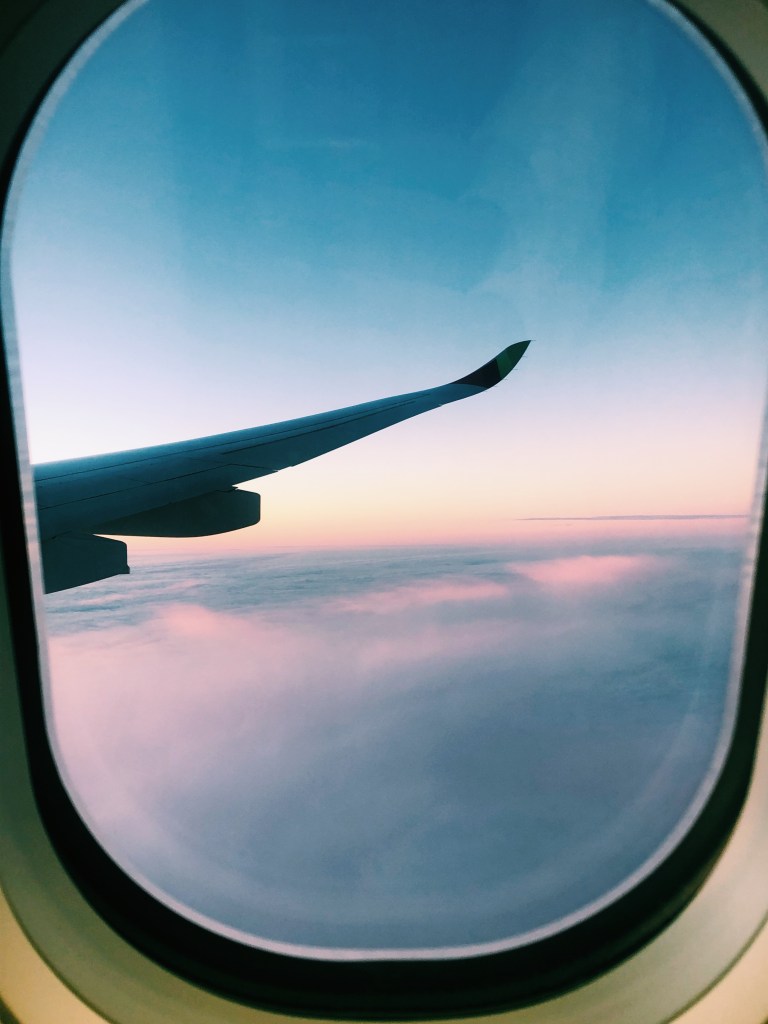
One thing I’ve learned to be true for my life is, if I stay open and continue to do the work – both personally and professionally, opportunities will flow directly to me. That’s proven true my entire career and this latest opportunity was another testament to that fact. On December 7, I was invited by the Israeli Ministry of Foreign Affairs to join a delegation of 21 public opinion leaders (aka progressive influencers – as we were later dubbed) from the US and Europe – to experience Israel first-hand. The goal of the trip, simple: to expose us to the people, places and circumstances that has cultivated one of the most unique ecosystems in the world, especially relating to social impact in hopes that the experience would better inform our work and give us a more accurate perception of Israel. I’ll be honest, prior to this trip, I knew virtually nothing about Israel, other than it being known as the Holy Land. Most Black people I know who have been, have gone on a mission trip with their church, some have gone to learn more about Israeli politics, but from the itinerary I received, it seemed our trip would include that and so much more.
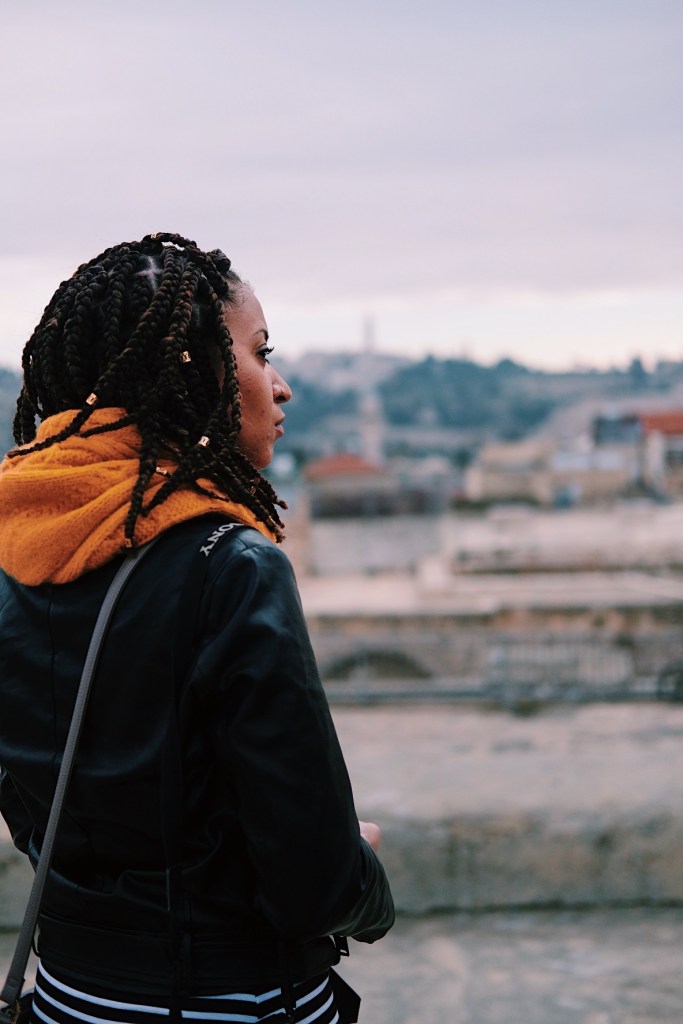
Something I always talk about is how important it is to build a strong network – this trip likely wouldn’t have happened otherwise. A colleague who had taken the trip a year prior, recommended that the Consulate General of Israel to the Midwest invite me to be a part of the next delegation. After meeting with the Consulate and learning there was an opportunity to extend my ticket and visit other countries after Israel – it became my mission to find places I could visit alone, in the middle of December and have an enjoyable experience. I decided on three stops: Lisbon, Portugal, Barcelona, Spain and Paris, France. I’ll share more about each of those experiences as they were a stark contrast to the first half of the trip in Israel.
I arrived to Tel Aviv after almost 24 hours of travel (layovers included), feeling excited, privileged, and curious about how everything would unfold. As I began walking through the ariport and taking in the sites, I noticed my name on a sign someone held (a moment I’m still upset I didn’t capture on film) – we’re live! After getting through security, I hopped in a car for the 45 minute drive to Jerusalem. After settling into my super cute hotel room, it was time to get some rest.
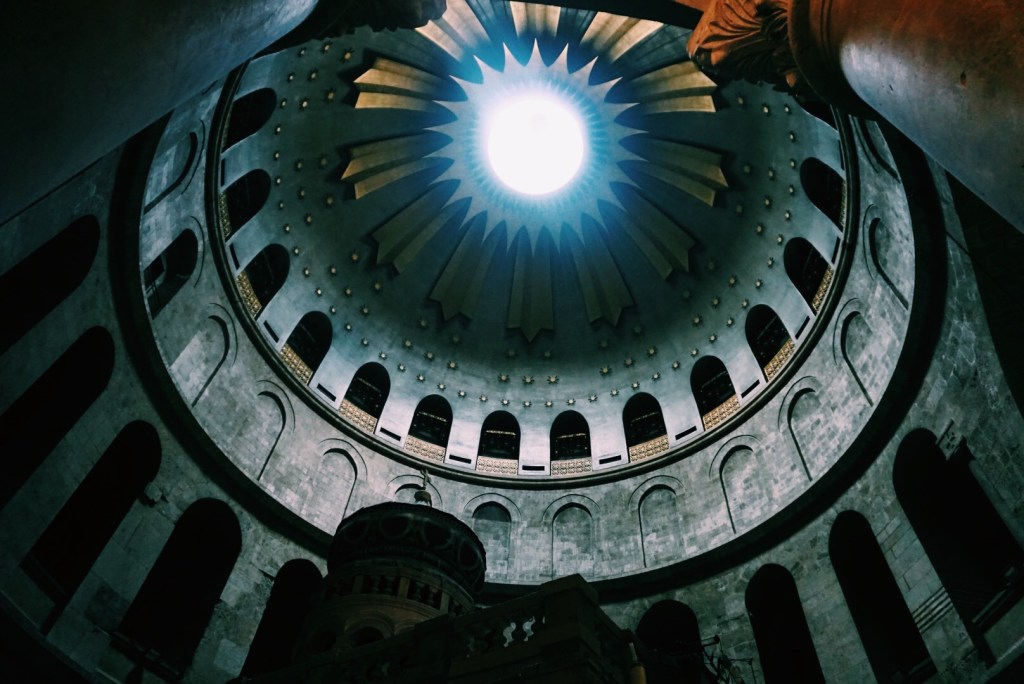
Inside the Church of the Holy Sepulchre 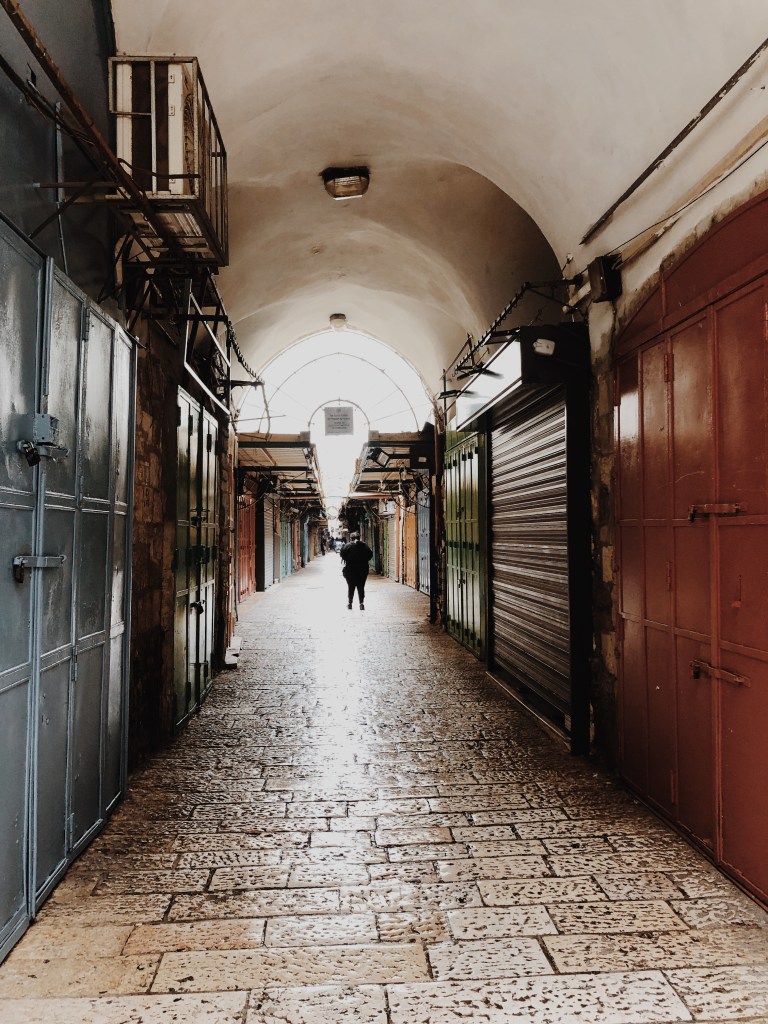
The market corridors 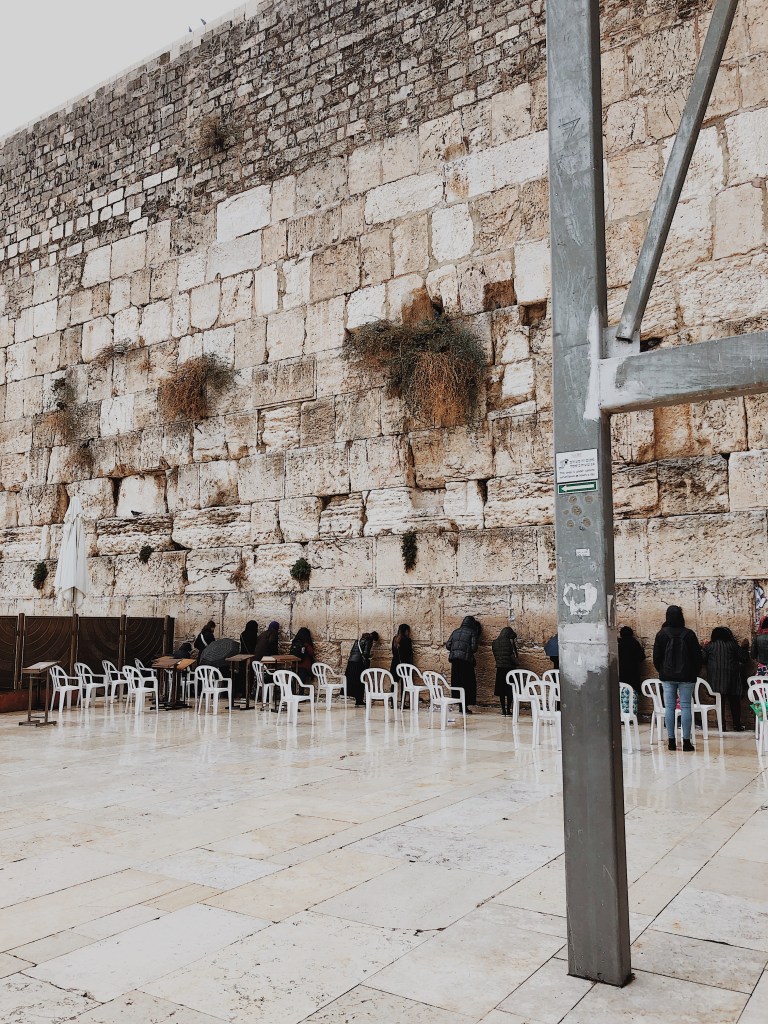
The Western Wall (The Wailing Wall): the holiest place Jews are allowed to pray. 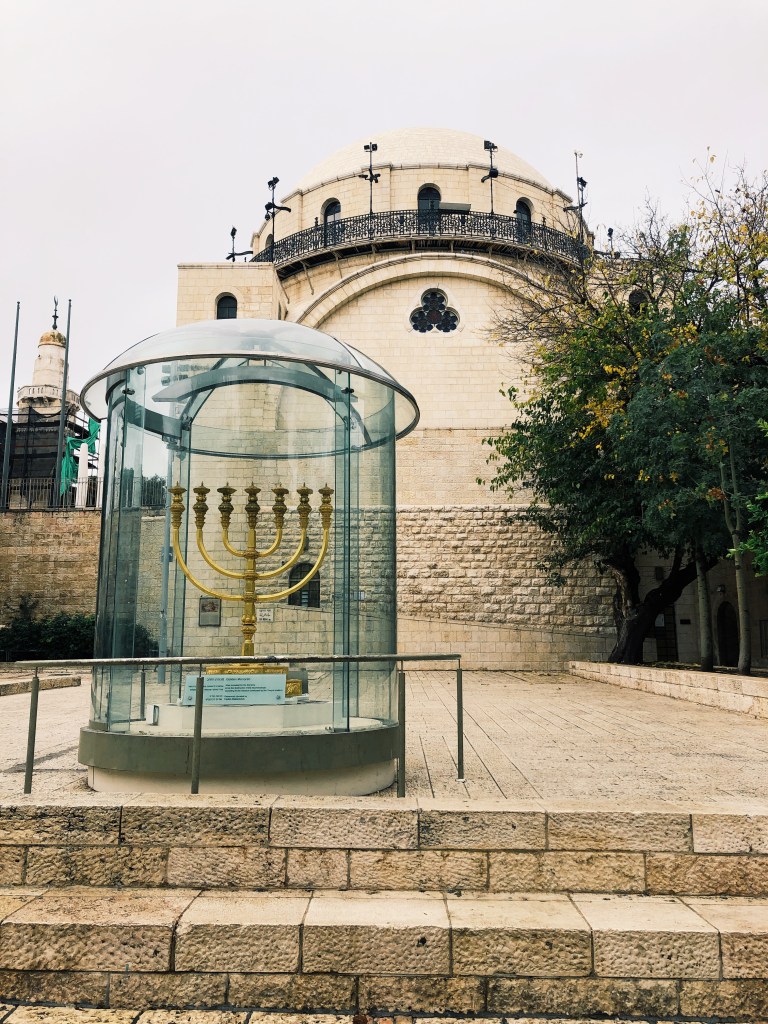
Jewish menorah in the Old City 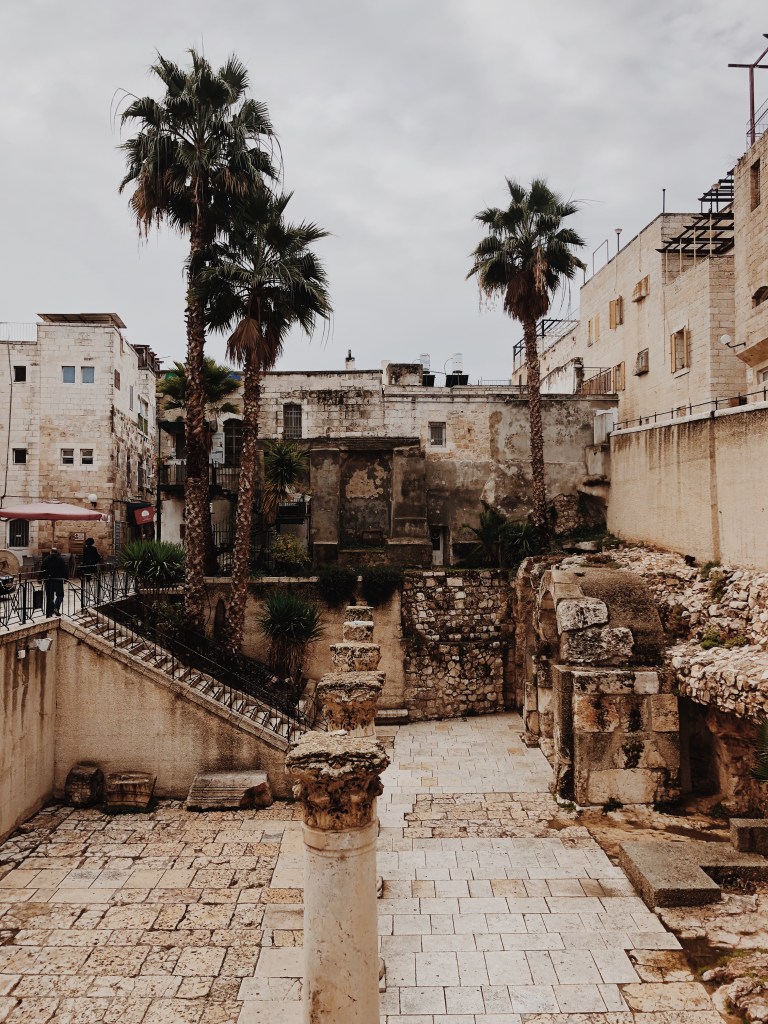
Old City, Jerusalem 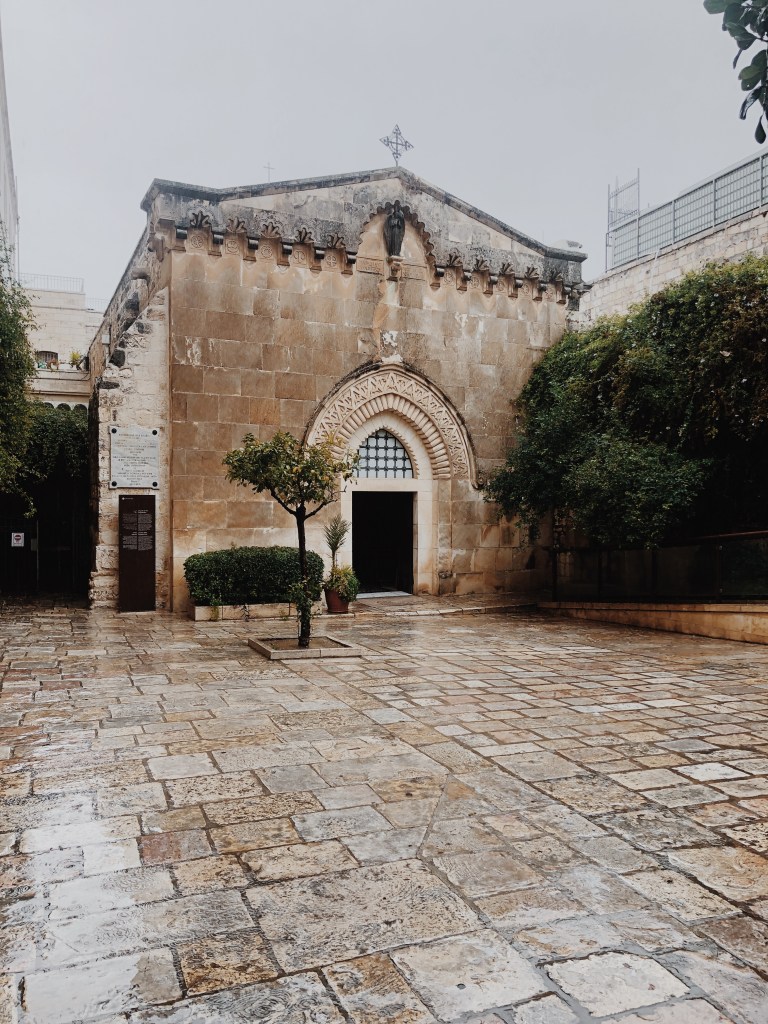
Where Jesus’ trial was held 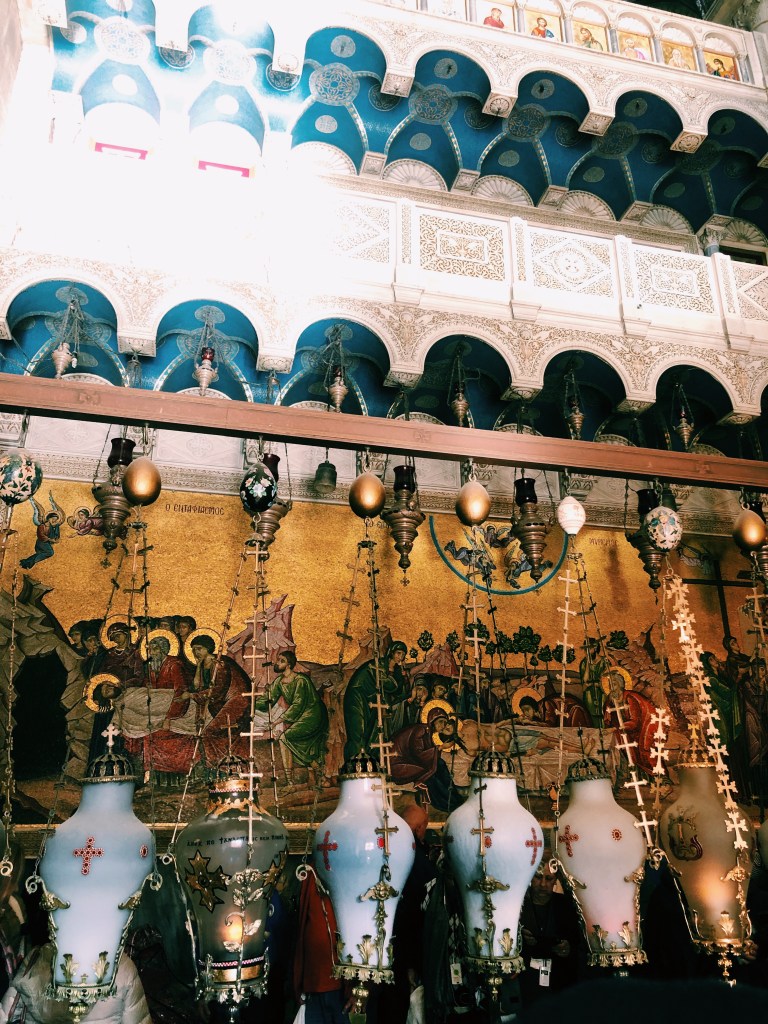
Church of the Holy Sepulchre 
Our Delegation 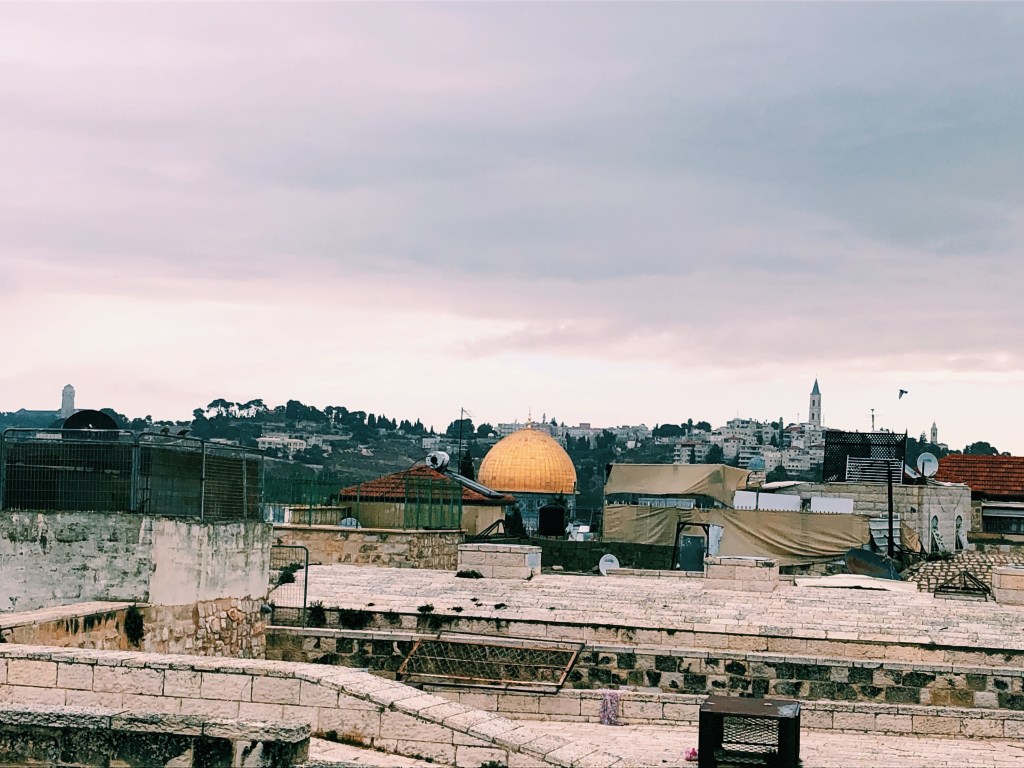
Temple Mount 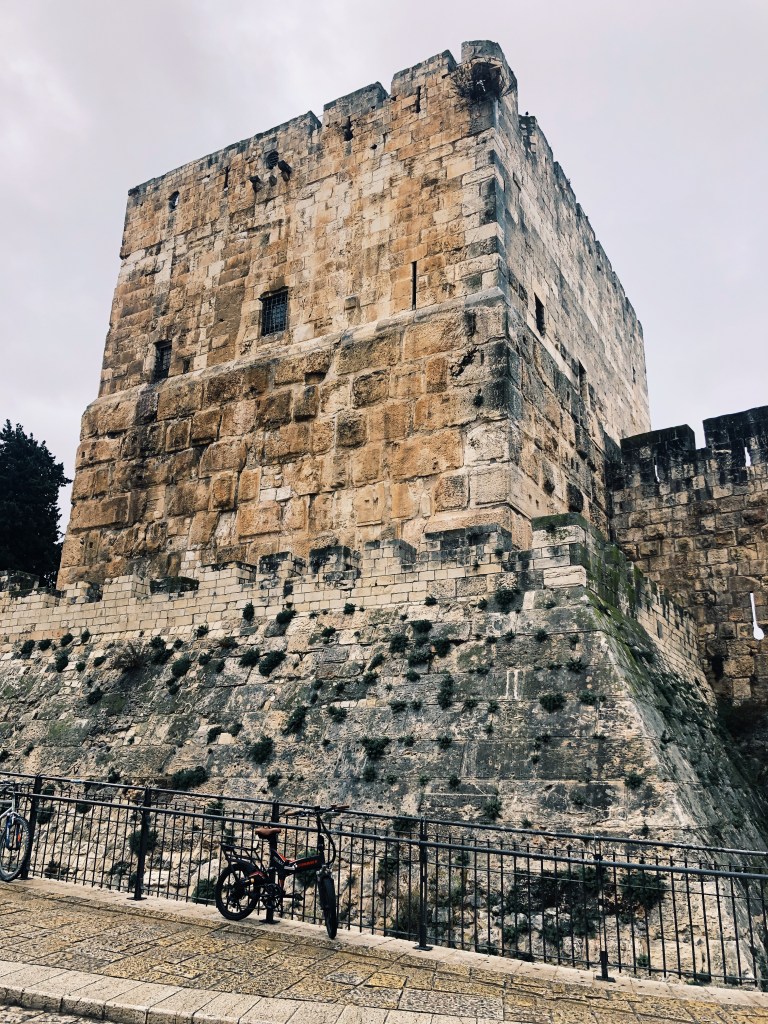
King Herod’s design 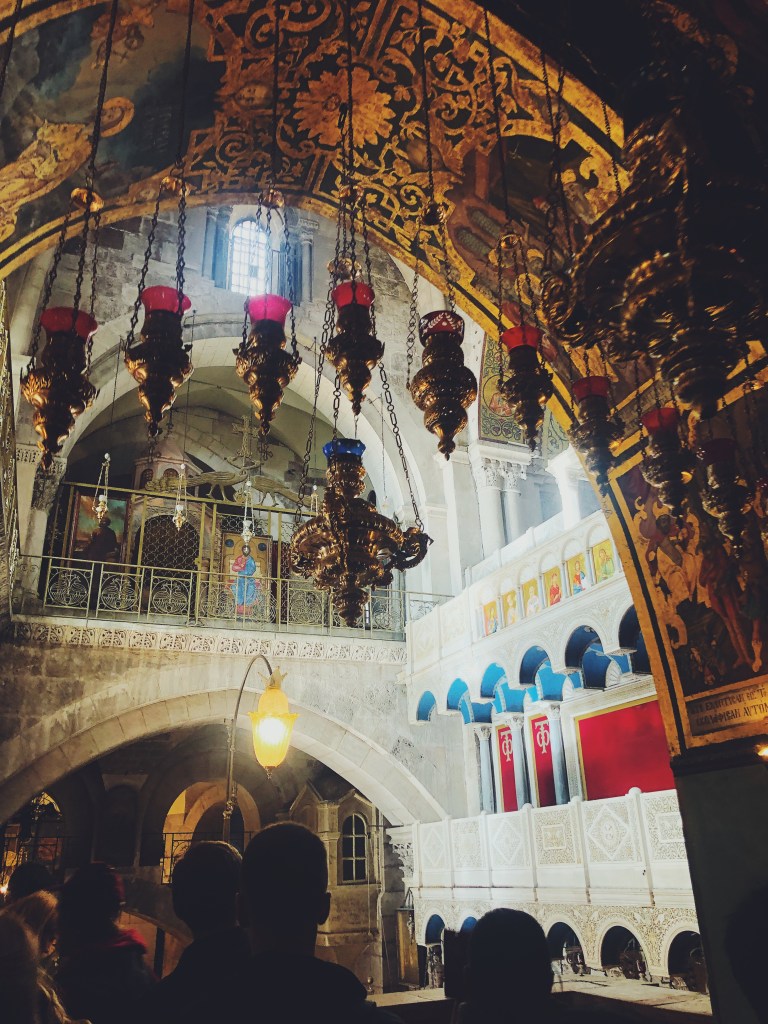
Church of the Holy Sepulchre 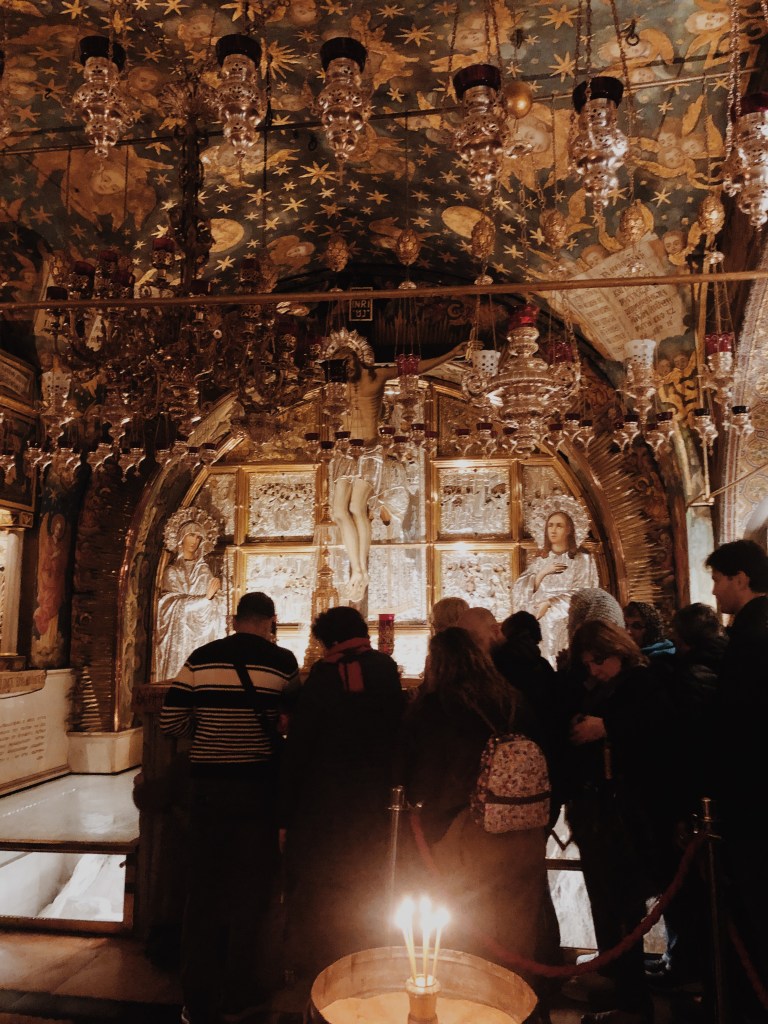
Church of the Holy Sepulchre
Day one, we’re up at 6am for breakfast then headed to The Old City (Jerusalem) for a 2 hour walking tour. Our tour guide was incredible – being sure to point out all the historical sites and their significance to each religion – Christian, Jewish, Muslim and otherwise. I listened, but barely retained any information because it was all so beautiful. There was no time to take notes because I was 100% invested in being fully present – taking in the views and acknowledging all that I was feeling. Walking the streets that Jesus walked, praying at the Wailing Wall (where I left a tightly folded prayer for my family and success, nestled between the old limestone bricks of the wall) and standing where Jesus was buried – all moved me to tears. It was all so very sacred. I felt so much pride and honor to just be there. Looking around at the 20 other delegates representing Germany, Sweden, France, Italy, Denmark, Bosnia, Poland, Norway, The Netherlands, Canada, London, and the US – taking in the fact that I was one of two Black people, and the only Black woman – added to the very privileged experience I was given.

Save A Child’s Heart 
Lightweight, affordable wheelchairs less than $100 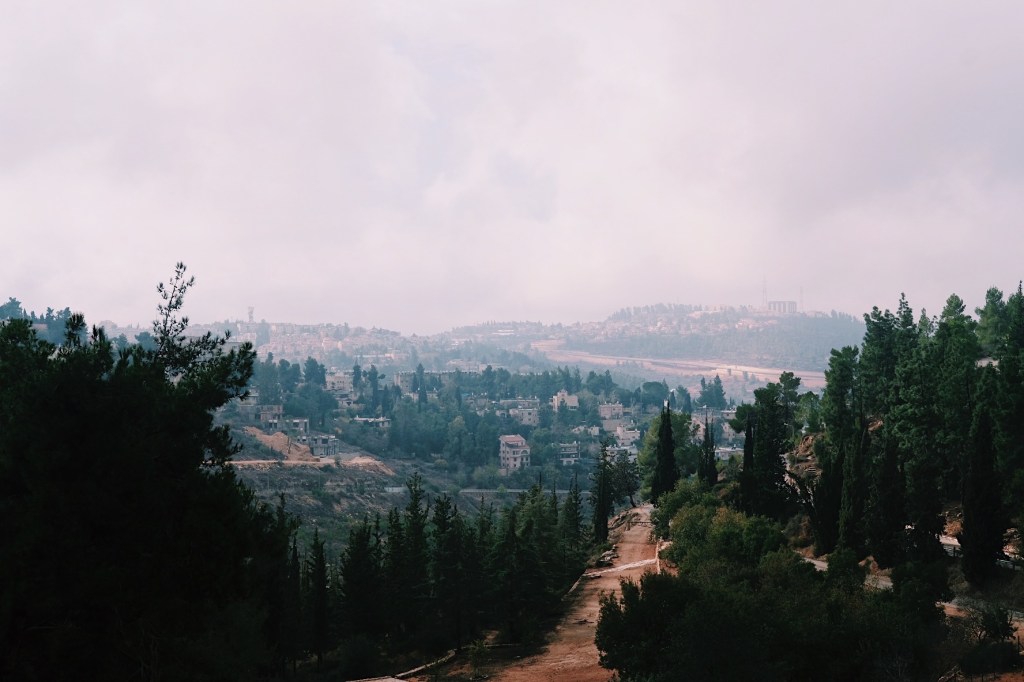
View from Alin Hospital 
Knesset Visit – Deputy Mayor MK Asaf Zamir 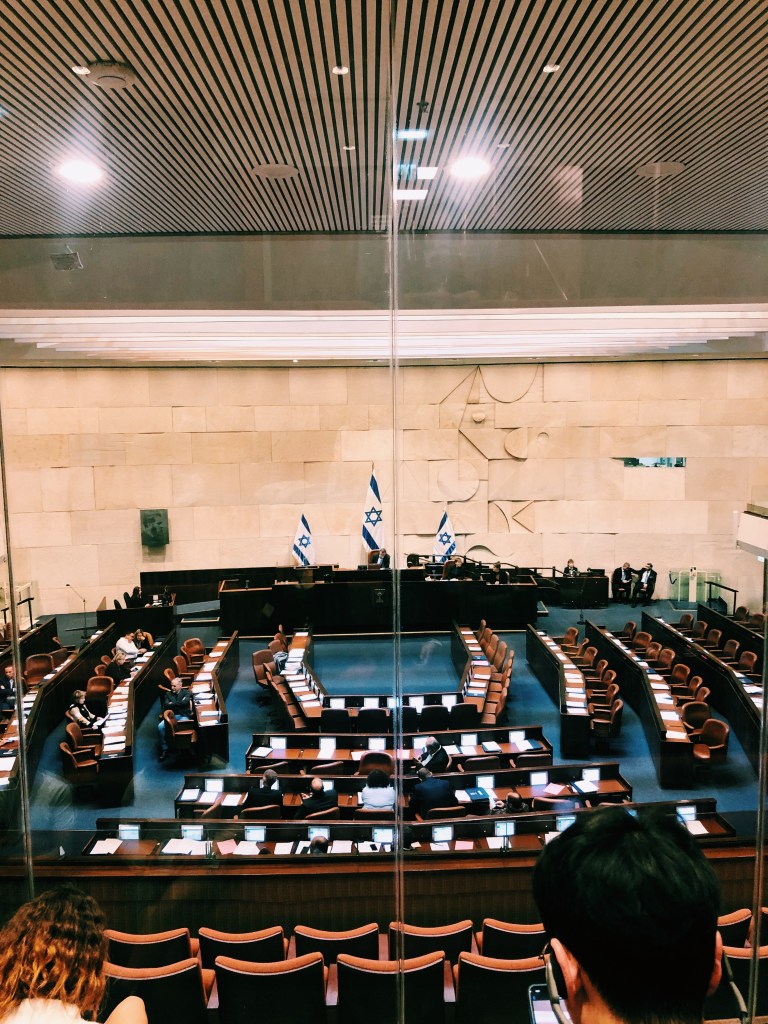
The Knesset 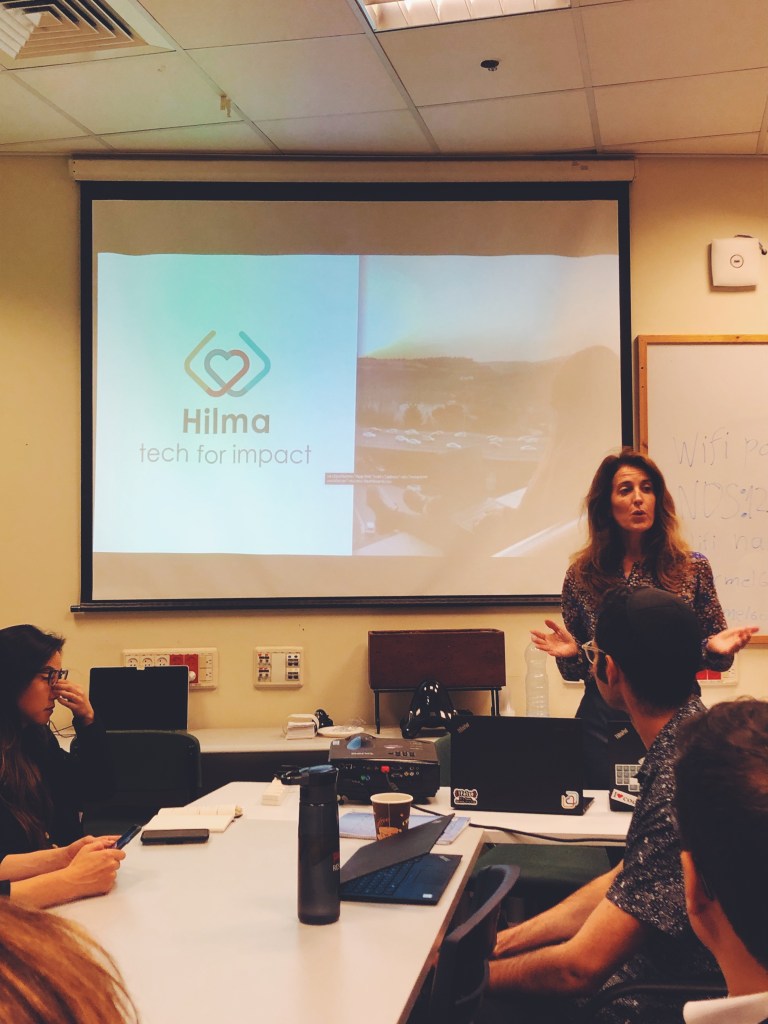
Hilma
Each day was packed full of eye-opening experiences. From visits to local hospitals: Alin Hospital, leverages technology and innovation to build custom solutions for children with developmental disabilities and Save a Child’s Heart, where children around the world who don’t have access to cardiologists, can visit to receive heart surgery and treatment. Visits to Yad Vashem (The Holocoust Museum) – one of the most beautiful and moving museums I’ve ever visited, local accelerators and incubators (PresenTense & Hilma) that help underserved populations start businesses with an emphasis on hi-tech (two programs were very similar to The Gray Matter Experience – more partnerships and details to come soon!), visits to The Ministry of Foreign Affairs – where we learned more about Israel’s entrepreneurship ecosystem. Did you know that Israel has the largest number of startups in the world, per capita and is second only to Silicon Valley? I didn’t! Technology is a second language to everyone that lives in the country and it seems everyone is very invested in finding thoughtful technology solutions to problems within their respective industries. We enjoyed amazing food while hearing about Israeli politics from a political correspondent for The Times of Israel and visited the Knesset (Israeli Parliament). I won’t talk a lot about the food, but you should know that we were incredibly well fed with some of the most delicious food I’ve ever had. They particularly continued to blow my mind on the various ways they prepared eggplant – I’m still inspired and still testing recipes in my kitchen.
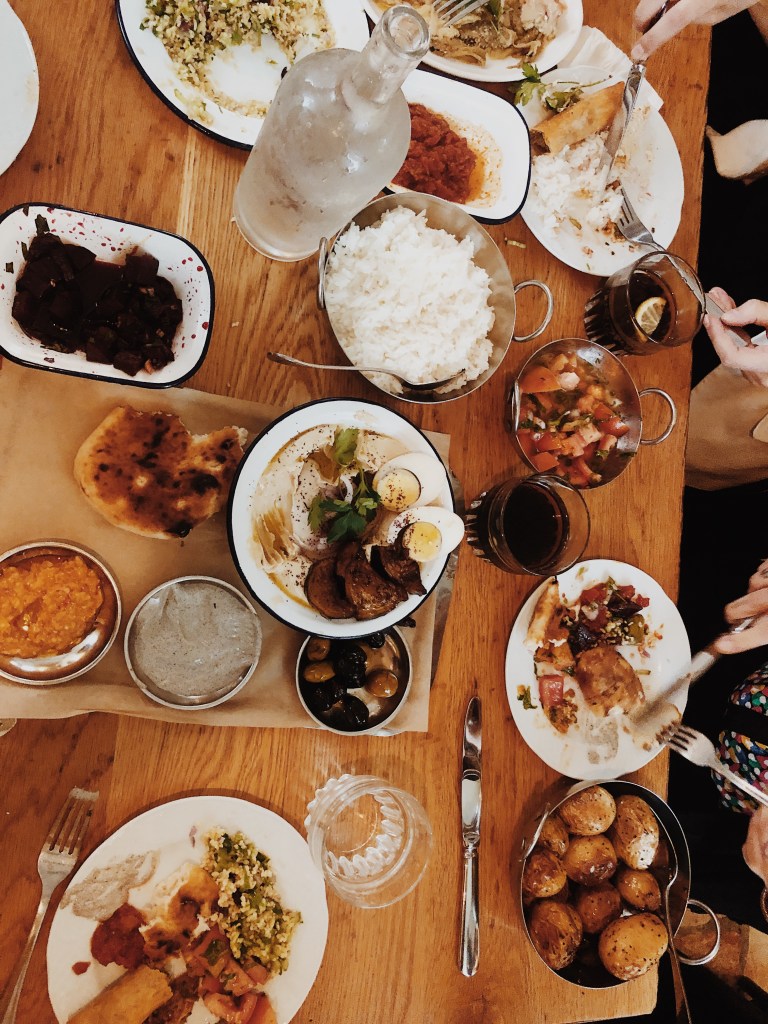
Lunch – More dishes were still coming 
The spice market 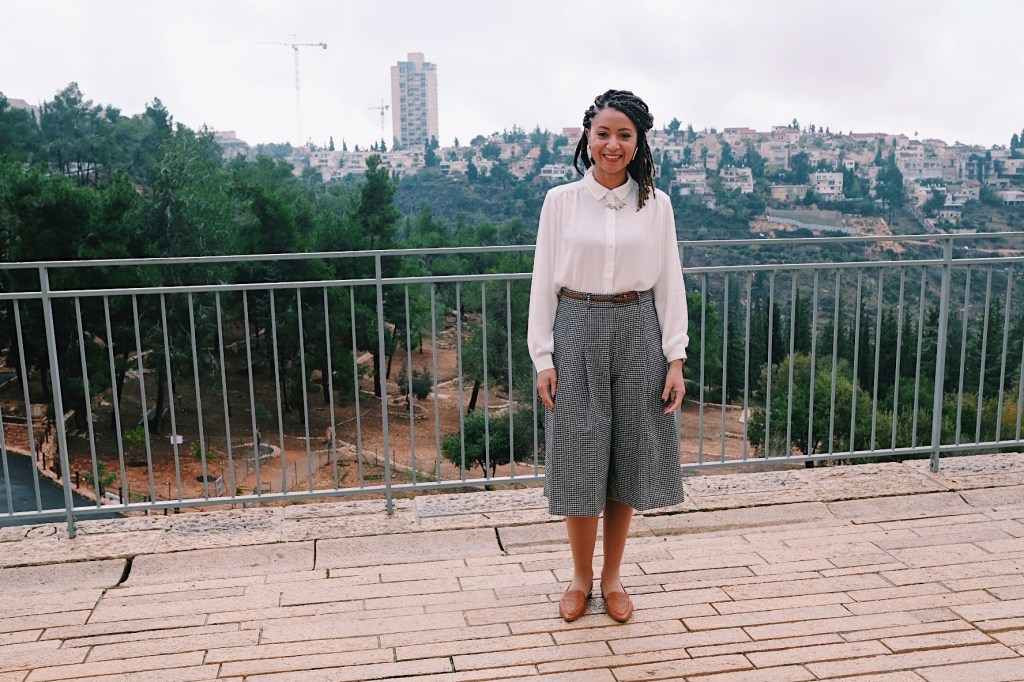
Outside of the Yad-Vashem 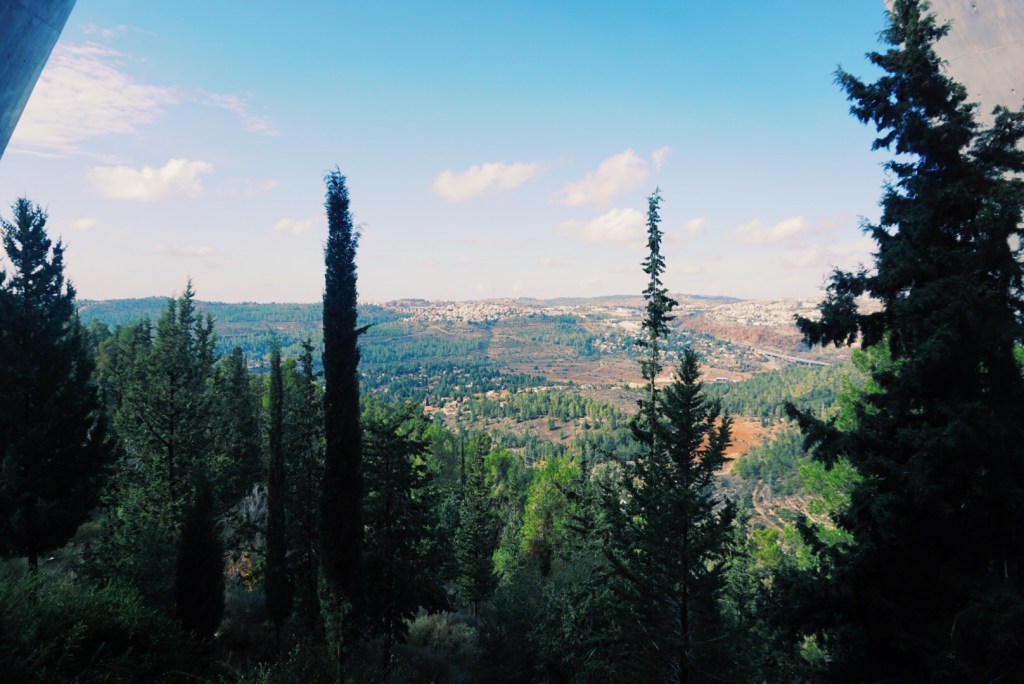
Outside of the Yad-Vashem
One of the most impactful experiences was our visit to the Gaza Border – specifically to a city called Sderot. Sderot is a western Negev city, less than a mile from the Gaza Strip with a population of almost 27,000. It’s a quaint town where, because of its proximity to Gaza, is one of the most bombed areas in the country. As we pulled up to our first stop, our guides said “Okay guys, we should be fine and not hear any alarms today, but if we do, you have 15 seconds to get to the nearest bomb shelter.” All of us immediately became panicked, to which we were met with a reassuring “No need to panic, you’ll never be anywhere in this city where you’re more than 15 seconds away from a bomb shelter.” They then proceeded to point out which buildings were bomb shelters, revealing that sobering fact that most every building in this city had been converted to bomb shelters to protect the residents. While we stood on the sidewalk and learned more about the history, we all couldn’t help but feel extreme conflict and honestly fear – that at any moment a bomb or rocket could strike – and the fact that this experience is an everyday reality for those residents. We drove past schools where we were told to count the number of bomb shelters to basketball courts… 8 to 3. We were told how even balloons in this country are seen as a threat, as sometimes bombs are sent in balloons – a tactic to target young kids. When asked how the residents cope with this reality, we’re told most everyone in the city has PTSD – again a sobering and stark contrast to each of our lived experiences. From a hill in Sderot, we looked upon the Gaza Strip and heard about the dynamics between the Hamas administration (who governs the strip) and the Israelis – learning that most of the rockets and bombs fired towards Israel are crafted from materials that they supply to Gaza for development within the city. After Sderot, we visited the Gaza Border and met with the Coordinator of Government Activities in the Territories – a unit in the Israeli Ministry of Defense that engages in coordinating civilian issues between the Government of Israel, the Israel Defense Forces, international organizations, diplomats, and the Palestinian Authority. Here we heard about all the imported and exported goods (including weapons that are intercepted) that come in and out of countries like Egypt, Jordan, Judea and Samaria. This location was also a heavily targeted area for bombings and rocket activity, so we kept our visit brief. While touring the grounds, it was completely normal to see soldiers with machine guns every few steps. During our briefing, someone from our delegation asked the Deputy Coordinator what he thinks would solve all of the violence and unrest in the area. His response: “Get rid of religion” which prompted a moment of reflection for all of us. While we’re certain it would take much more than just the removal of religion to fix the deep-rooted conflict in the country, it is interesting to think that the one thing that was constructed to unite the masses, is the same thing that divides and creates so much tension between so many. He also mentioned that even though there was a lot of violence that took place in the country, that it wasn’t much different than Chicago, “just a little louder” – to which I was shocked, offended and quickly realized, I was the only Chicago representative who could absolutely dispute that fact.

A playground in Sderot. The snake is a bomb shelter. 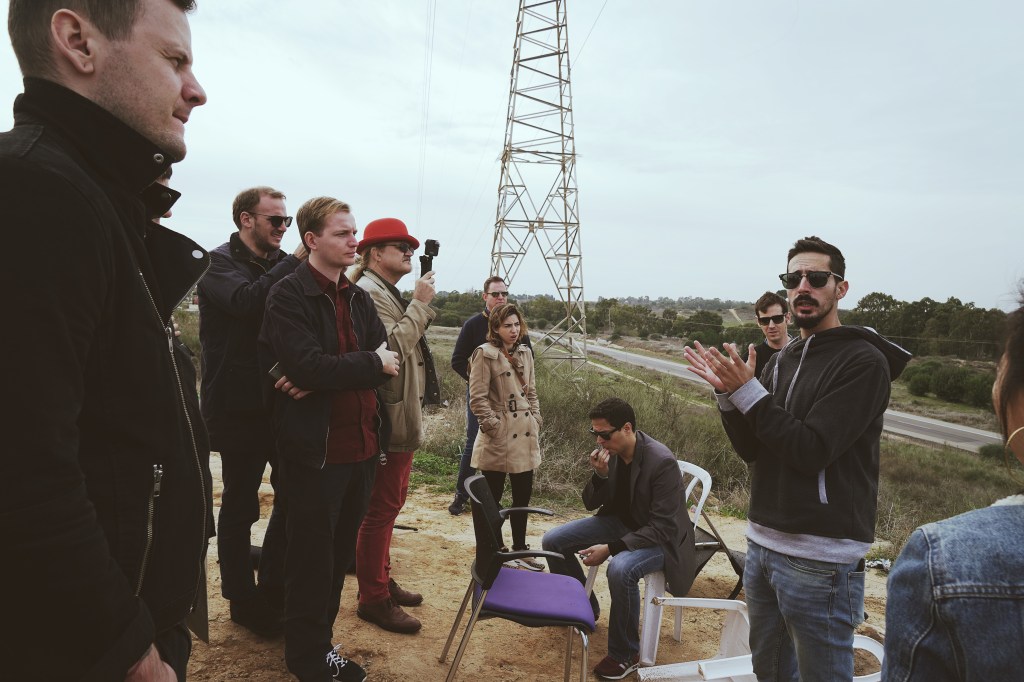
Facing and learning about the Gaza Strip 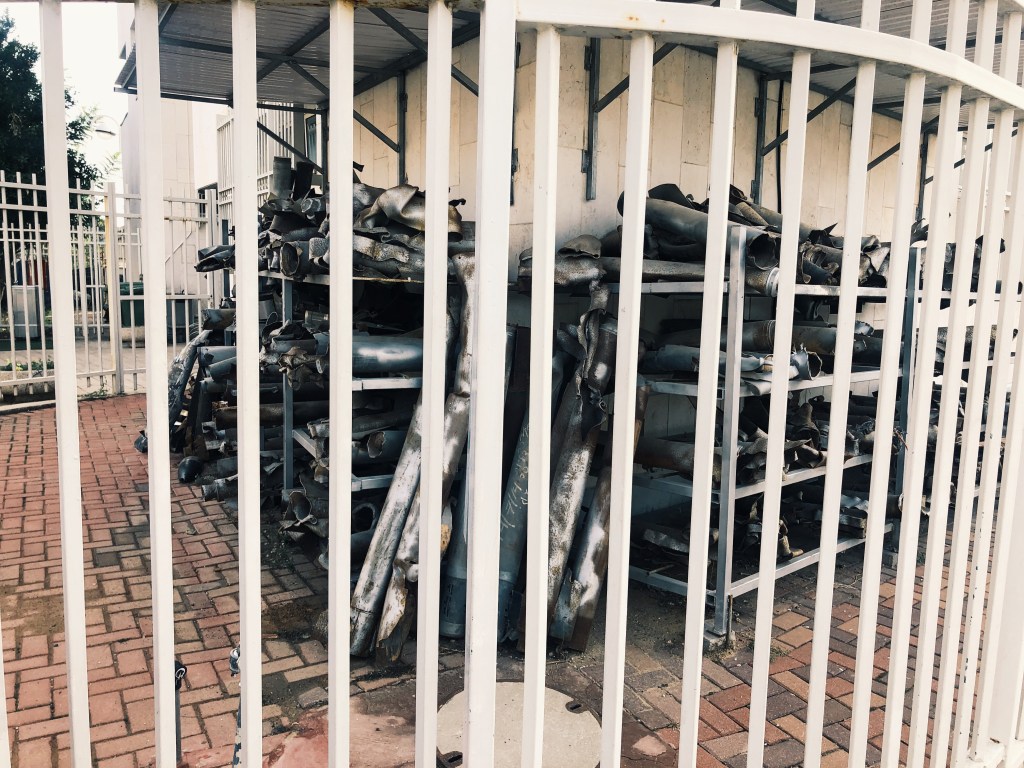
Rockets recovered after being fired into Sderot. 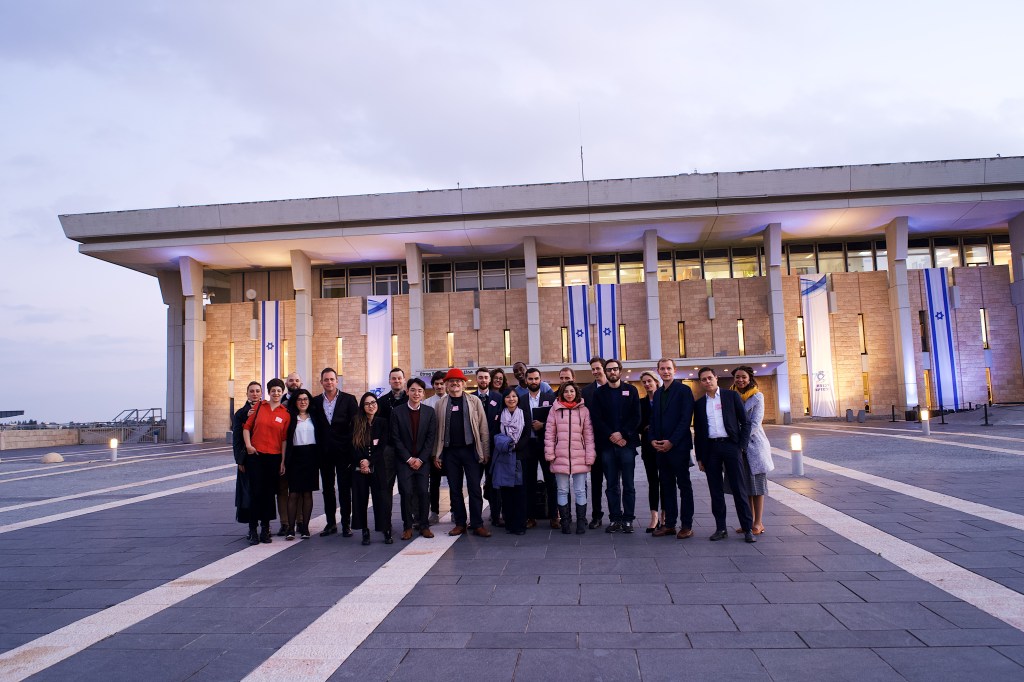
We followed this very sobering experience up with one that was a bit lighter – by touring the headquarters of Soda Stream. The magic of Soda Stream was the way they’ve created a safe space for their employees. They have dubbed the headquarters “The Island of Peace” where both Muslim and Jewish employees work side by side – they even have designated prayer rooms for people to practice their faith while at work. We then visited the southern city of Rahat where we were educated about the Bedouin community (whose history we thought most resembled the Black experience in the States), the challenges and triumphs they’ve had as well as learned about Social Finance Israel (SFI), a social impact bond that has raised $12.7 million so far, to improve math performance for high school students in the country’s Bedouin community. Up until this point, most of our time had been spent in Jerusalem. That night we were scheduled to arrive to Tel-Aviv, the country’s capital and almost a complete 180 from the experience we’d had in Jerusalem. While Jerusalem was very much traditional, older architecture and much quieter, Tel Aviv was alive and buzzing – skyscrapers, shops, malls, restaurants galore. We spent a lot of time in Tel Aviv visiting local business, hearing from journalists, and learning about the experiences of the LGBTQ+ community and the healthcare system – coverage and support available for residents. We also visited a unique military program called “Special in Uniforms” which allows people with special needs, to complete their military service by packing resources and supplies for the soldiers in active duty, as every citizen over 18 is expected to serve in the military. It was an amazing display of civic pride and again, was reassuring to see they ways in which the country tries to create opportunities for everyone to have a place. Afterwards, we headed to our hotel, which was incredibly beautiful and generous – they offered us complimentary champagne any time of the day and we made sure to take full advantage. We even went to our hotel’s rooftop club that night – a very similar experience to that we have in the States, hip hop and electronic music included, except they can still smoke cigarettes inside of clubs – major turnoff for me!

Soda Stream headquarters 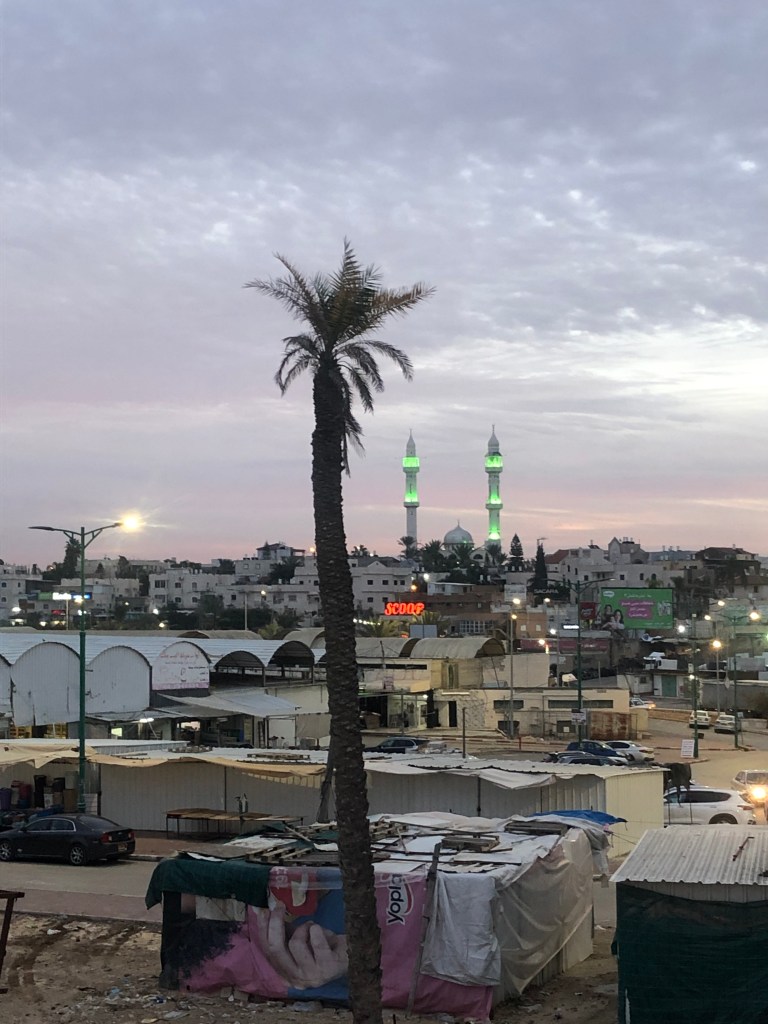
Rahat 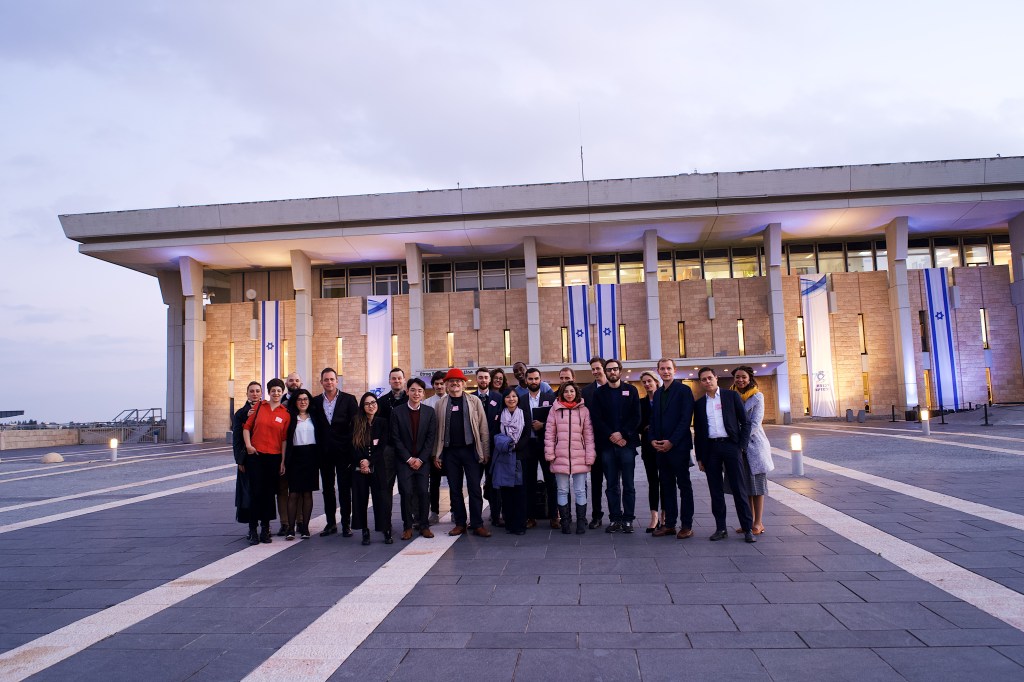
Outside of the Knesset 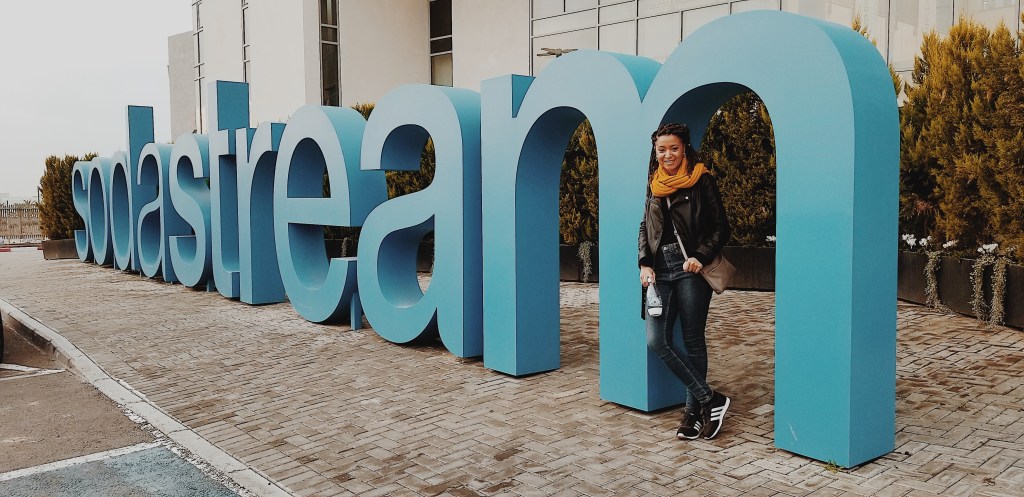
Soda Stream 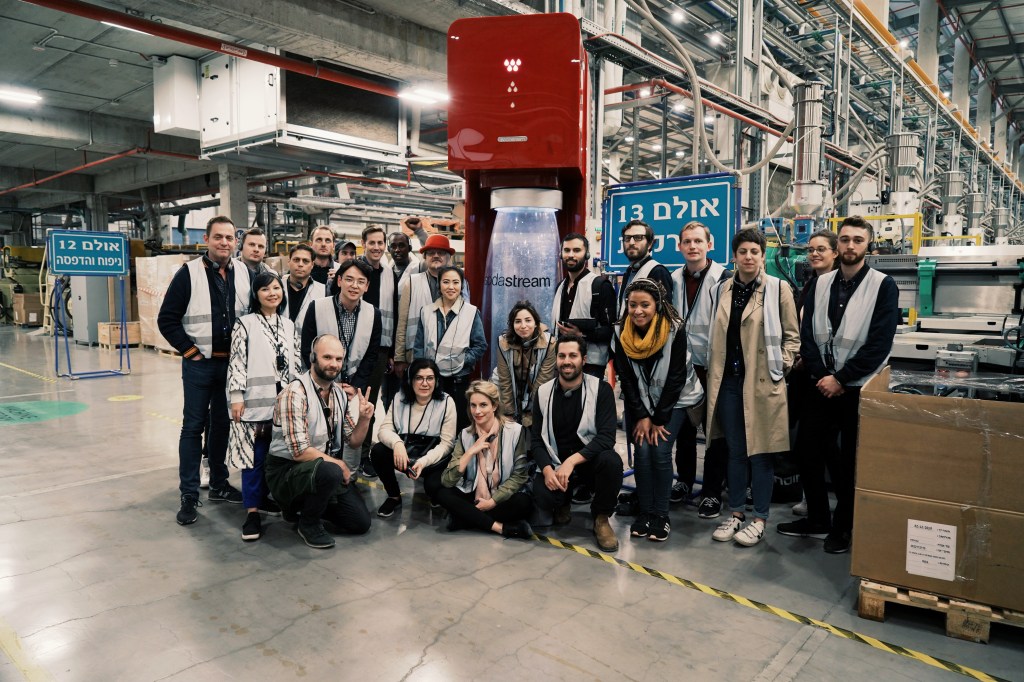
Inside of Soda Stream
Our last full day in Tel Aviv, we visited a school (Bialik Rogozin) that provides free education to the children of undocumented migrants. The story, curriculum and energy within the school was so inspiring. Kids come from all over the world and the school is intentional about incorporating each of the students’ heritage and culture into their experience within the school. My personal favorite part of the trip was our visit to The Peres Center for Peace and Innovation. Not only was this my first time seeing the beach in Israel (absolutely breaktaking), the Center itself was one of the most amazing buildings I’ve seen in my life. Founded in 1996 by the late President of Israel, Shimon Peres – who was an exceptional leader and hero to many in the country and around the world, the Center celebrates the various ways Israel has had an impact on innovation and technology across the world. We were met with wall to wall screens of videos welcoming us into the space, moved into rooms where we heard from local innovator’s business solutions and their personal stories as they spoke to us on video pods we were able to control and navigate. This is where I learned the founder of Waze is from Israel! We were taken to a room with the history of Israeli inventions highlighted all around us including the USB, Xbox’s Kinect technology, the device in your car that alerts you when veering out of the lane, drip irrigation – all started in Israel. We got a chance to do a VR simulation where we solved the world’s biggest challenges 50 years from now and got a heads up on some of the newer technology currently being developed (a chip designed for legally blind people to see in low-resolution pixels, charging plates and roads for electric cars, and more). It was truly inspiring to see that despite the many challenges the country faces, they have also truly positioned themselves as leaders in tech and innovation. That visit was followed by a 2 hour walking tour of Jaffa, the southern and oldest part of Tel Aviv which also serves as an ancient port city. Jaffa was one of the most beautiful parts of the city, consisting of trendy shops and restaurants, local markets, a bustling beach and incredible architecture (and really great food!). I can’t lie, I took in no information from this tour because I was pouting about not being able to shop in any of the amazing markets we passed. I turned the two hour tour into an opportunity to snap some of the most amazing pictures I took during the trip.
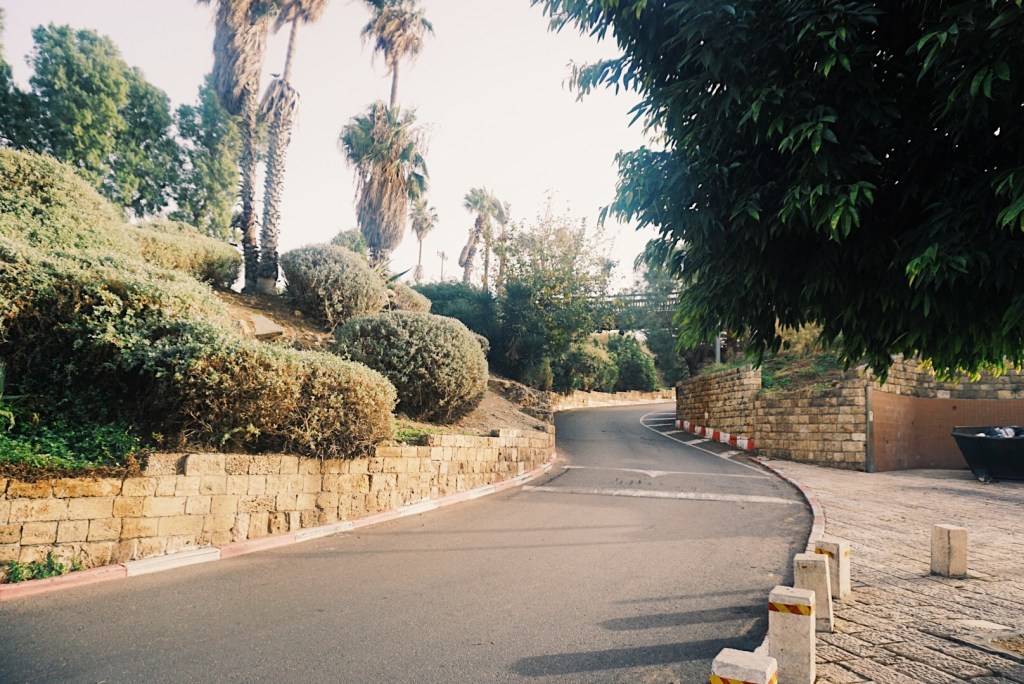
Inside of Jaffa 
The Delegation at Peres Center for Peace & Innovation 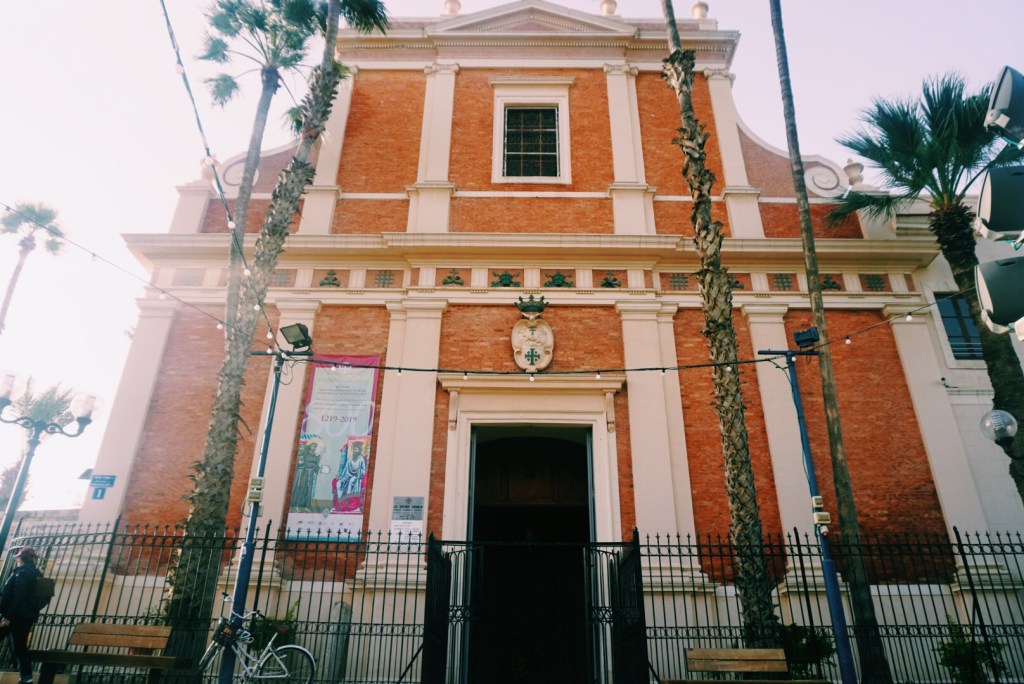
Jaffa 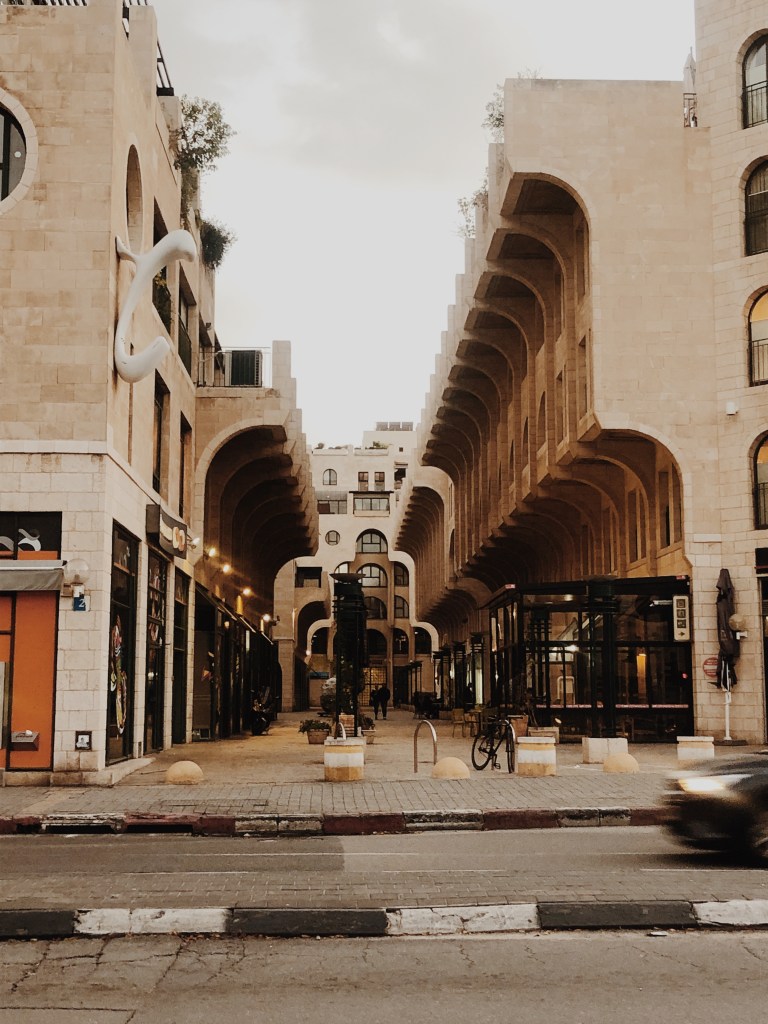
Jaffa 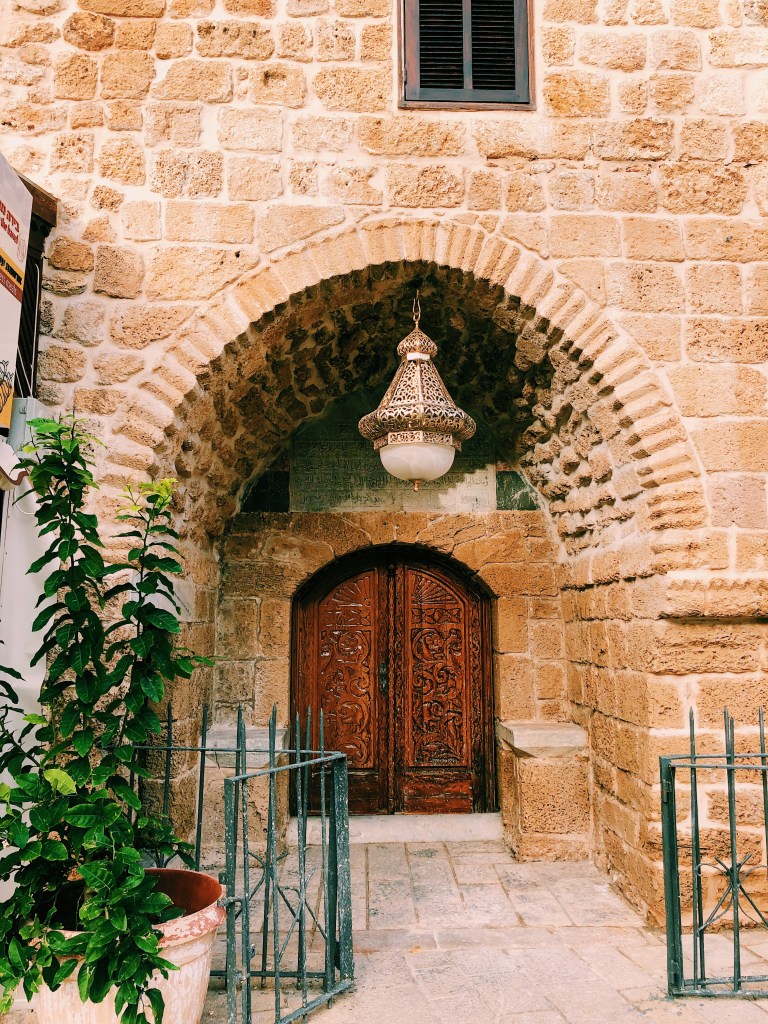
Jaffa 
Jaffa streets 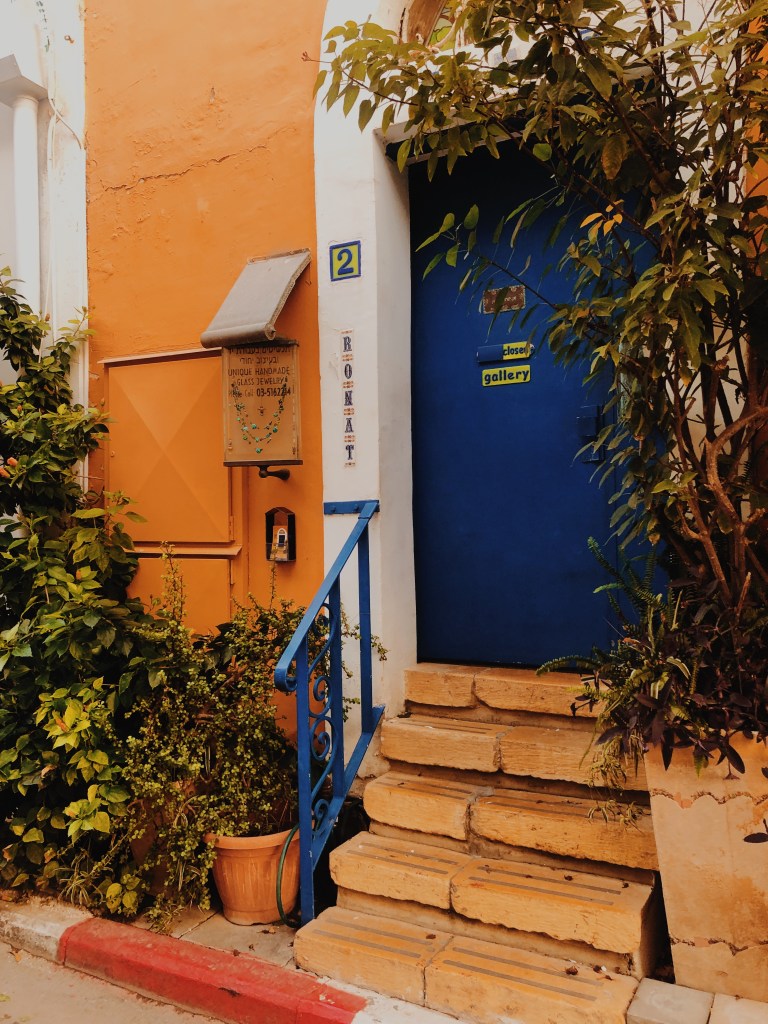
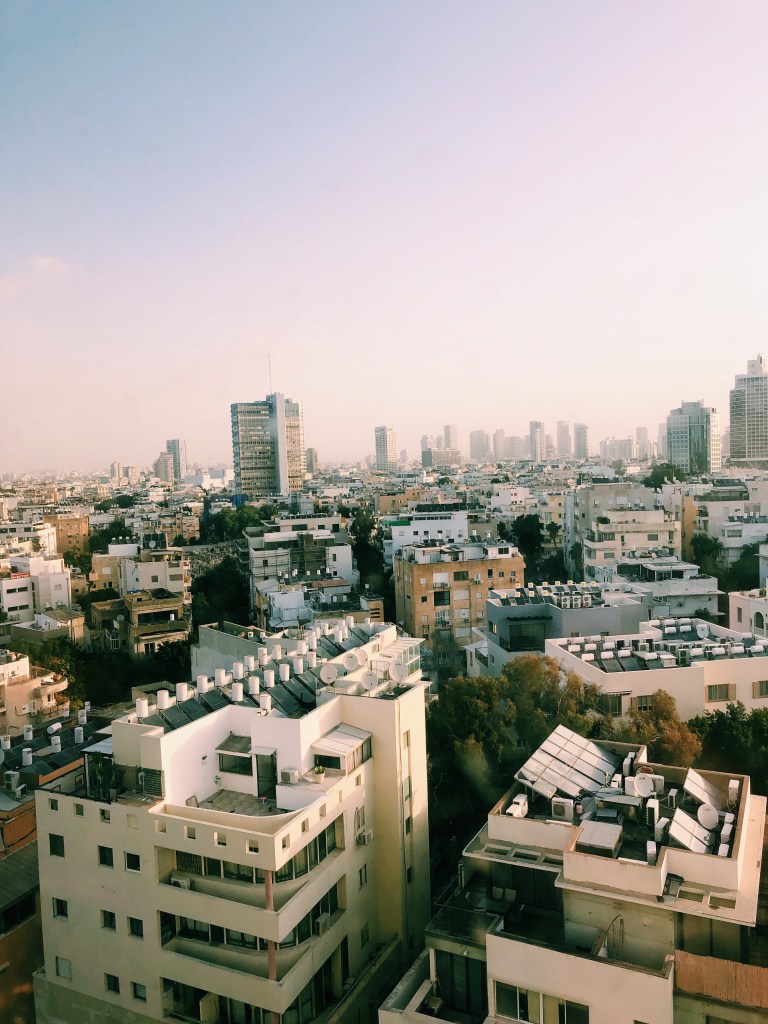
Tel Aviv 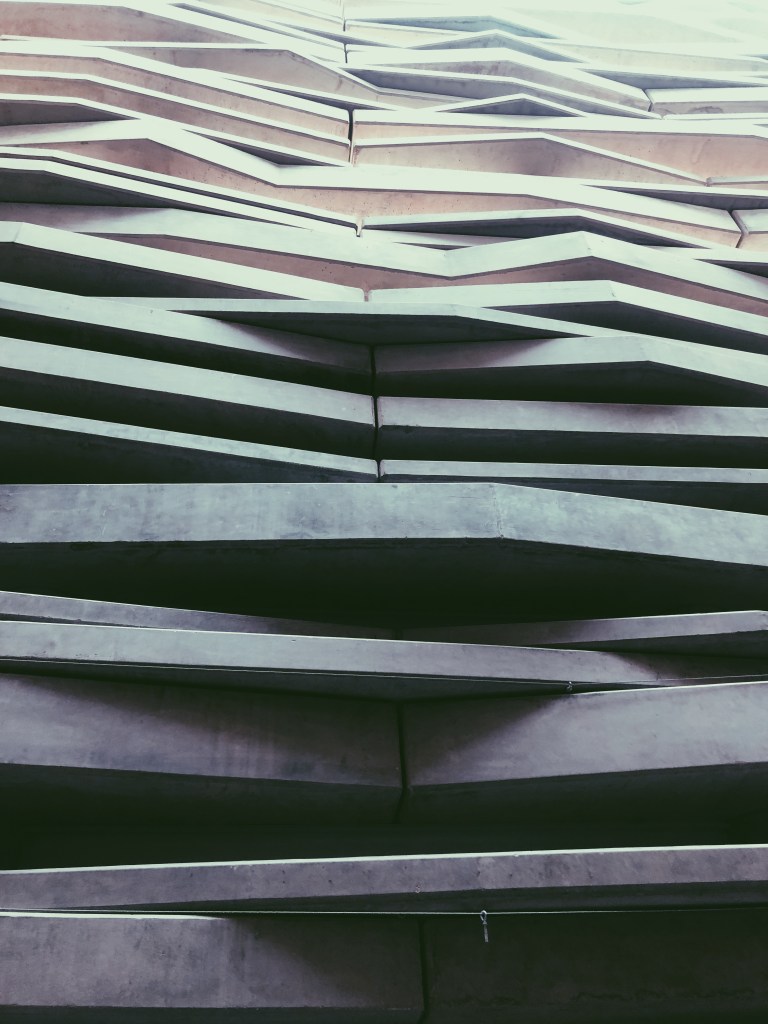
Architecture at Peres Center for Peace & Innovation 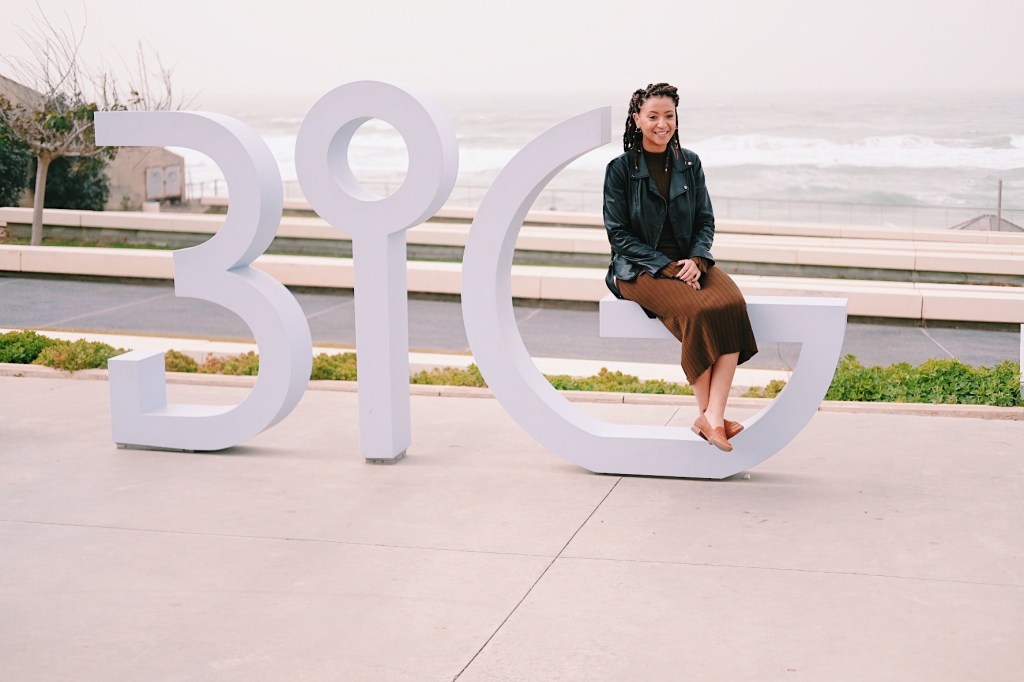
Dream Big 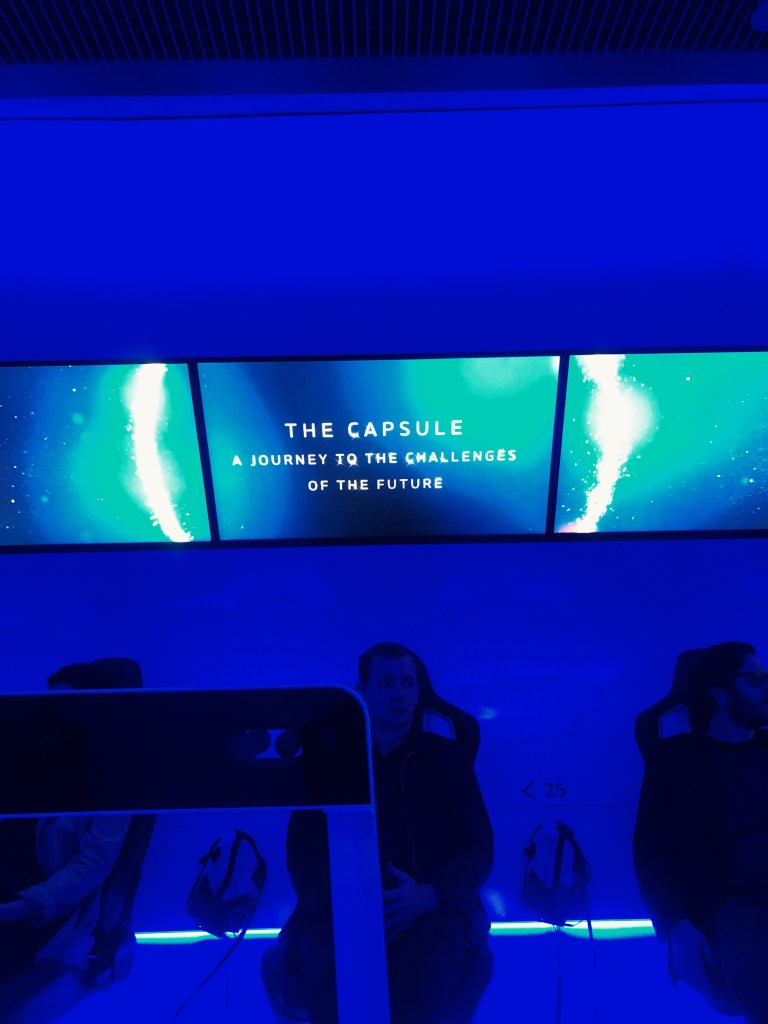
VR Experience: Peres Center for Peace & Innovation 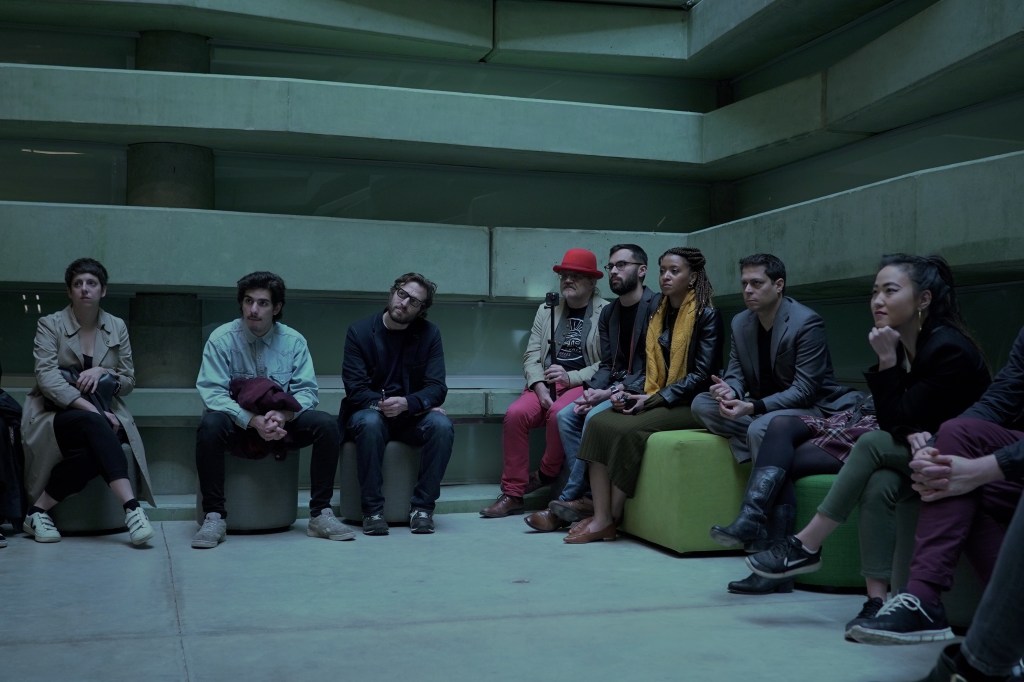
Peres Center for Peace & Innovation 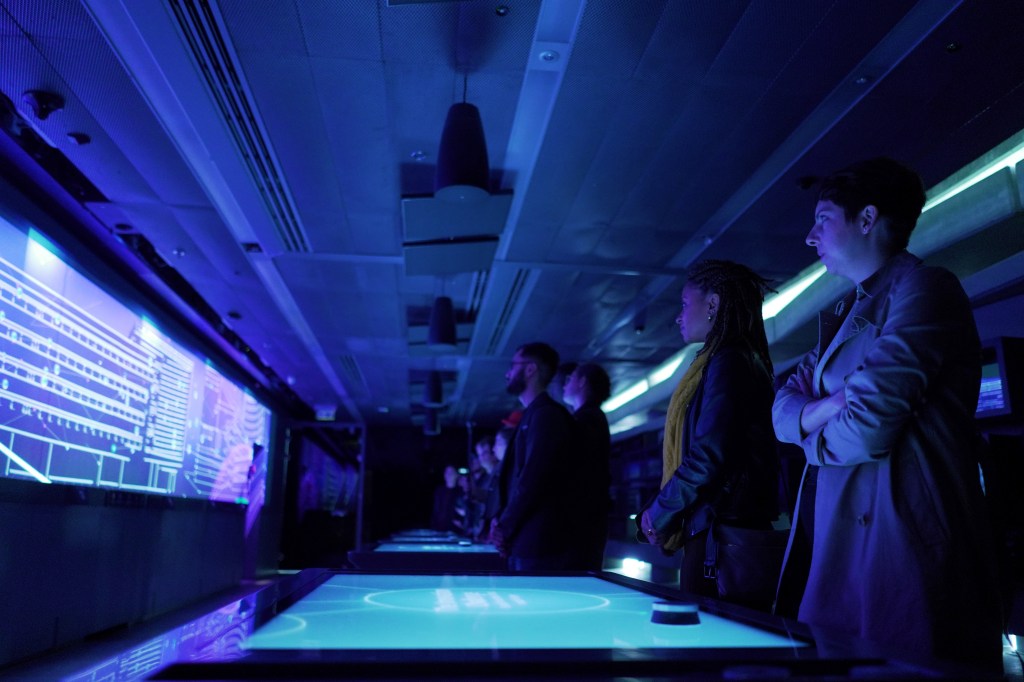
Peres Center for Peace & Innovation 
Jaffa streets 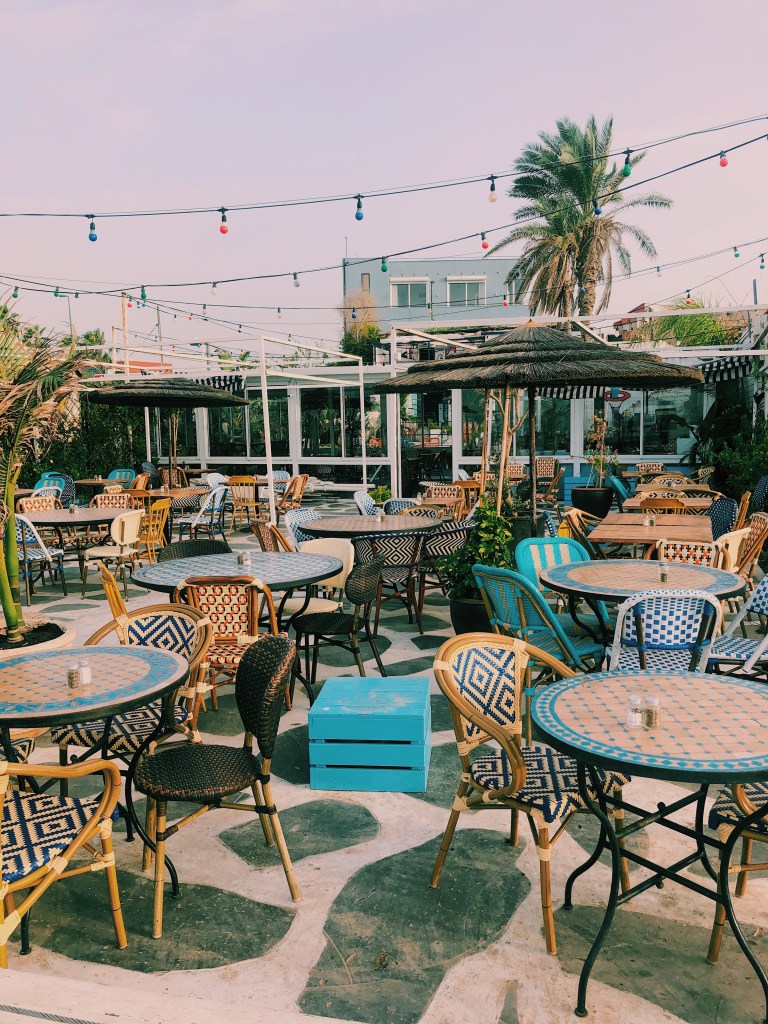
Jaffa cafe 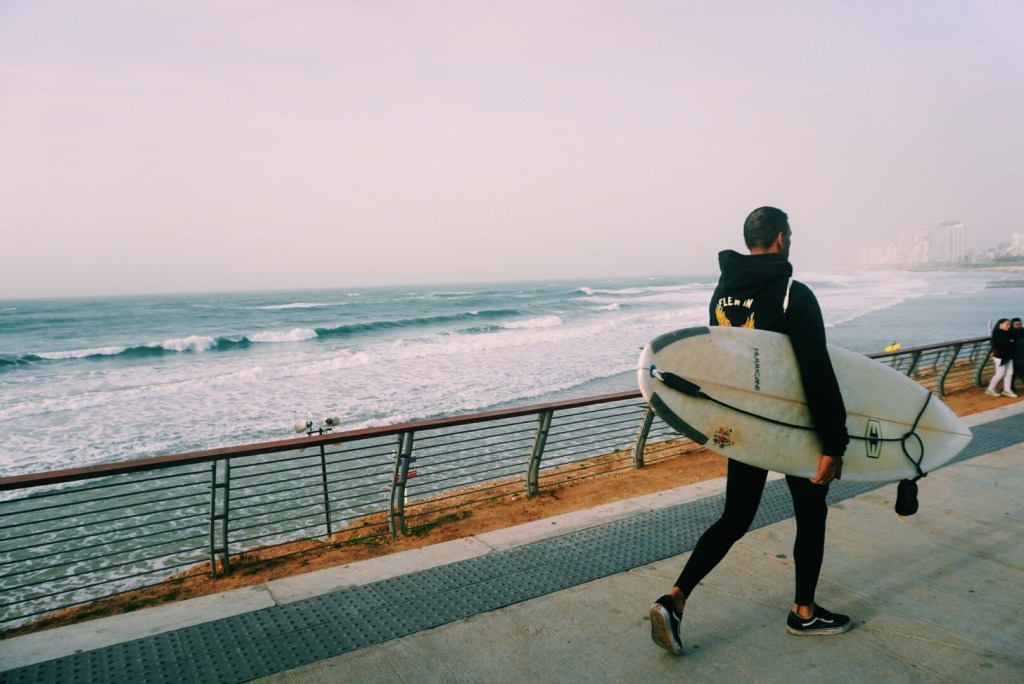
Surfing at Jaffa 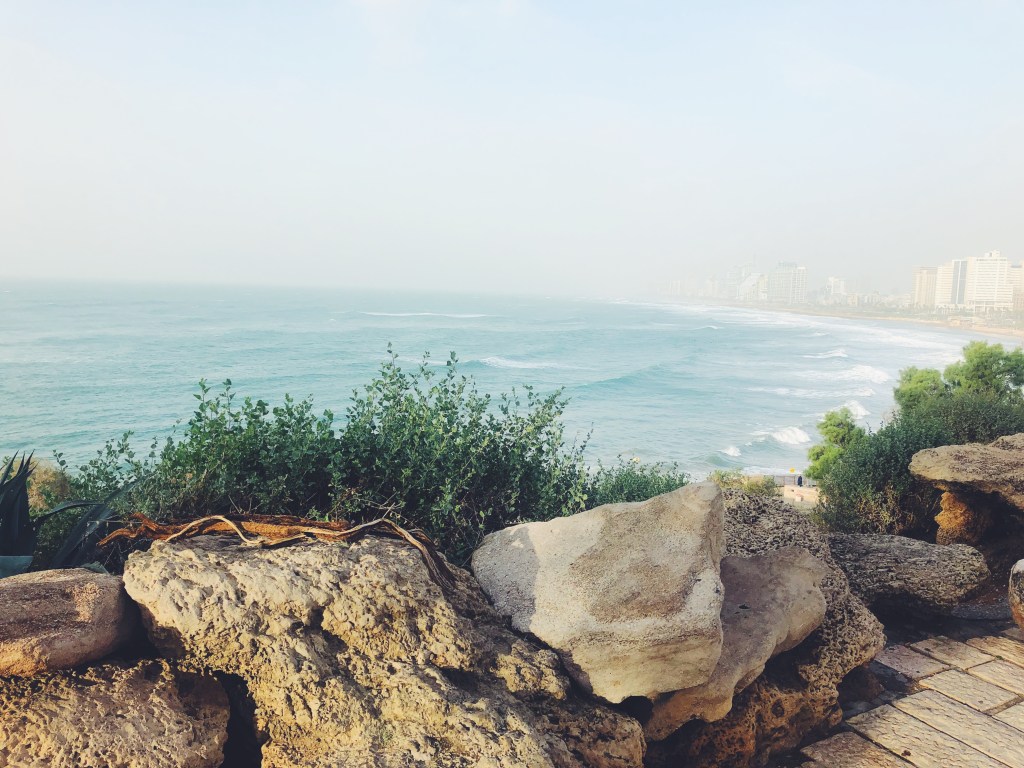
Jaffa
We ended the night with a traditional Shabbat dinner. For those of you unfamiliar, Israel operates on a different schedule than we do here in the States. Their work week is Sunday – Thursday, weekend being Friday and Saturday and Saturday being a day of complete rest – so much so that errands are run and food for Saturday is cooked on Friday to adhere to the rules of the Sabbath. Our dinner was hosted at the home of an incredible woman we got to know over the course of dinner, named Delphi. Delphi became a millionaire by creating a company that was later acquired (fun fact: she came up with the idea for the idea while she was tripping off of acid). She sold that company, started and sold another and decided to become a chef – starting first with a community of mom’s and then hosting monthly dinner parties. She was amazing, as was the food. It was such a unique and authentic experience and really emphasised the feeling of community and family – what Shabbat is all about. We ended the night with a nightlife tour, that was cut short because… we were all old *shrugs*. For many people, that was the last experience they had in Israel, for the 8 of us remaining, we spent our last full day, traveling about two hours out to visit Masada, an ancient fortification in the Southern District of Israel where King Herod the Great built two palaces for himself between 37 and 31 BCE. We did a quick tour and learned the history of the first Jewish-Roman war and the mass suicide a Jewish community. If you’re unfamiliar with the story, I encourage you to read about it – very interesting history. After Masada, we visited the Dead Sea. I was not able to submerge myself in the water, one because it was cold and two because I was not properly prepared. The entire bottom of the sea is hardened salt, meaning you must wear shoes to protect your feet – I had no idea! I walked as far as I could without slicing my feet open, took some cute pictures and headed to the indoor heated salt pool ; ) By the time we got back to Tel Aviv, most everyone headed to the airports to catch their respective flights while a few of us with later flights, enjoyed dinner and baked goods (which were amazing) before making our own departures.
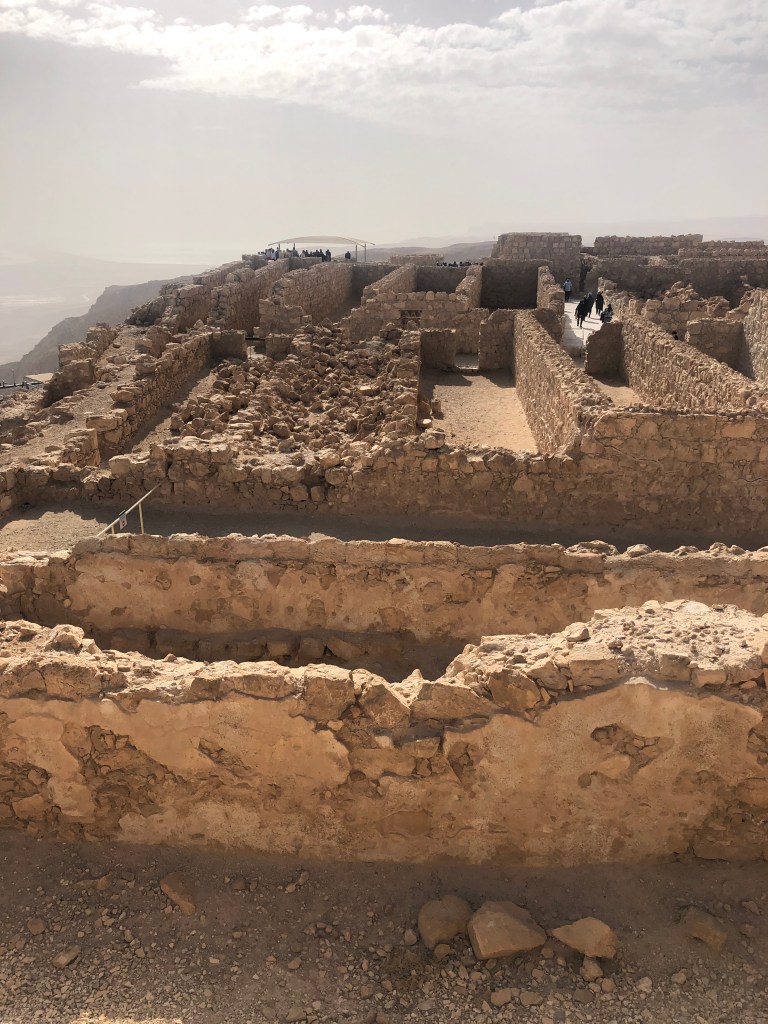
Masada 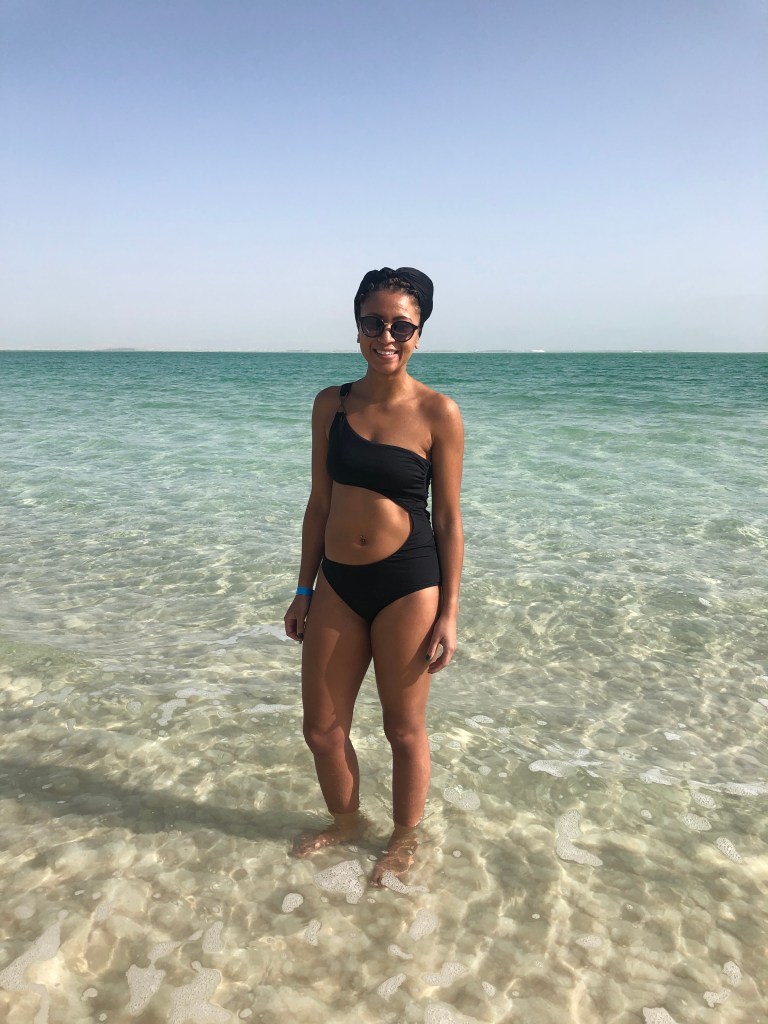
Dead Sea 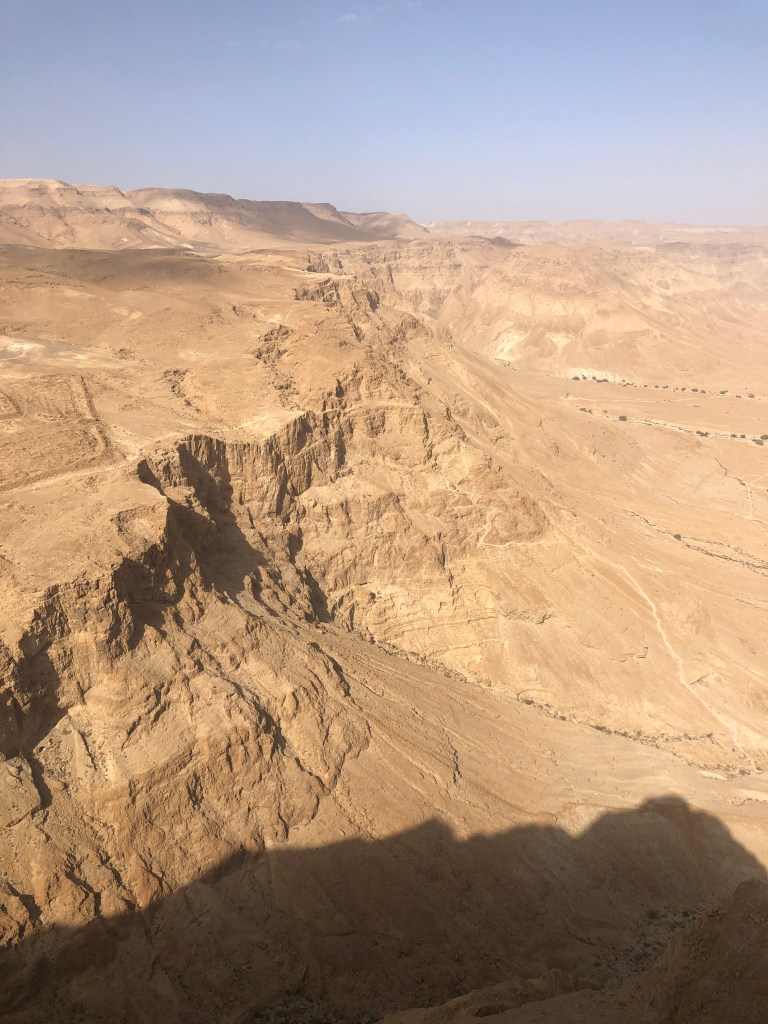
Masada 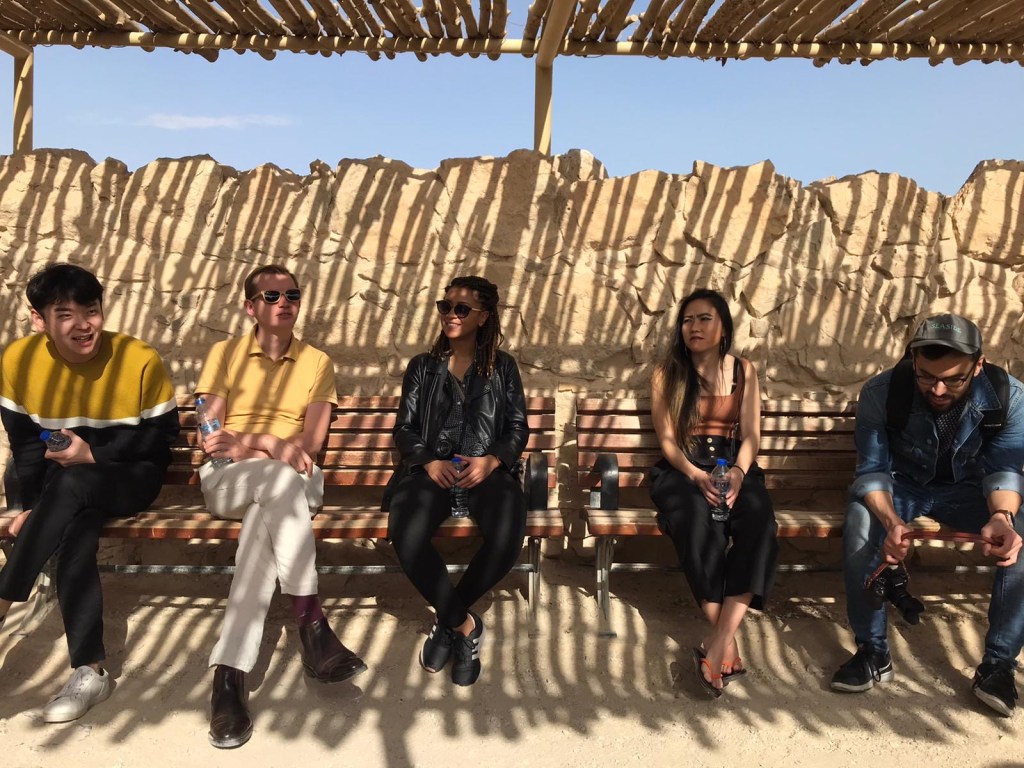
Masada
All in all, Israel was an amazing experience. I’m so grateful to have experienced it in the way and with the people that I did. I left with a much greater perception of the Israel and its people. While they have their own challenges, I would say when it comes to inclusion, social impact, innovation and technology, Israel is leagues ahead of where we are and a country we truly should be learning from. It made me much more interested in international business and also shed a huge light on the media and the way they truly shape our understanding of people, places and things we may never have any personal experience or connection to. It was certainly the most worldly experience I’ve ever had – meeting people from Germany, Poland, Rome, France, etc and going through this experience together, all while learning about each other’s culture and trying to understand how to take everything that we’re experiencing and use it to shape and inform our work. It was intense, it was beautiful, it was sacred, it was life changing.
I’m happy that I got to see the magic of Israel for myself and encourage anyone who’s considered it or been interested, to research your local consulate and other groups that offer opportunities like the one I had because it’s truly worth going. The Ministry, AIPAC – The American Israel Public Affairs Committee and the Jewish United Fund offer trips pretty regularly. Do your due diligence, but if given the opportunity, I would highly recommend visiting Israel in your lifetime. I know, without a doubt, I’ll be back!
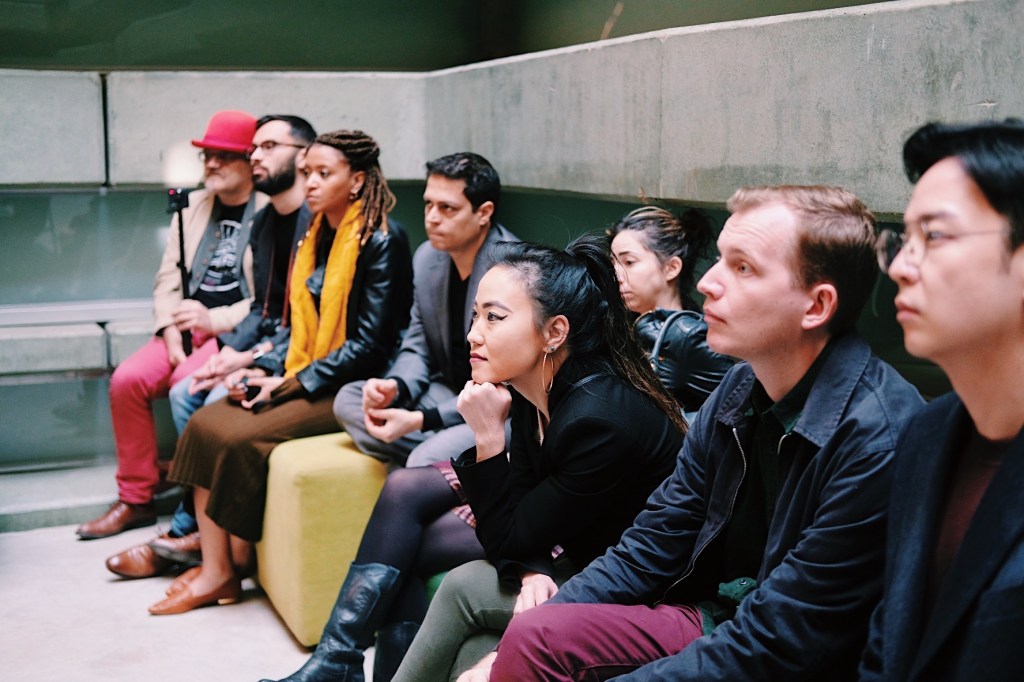
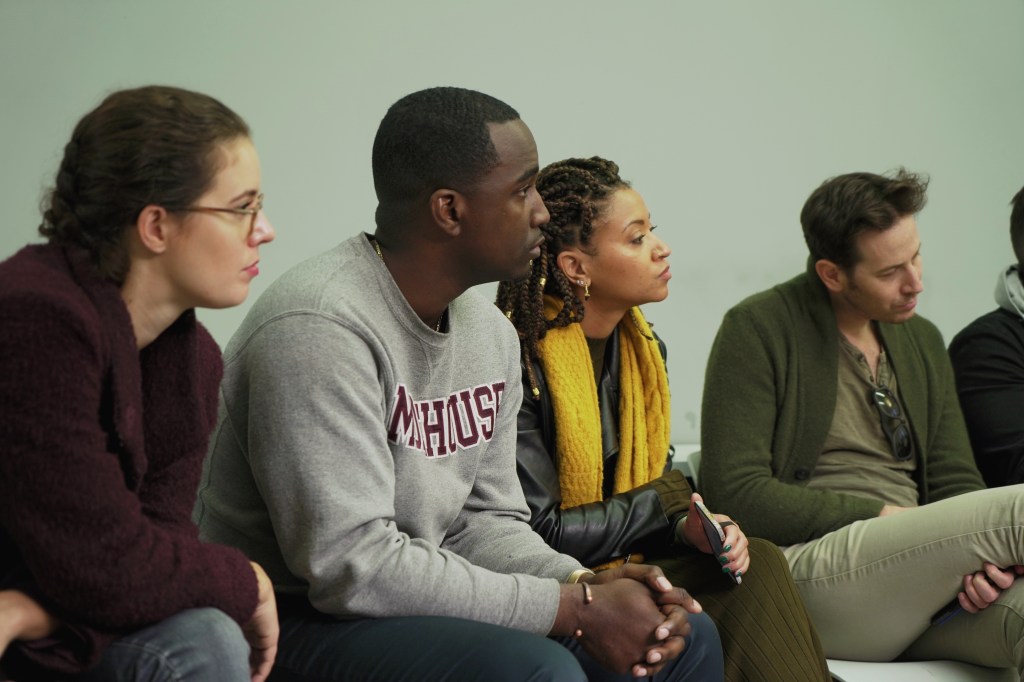
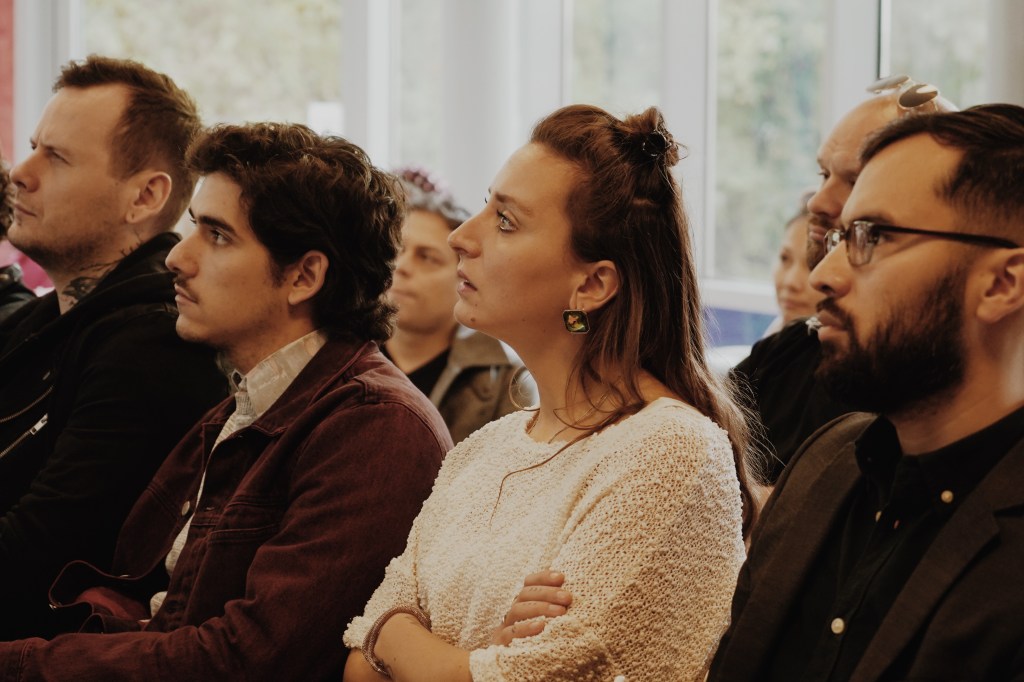
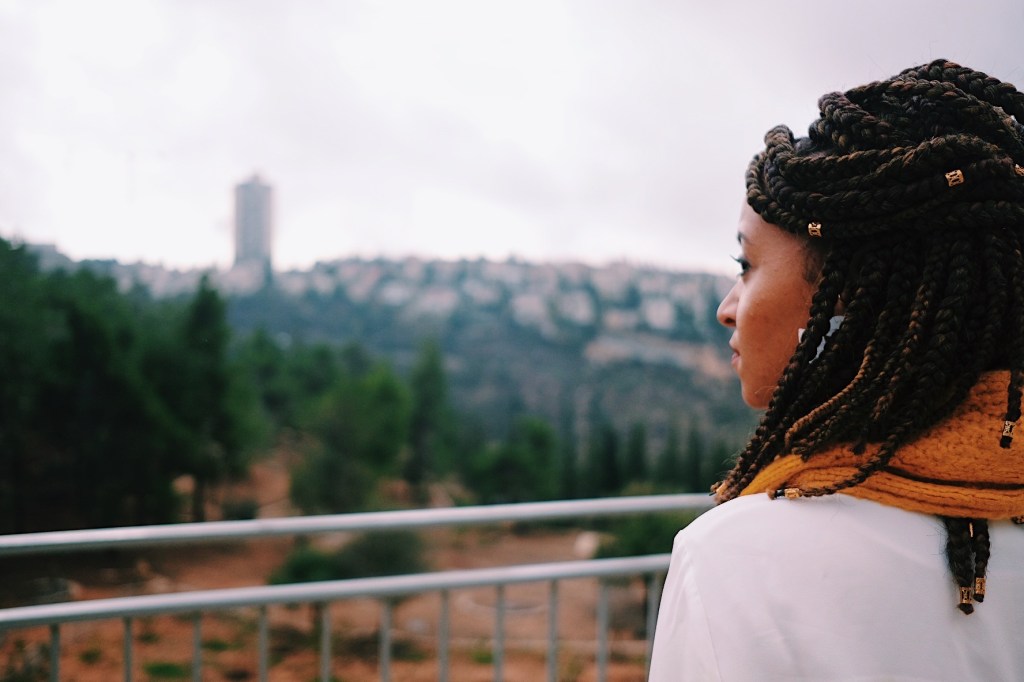
Part one of the trip was complete. Now it was time to have my first solo international travel experience. First stop: Lisbon, Portugal. I went from being with a group of people, having every day packed full of events, not having to think about planning anything – to not having a set schedule, navigating streets I’d never walked before, alone – as a Black woman – in a land foreign to me. The privilege, power, solitude and joy in knowing that was a constant reminder to stay present and enjoy every moment. Each city I visited, I wanted to honor my inner child and my intuition. I allowed my curiosity, energy, my need for rest, my desire to explore, guide my days. I also determined that I would walk most everywhere I went. While I took the bus and train a few times when I had to, I learned very quickly that the best way to truly experience the city was to walk around. And boy, was it a lot of walking (27 miles total walked in Lisbon).
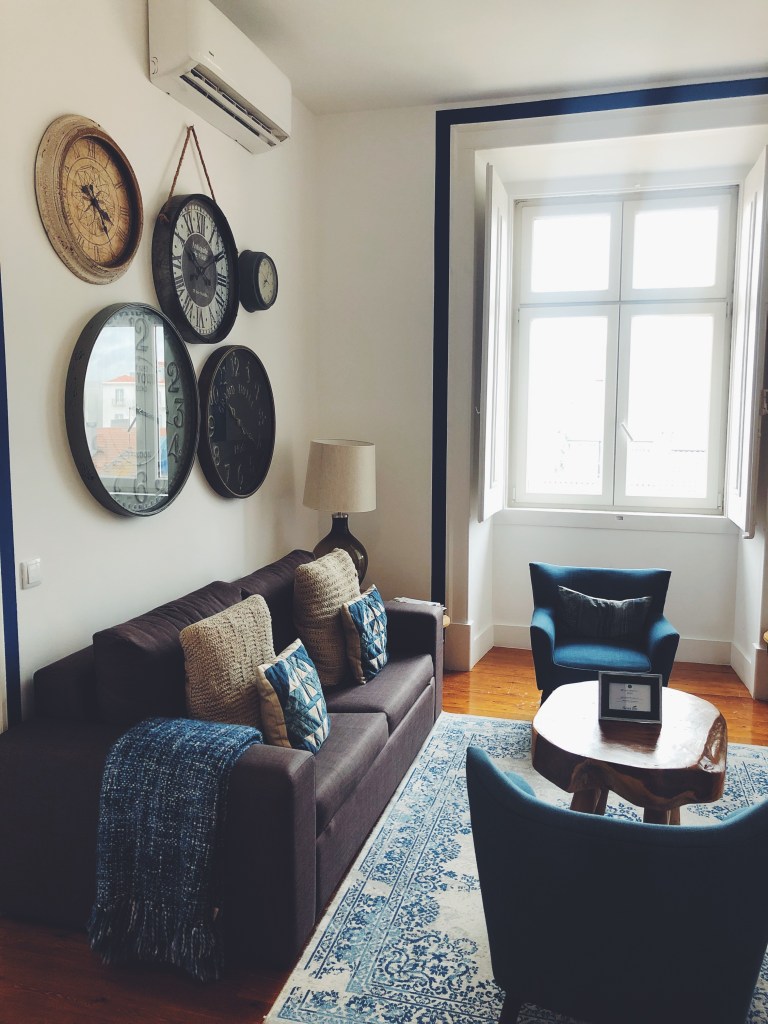
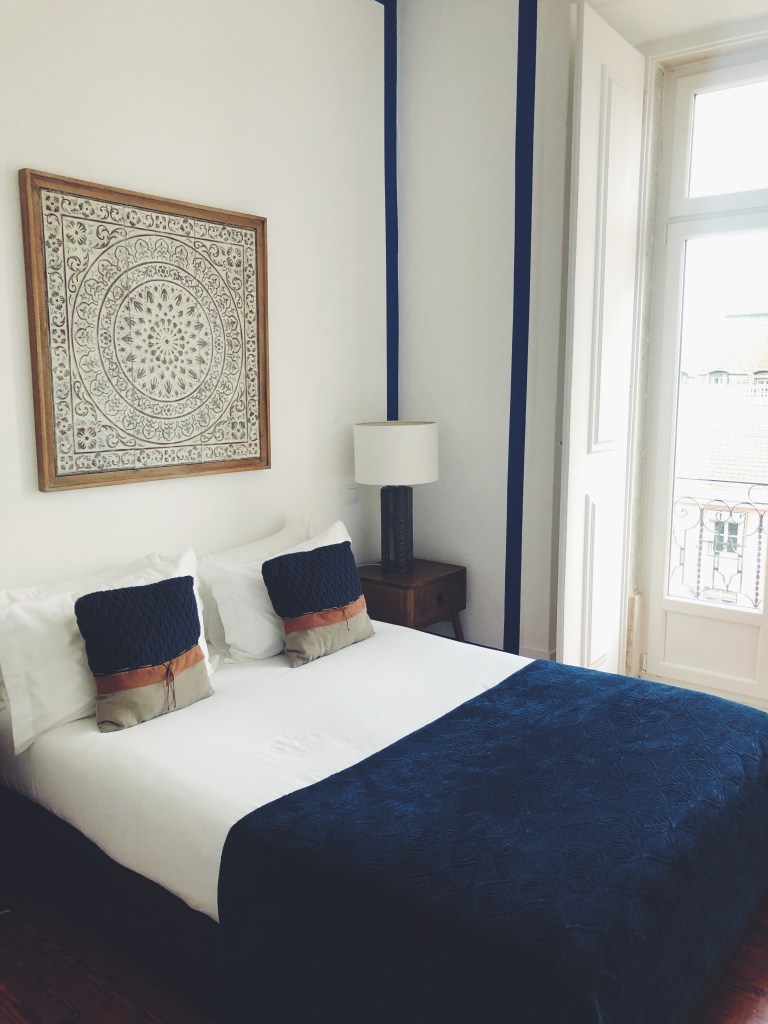
My adorable Airbnb 
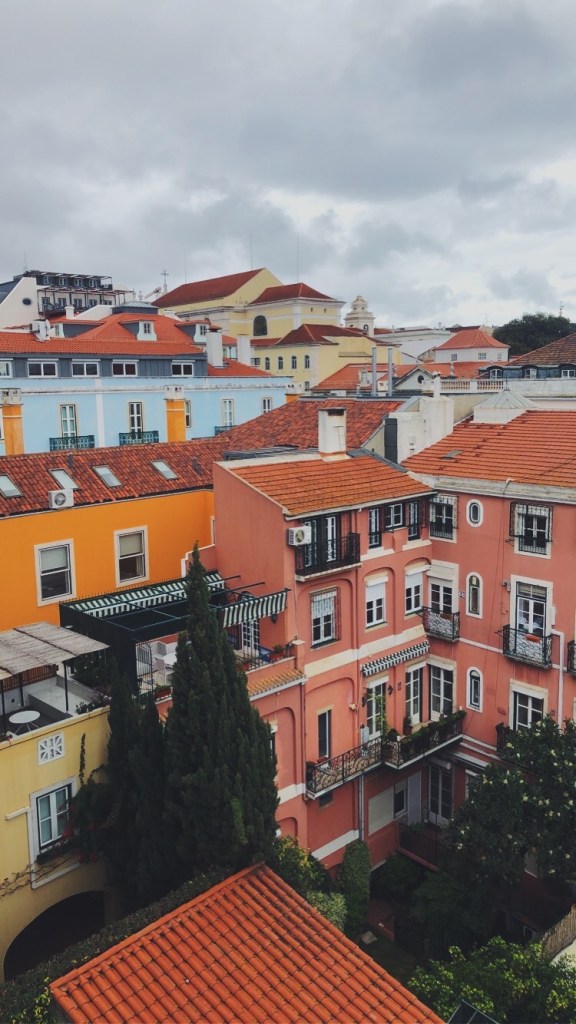
View from my balcony 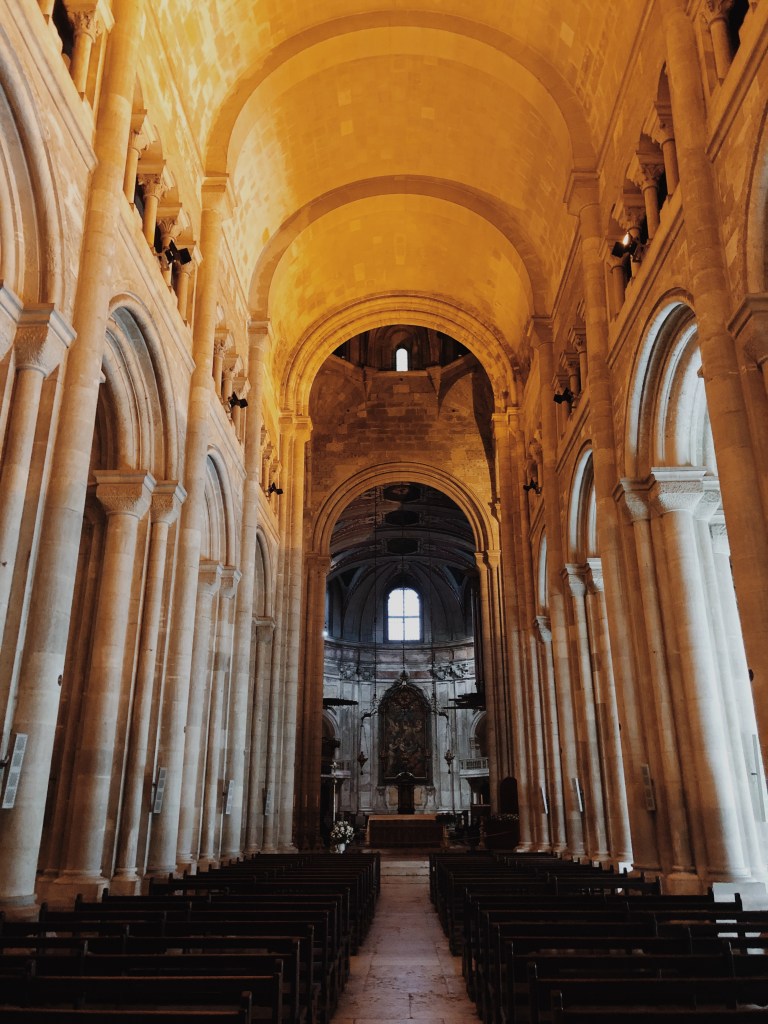
Inside the Lisbon Cathedral 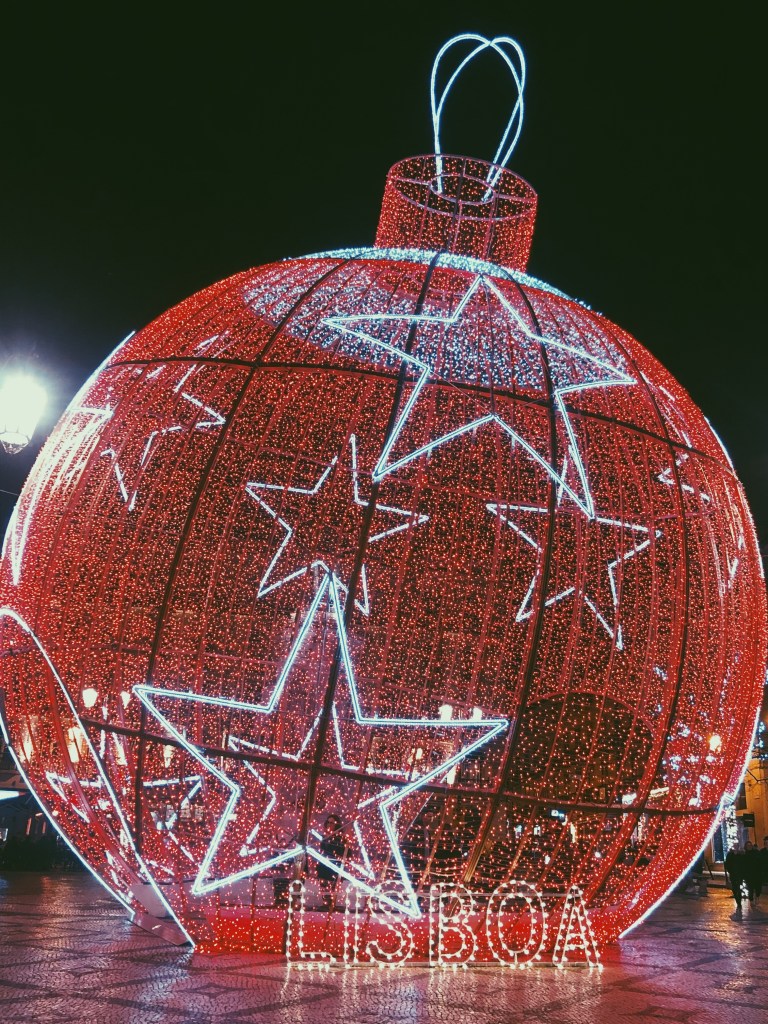
Christmas in Lisboa 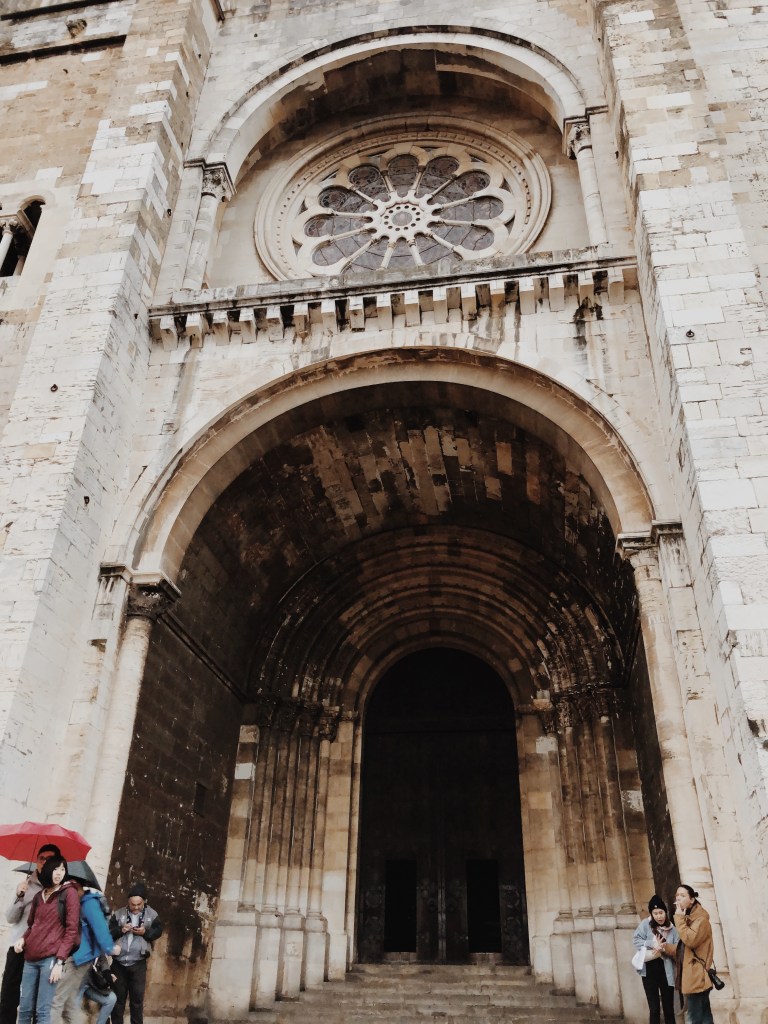
Lisbon Cathedral 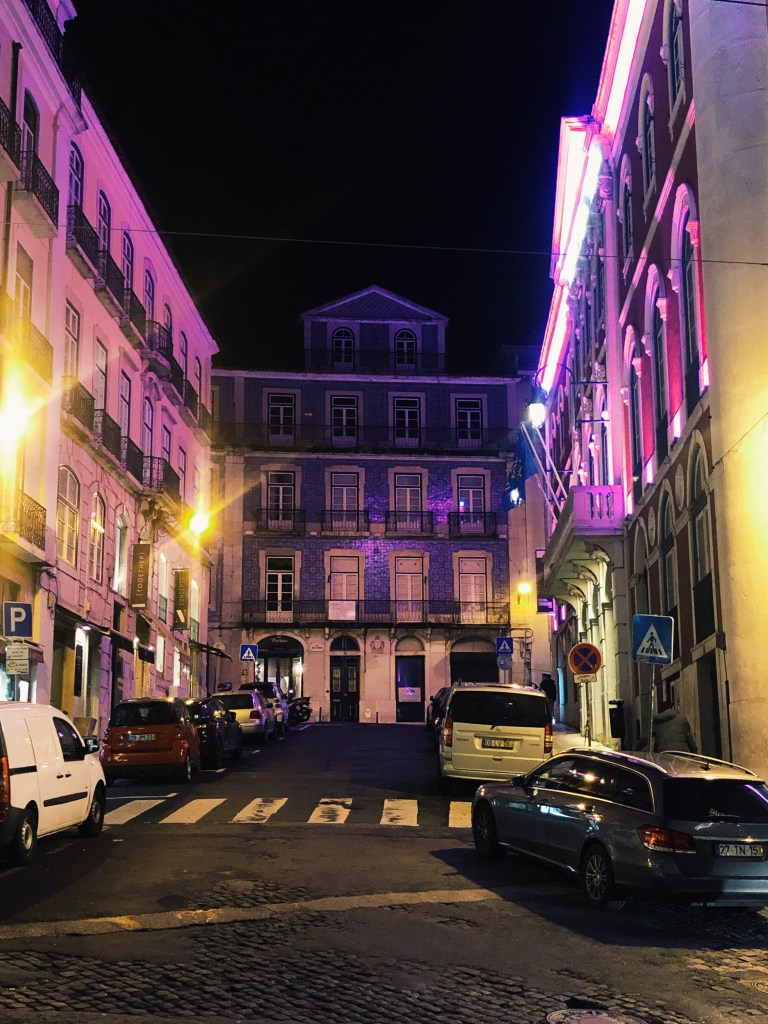
Lisbon at night 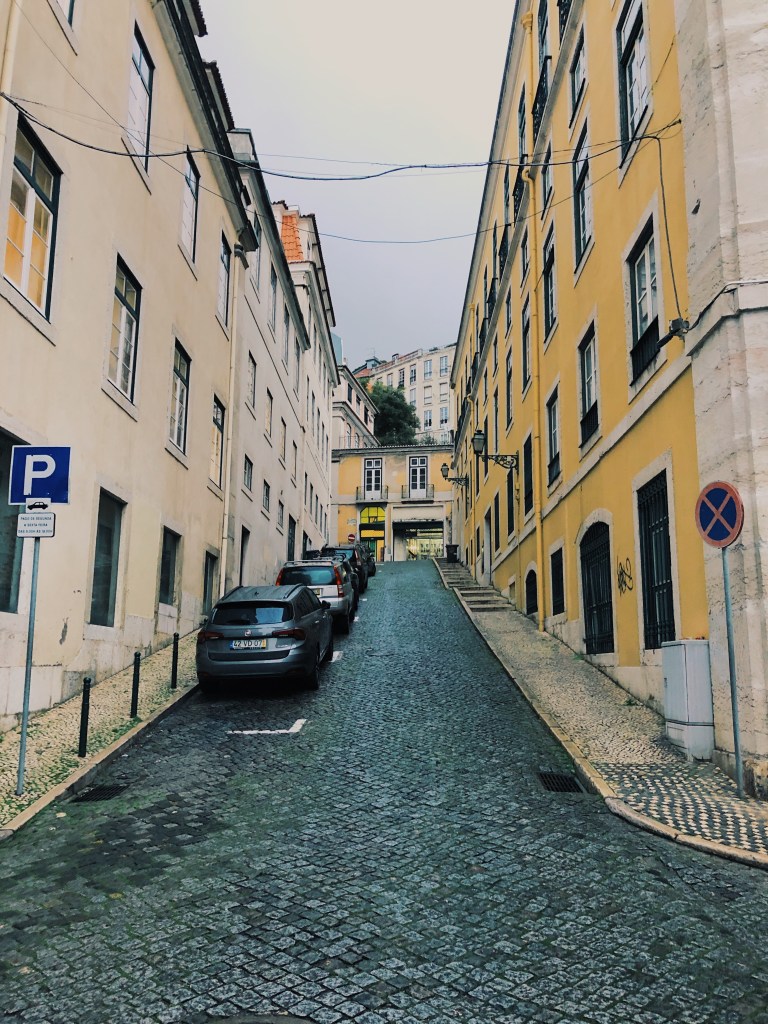
Tiled streets 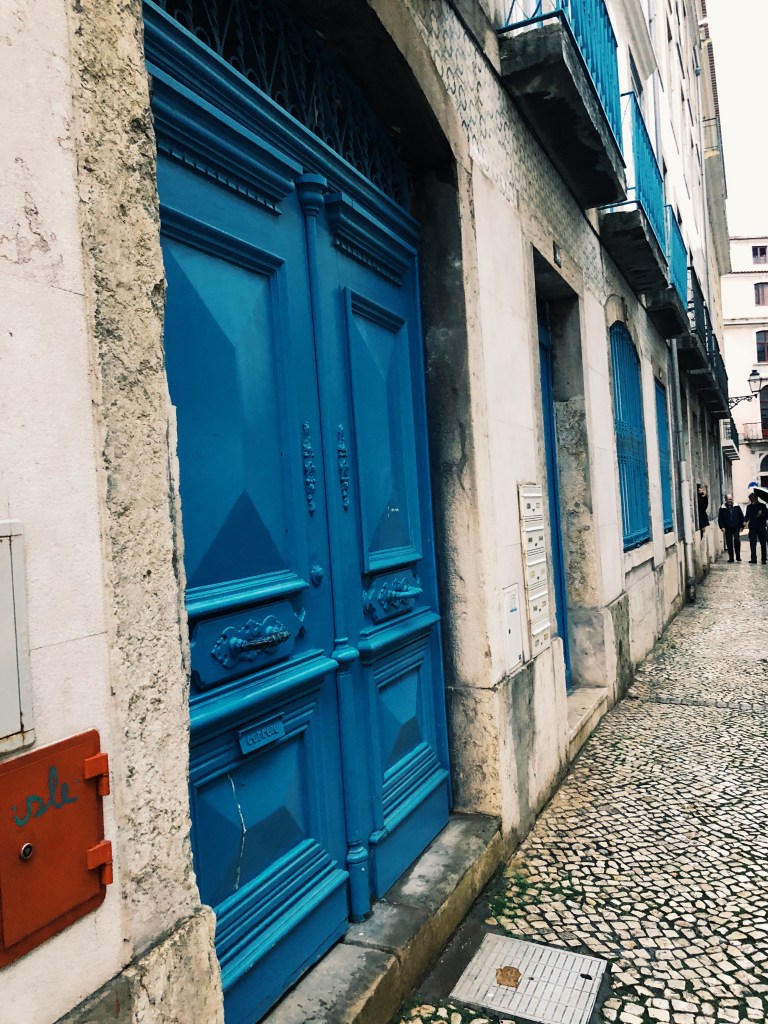
Lisbon 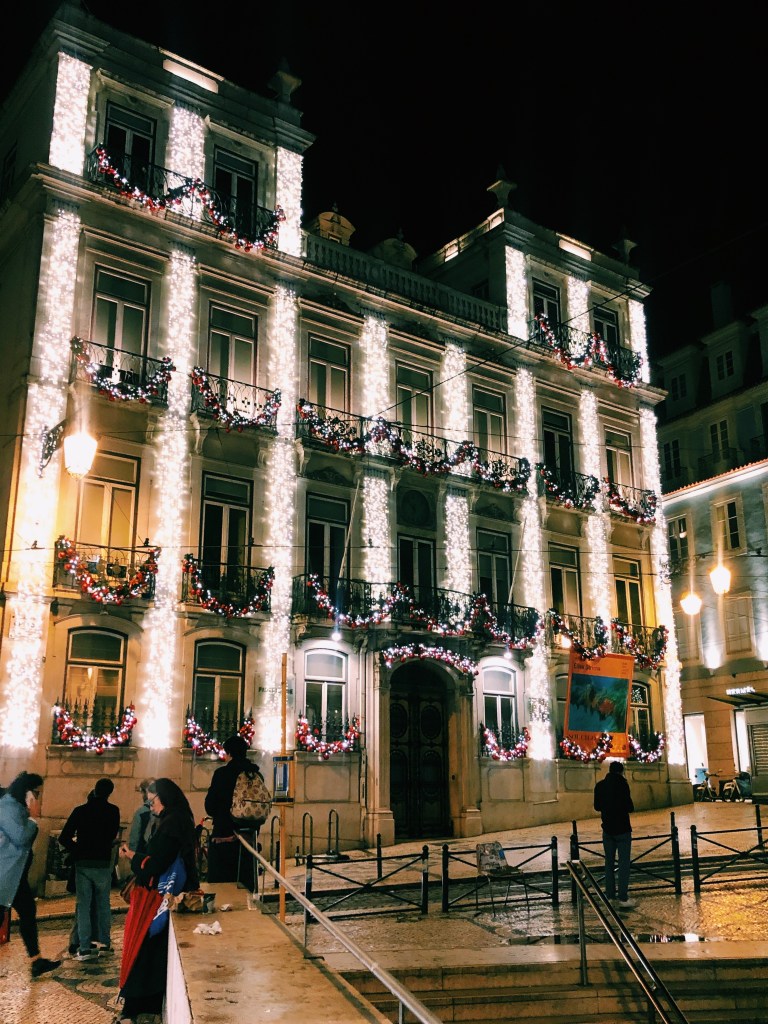
Holiday lights 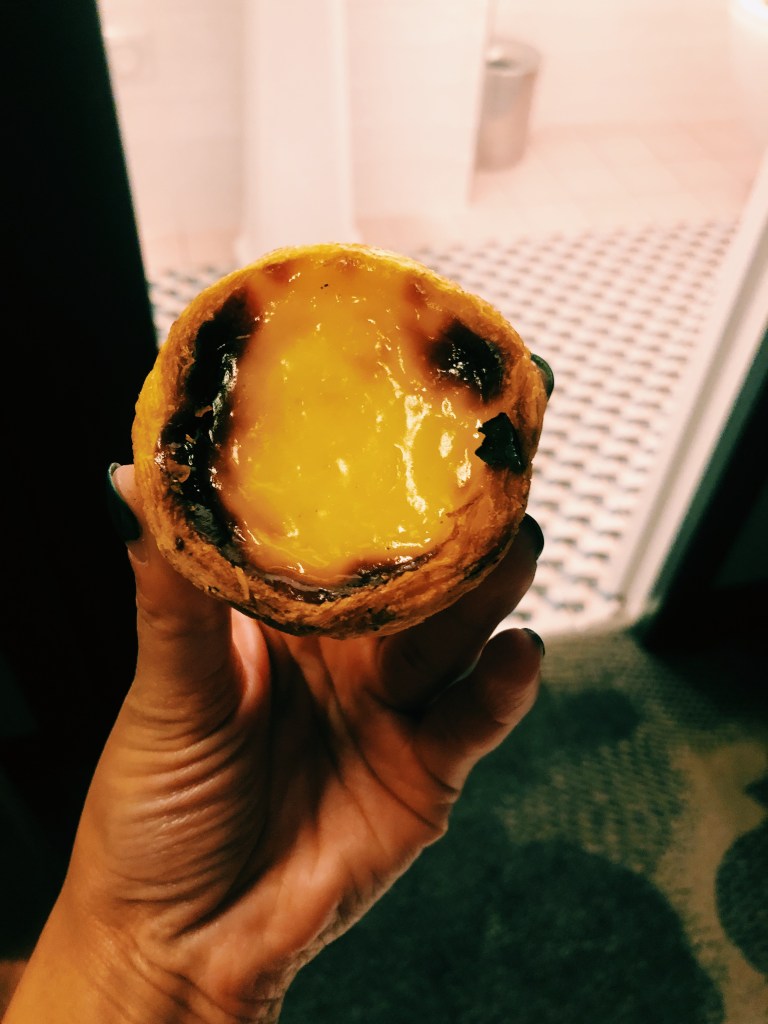
Pastel de nata
Lisbon was absolutely stunning! The streets are steep cobblestone hills that look like thousands of tiles (that get slick when it rains – which it did a lot, but somehow I managed to stay upright the whole time). Walking gave perspective to how far things truly were in relation to one another and all the beauty that existed on the journey. I stopped so many times to snap pictures of the locals, the immaculate architecture and the enormity of the landscape. Sometimes I knew a picture wouldn’t even capture the essence, so I just took it all in. No room to do anything but be present. There was no thinking about work, planning for the new year, thinking about all the things I had to do when I got back. Nothing was allowed in that space, except processing what was currently taking place. Each day, the hardest decision I had was where to eat. Not knowing the language and wanting to try food that wasn’t geared towards tourists palets, became of game of calculated risk. Each morning I would wake up when my body told me to – some days that was 8 am and I would lay in bed reading “Children of Virtue and Vengeance” by Tomi Adeyemi, getting lost in the fantasy world of Black Gods and magic before getting lost on my own day’s adventure. Some days I’d wake up and lay there in gratitude for the opportunity to rest and recharge. And some days, I slept until noon because I wasn’t pressed to be anywhere by any specific time. Plus my place in Portugal was gorgeous – perfect size, perfect decor, beautiful views and centrally located – so some days it was hard to leave the space. I decided to plan my days around how far I wanted to walk, what monuments I wanted to see and at what time of day I could snap the best pictures. That’s all the trip was about for me – great food, great views, great wine and great energy. Once I realized that taking photos was the one thing I enjoyed no matter the setting, I made it a point to try to capture some of the best shots I could, of all the beauty I was experiencing.
Because it was my first time being alone since being with a huge group on a trip that was planned for me down to the minute – I found myself being a bit more on guard. Watching my surroundings a bit more, going in early sometimes if I felt like I was too nervous. Now what’s to note here is that, I typically consider myself an alert person, but ever since hearing stories of so many women being targeted, kidnapped, sex trafficked – I knew I couldn’t take any chances. I packed my nightstick with me and carried it in my purse the entire trip – just in case. Luckily, I never had to use it.
My first night in Lisbon, I visited LX Factory – that was actually my first stop after a bit of napping. LX was a great outdoor/indoor market with tons of restaurants, art vendors/galleries, retail stores, bars and vibes. It was the cutest little strip and is apparently only open on Sundays – I’m glad I made a point to go there. I ended up buying some art that I fell in love with and found a few artists I continue to follow. I would say, of all the cities, Lisbon had the best art/art for purchase. Most of my time here was spent just walking the streets and popping into different shops and restaurants – most of which I don’t recall the names. On my third day, I hopped on a train and took it 40 minutes to a town called Sintra. Finding the train station proved to be the hardest task I encountered while in Lisbon. Language barriers made it extremely difficult to find where to catch the train, but finally I figured it out! Sintra was full of awe-inspiring mountains, dewy forests, exotic gardens and stop-you-in-your-tracks palaces. I felt like a child as I hopped on and off the bus to walk through the various castles, parks and temples the city offered. At one point, I walked out onto the Queen’s Terrace (at Pena Palace) and was met with one of the most beautiful views I had seen since being in Portugal. I took my time, exploring the wells, caves, forests, parks, and views each of these castles had to offer (I visited three while there: National Palace of Sintra, Quinta da Regaleira (my favorite) and Pena Palace). It was one of the most freeing experiences I’ve had – allowing my interests and intuition to guide me and be in a complete state of wonder and gratitude.

Pena Palace 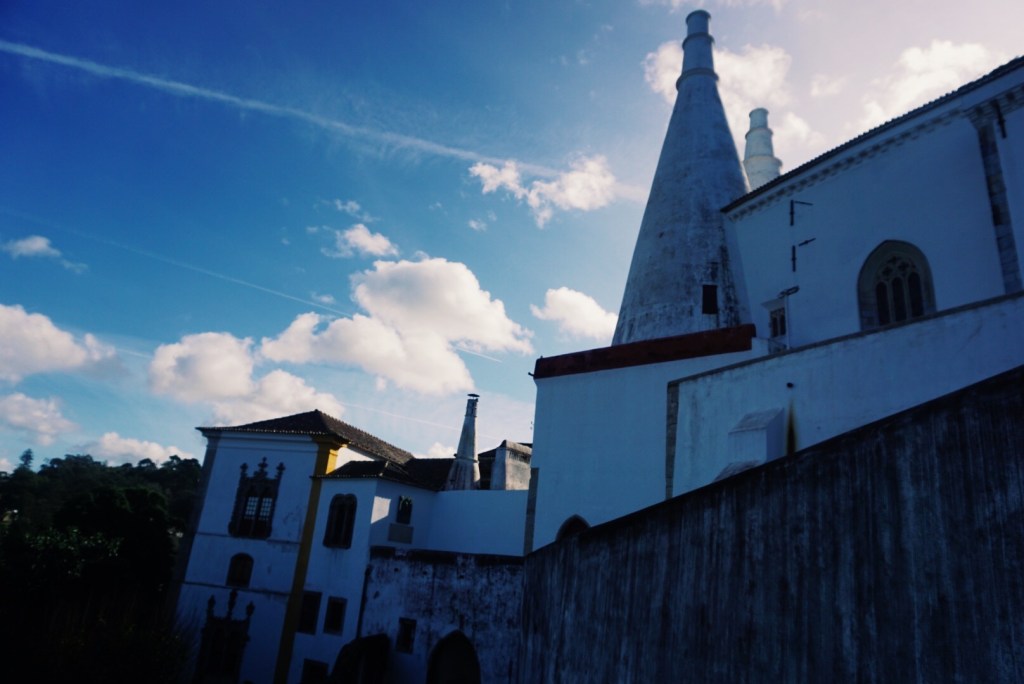
National Palace of Sintra 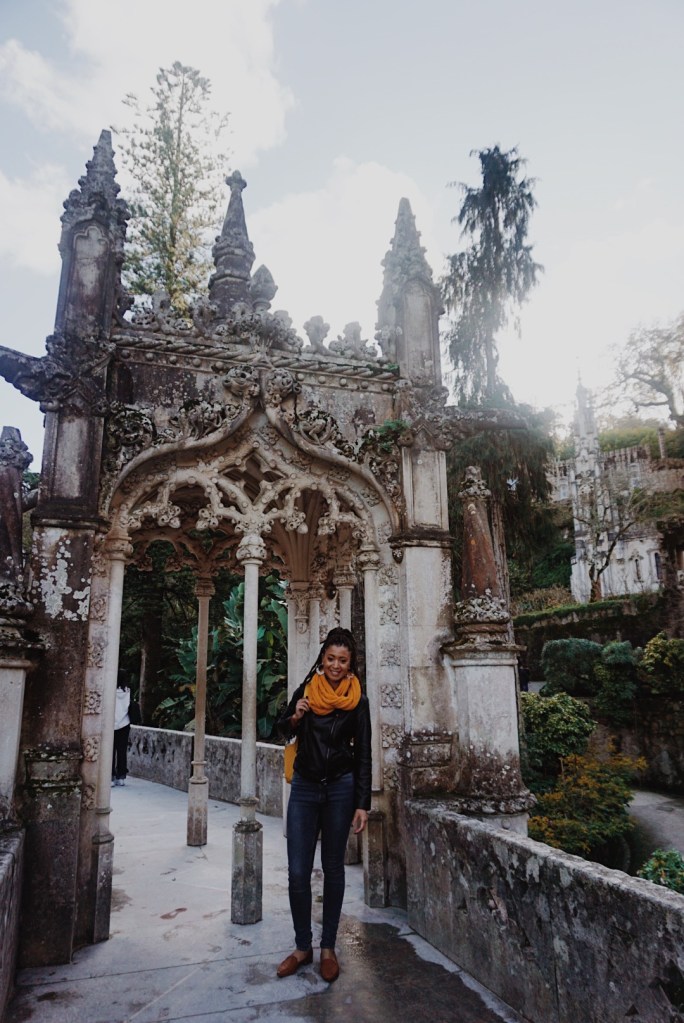
Quinta da Regaleira 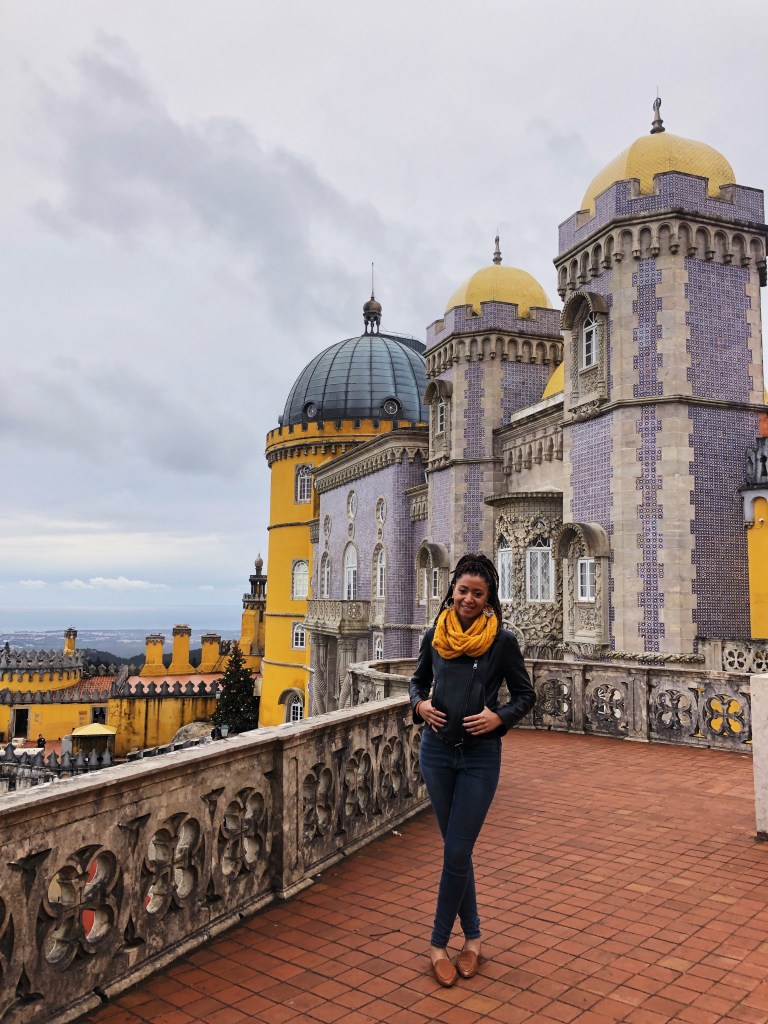
Pena Palace: Queen’s Terrace 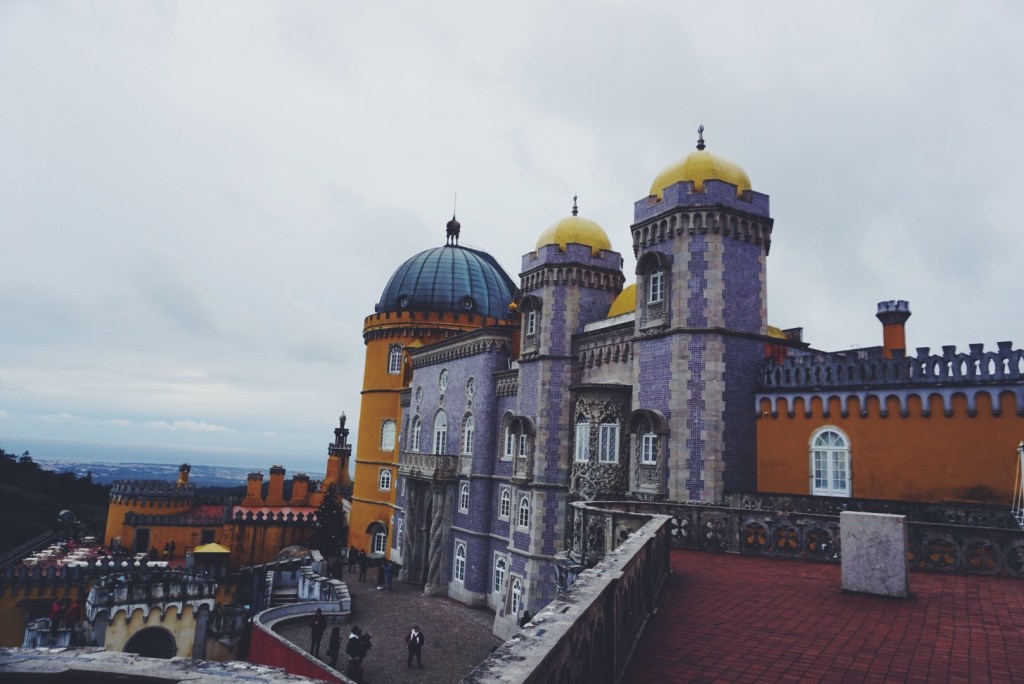
Pena Palace 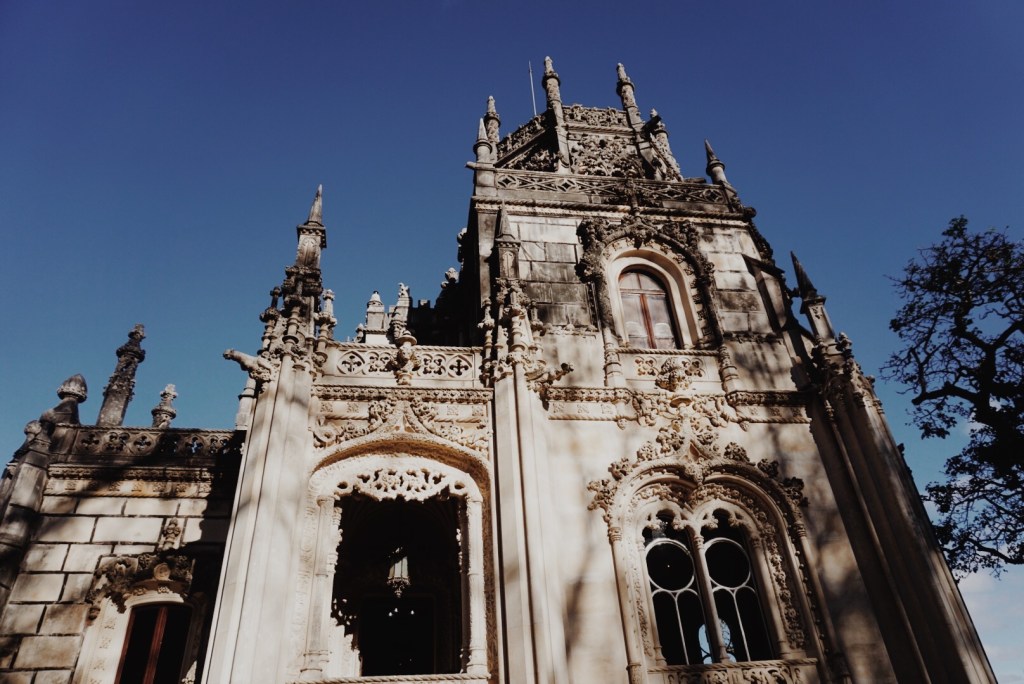
Quinta da Regaleira 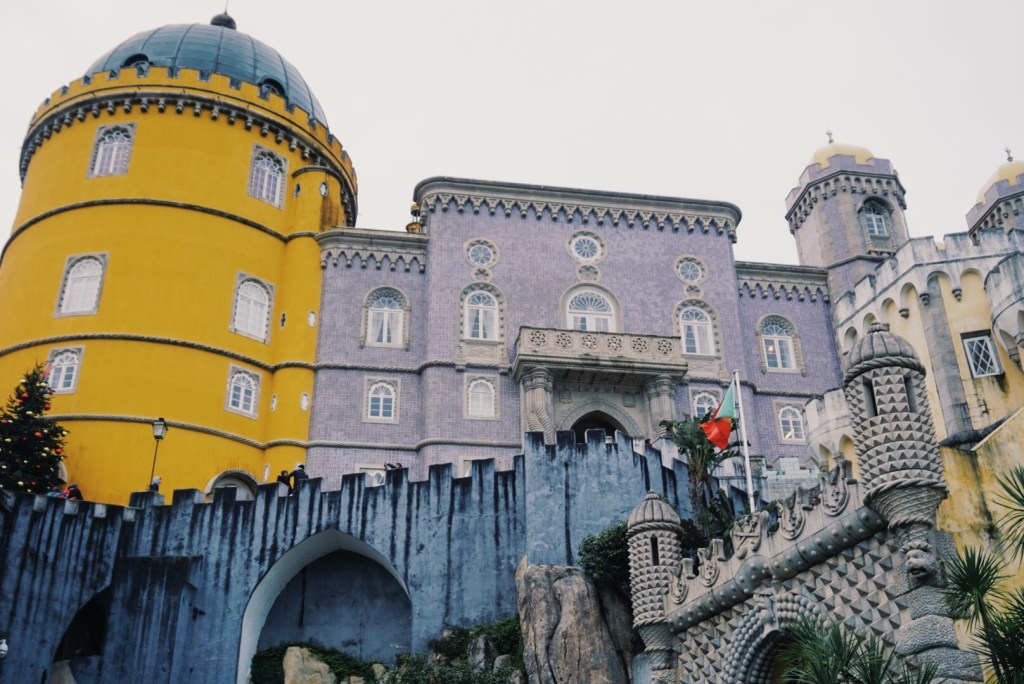
Pena Palace 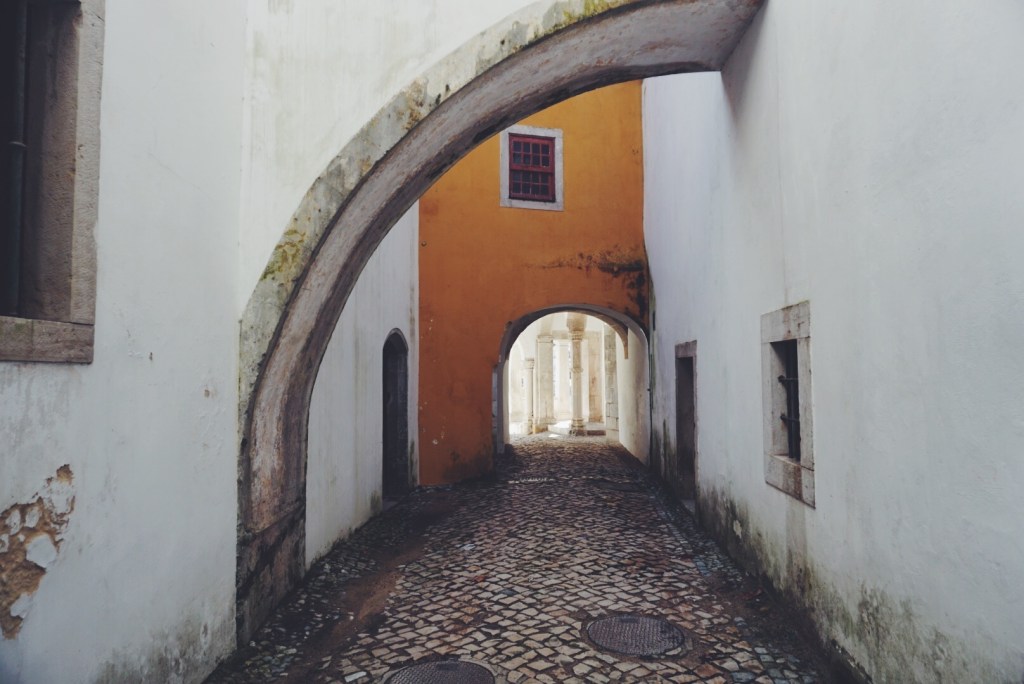
National Palace of Sintra 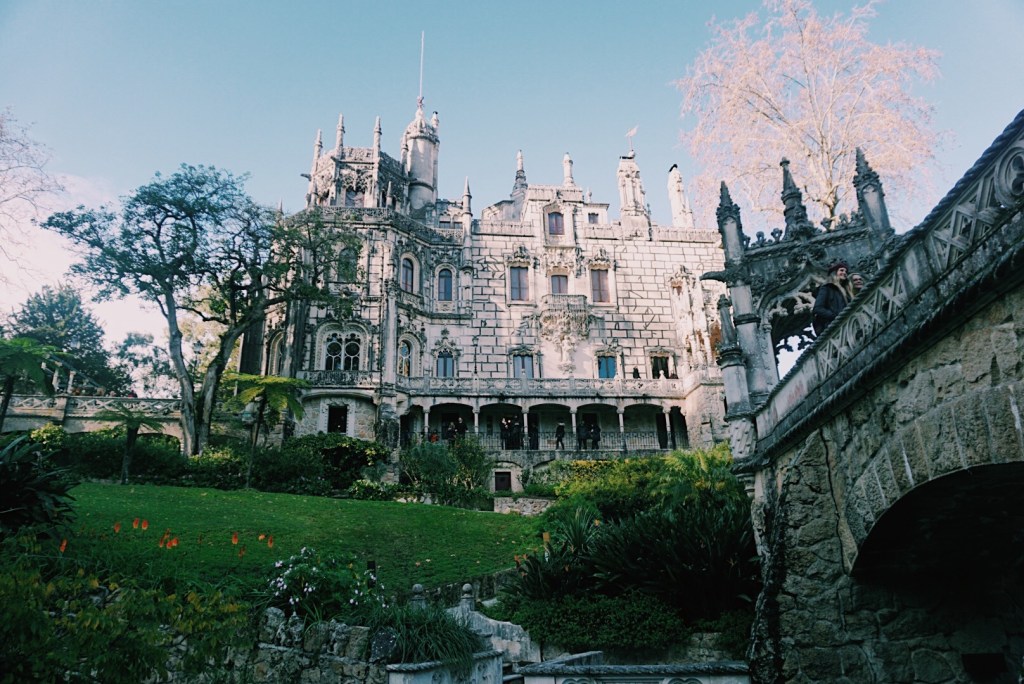
Quinta da Regaleira 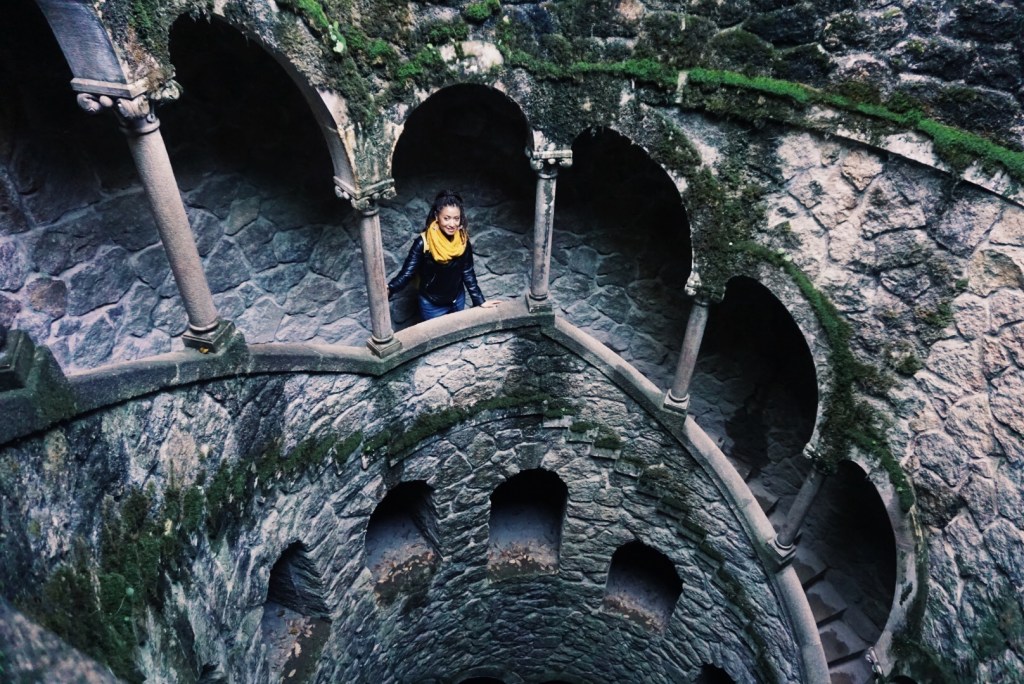
Well at Quinta da Regaleira 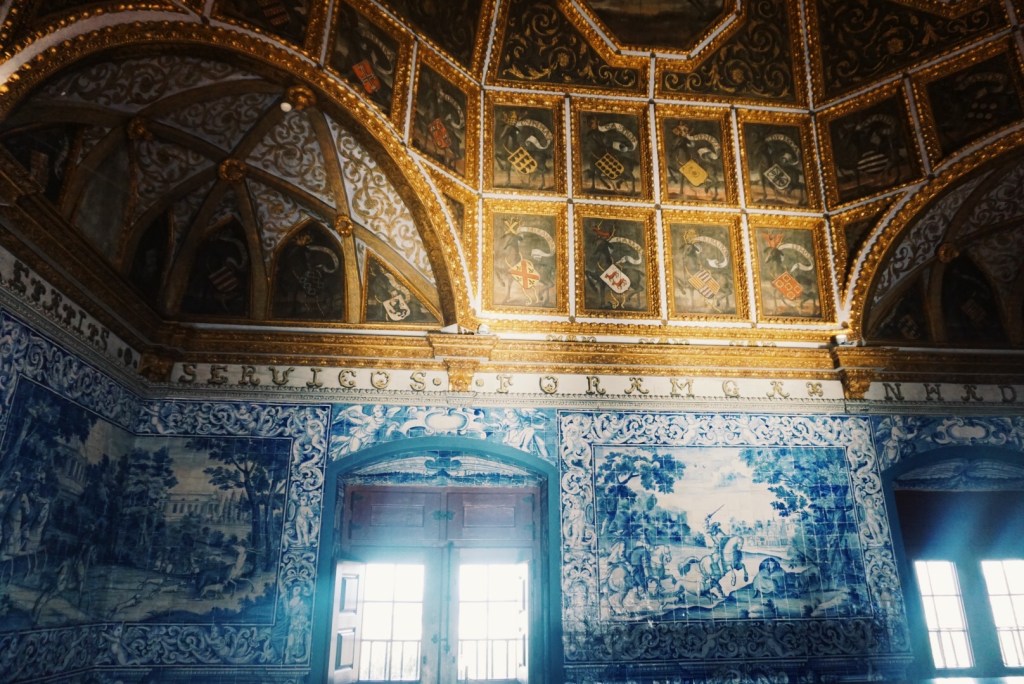
Inside National Palace of Sintra 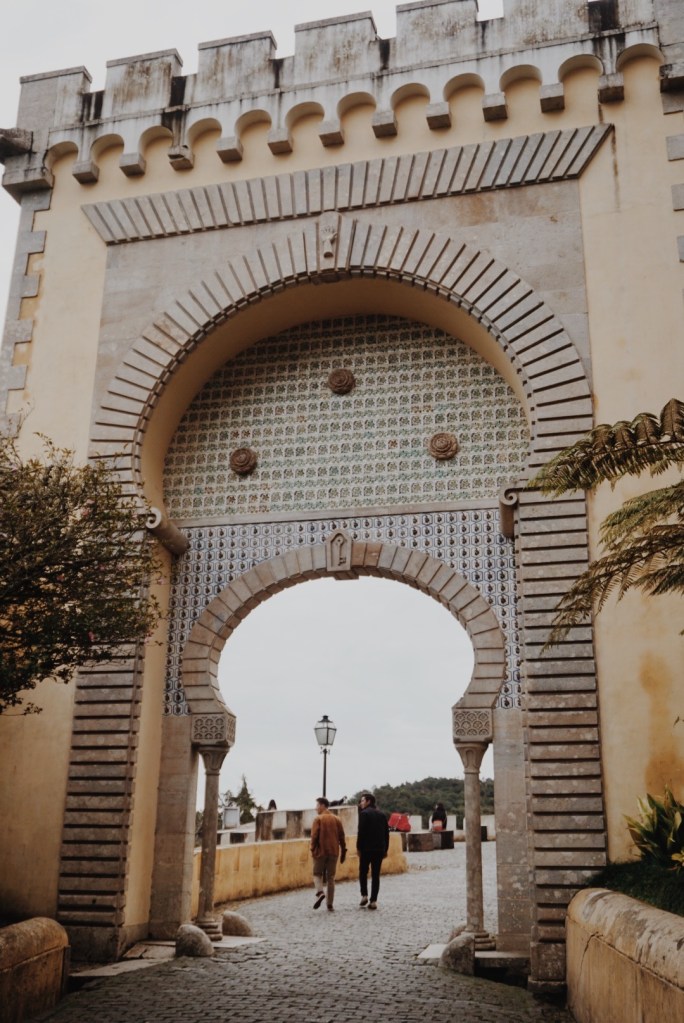
Pena Palace Entrance 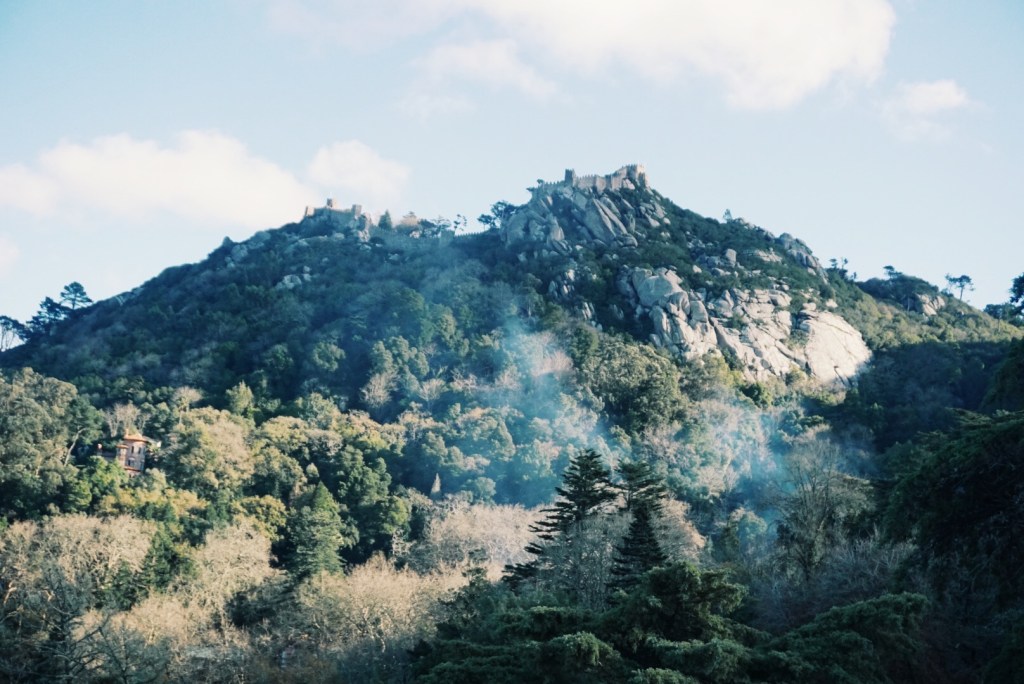
Castelo dos Mouros 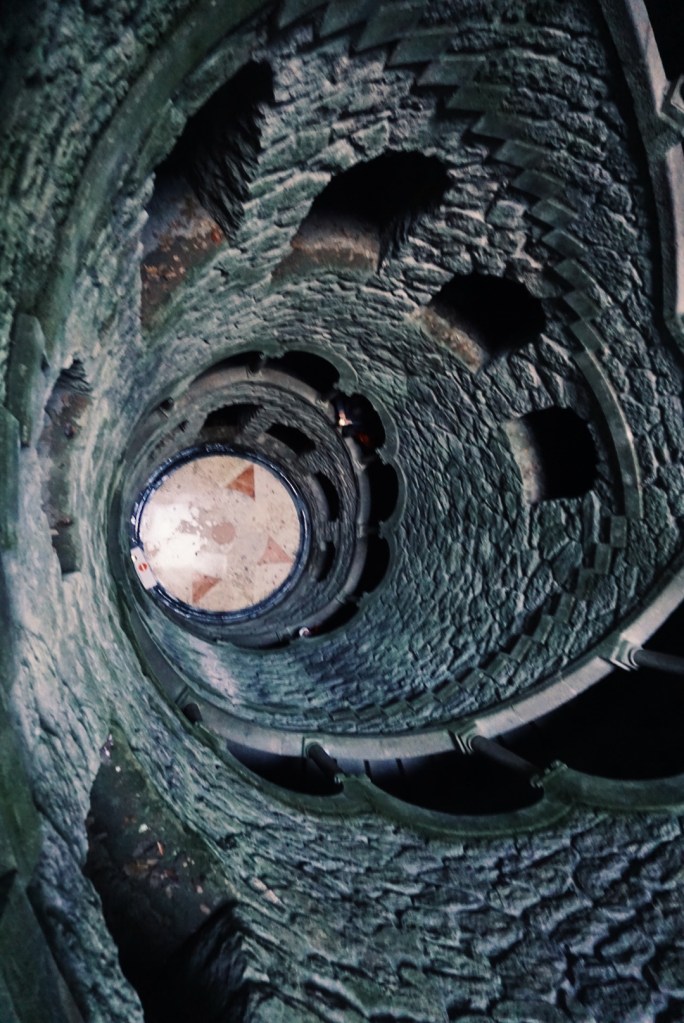
Well at Quinta da Regaleira 
Quinta da Regaleira 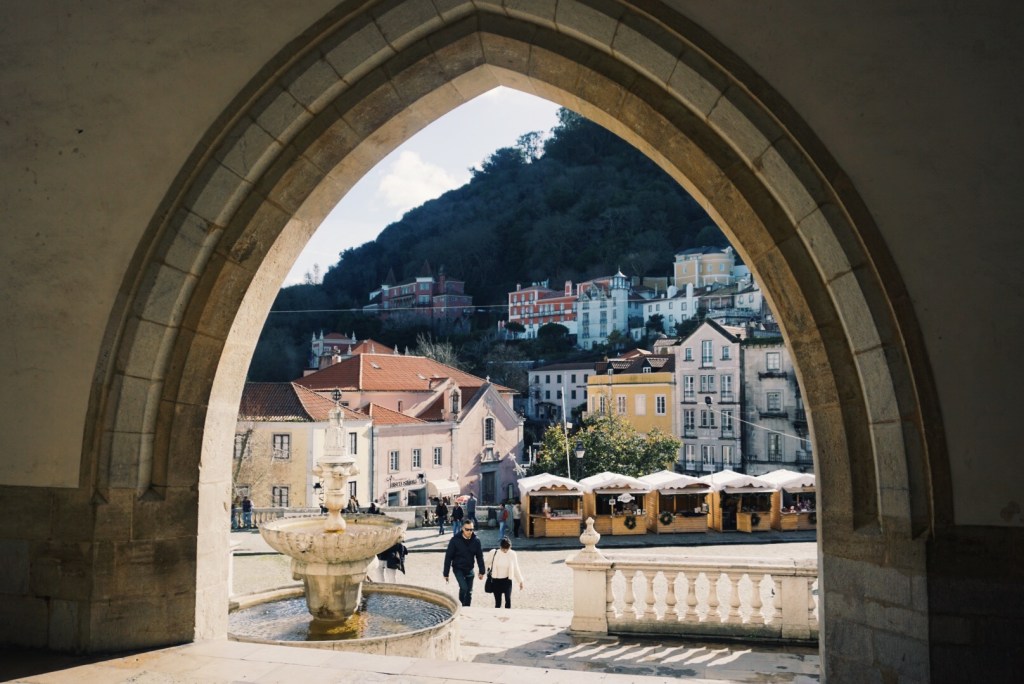
National Palace of Sintra 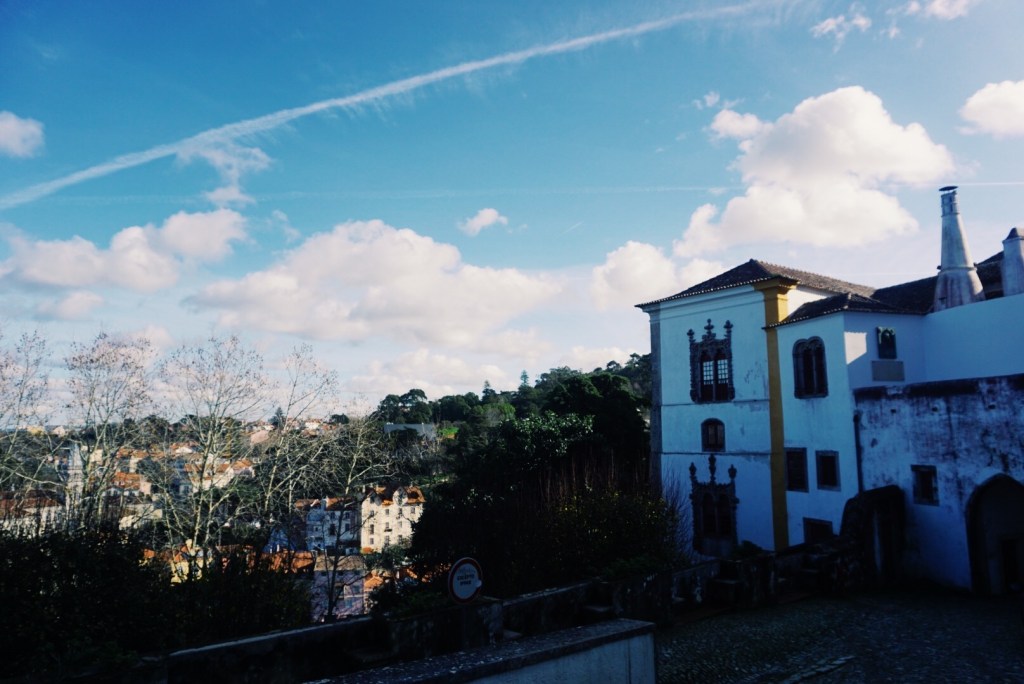
National Palace of Sintra 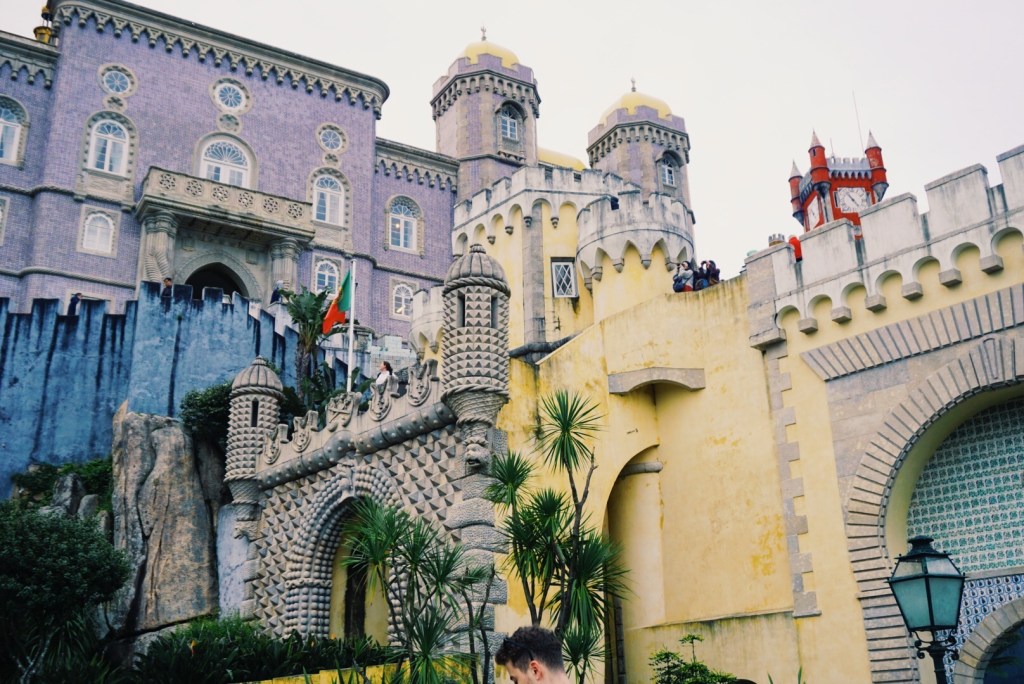
Pena Palace 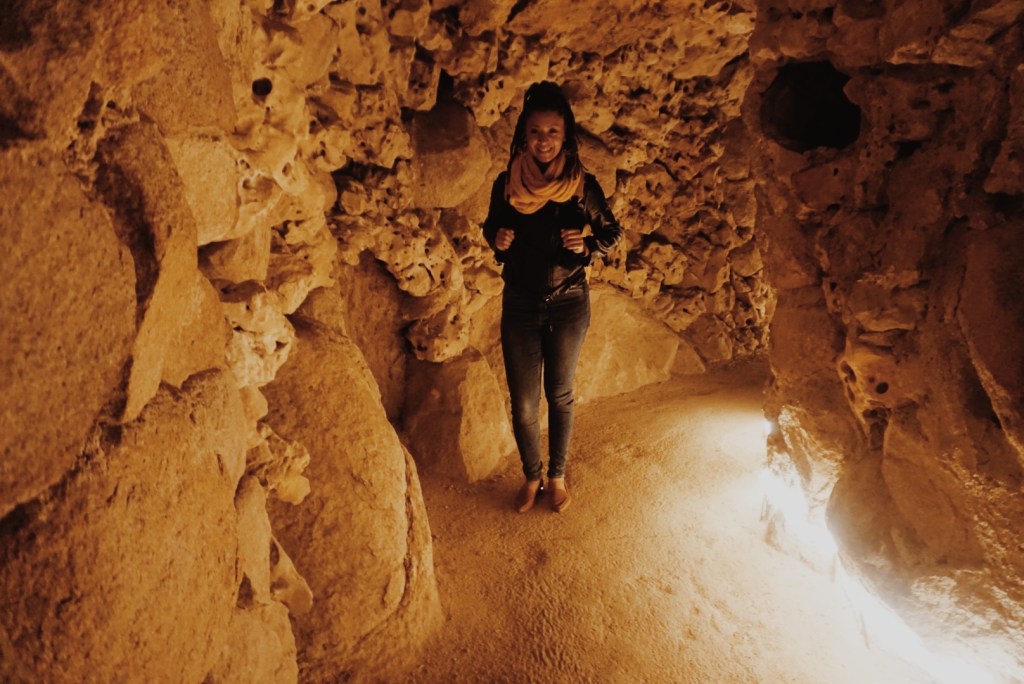
Caves at Quinta da Regaleira 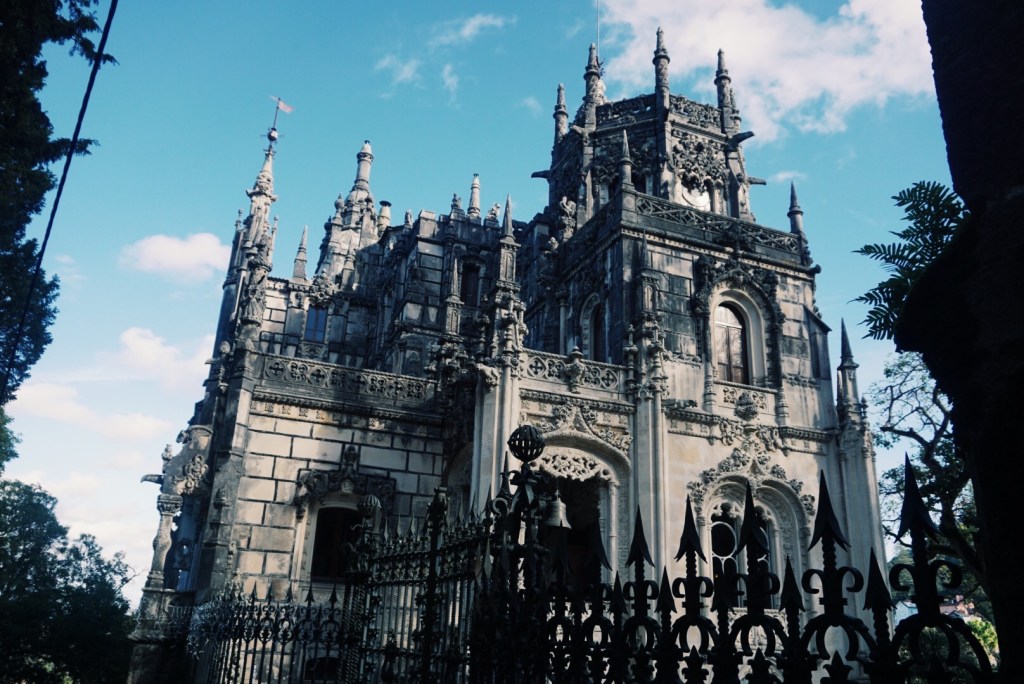
Quinta da Regaleira 
National Palace of Sintra
That night I visited Time Out Market in the Cais de Sodre district. We just recently got one in Chicago – I hadn’t been yet, but figured I should check it out. It’s a hip food hall that showcases all sorts of cuisine and was perfect for an indecisive eater (like myself) who wanted to try some local staples. I tried quite a few local dishes from a few different vendors while I sat alone and people watched. At the end of dinner, I was approached by a man and woman who proceed to tell me that their whole table found me gorgeous and made a bet/game that whoever lost had to approach me and invite me over for a drink. The guy who lost got shy and they couldn’t let me leave without inviting me over for a drink – I oblige (honestly had the woman not been with them, I would’ve opted out). Upon joining the table, I’m told they’re a group of physical therapists and coaches for a Spanish soccer team and were in town for a game. We shared wine and stories of our respective work and then they convinced me to go out with them. We landed in a bar on Pink Street, where all Lisbon’s clubs and bars are located, with a cover band who KILLED IT (I heard D’Angelo from the street and knew we had to go in!). We stayed out until 4am, dancing to all the top 40 American hits and a bit of reggaeton. I was in heaven (minus the 300 cigarettes being smoked around me and the thought that my braids would hold this smell for the next few days). After a full day of recovering (no kidding), I got out of bed to pack, grab pizza and pastel de nata, the famed egg custard that everyone raves over. For the record, they were 100% right!
Sleep, then off to Barcelona in the morning.
Other things I did/saw in Lisbon: Arco da Rua Augusta, Praca de Comercio (shopping), Lisbon Cathedral, a full body massage, Taberna da Rua Das Flores (amazing tapas restaurant I waited over an hour for).
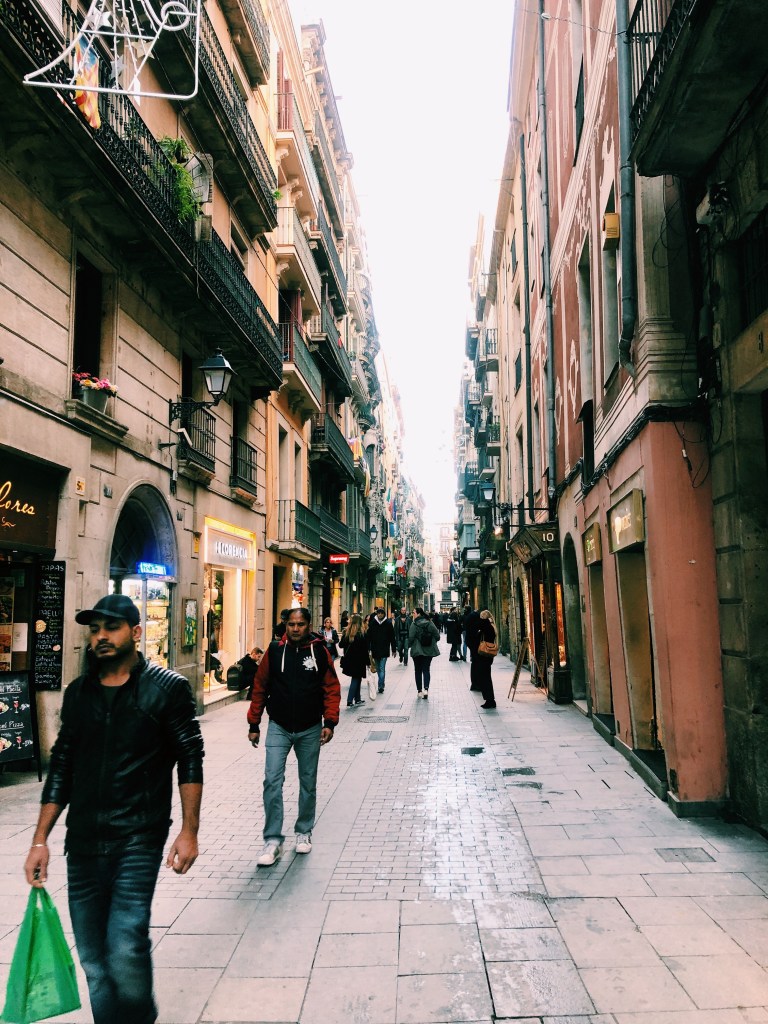
Las Ramblas 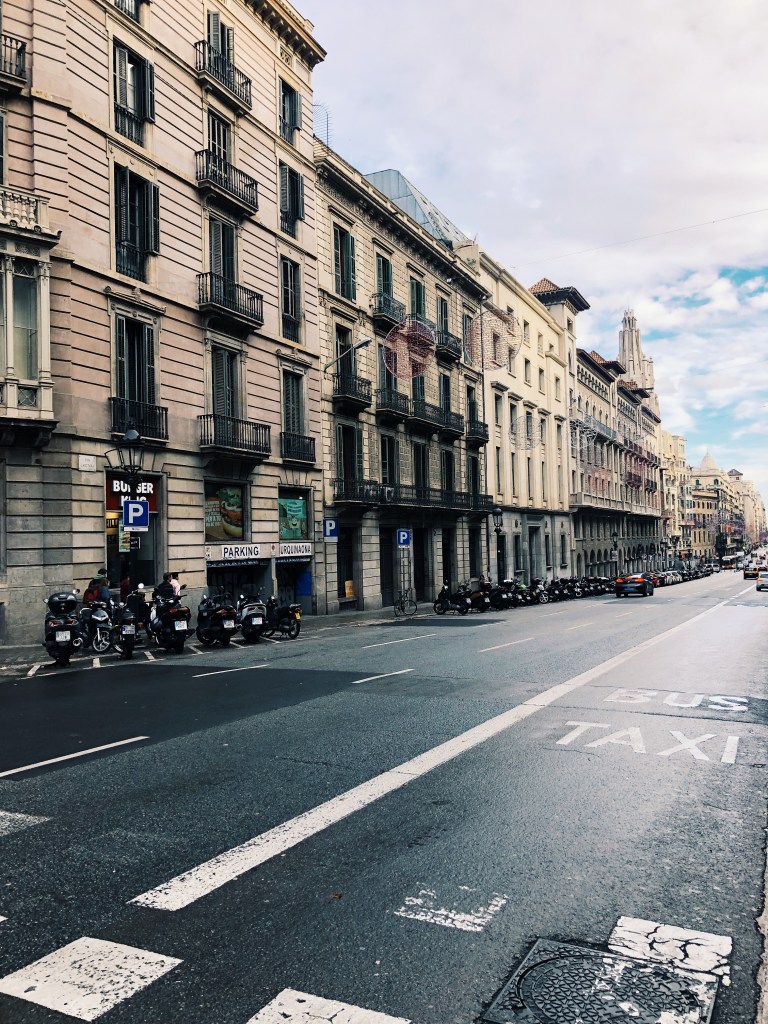
Streets of Barcelona 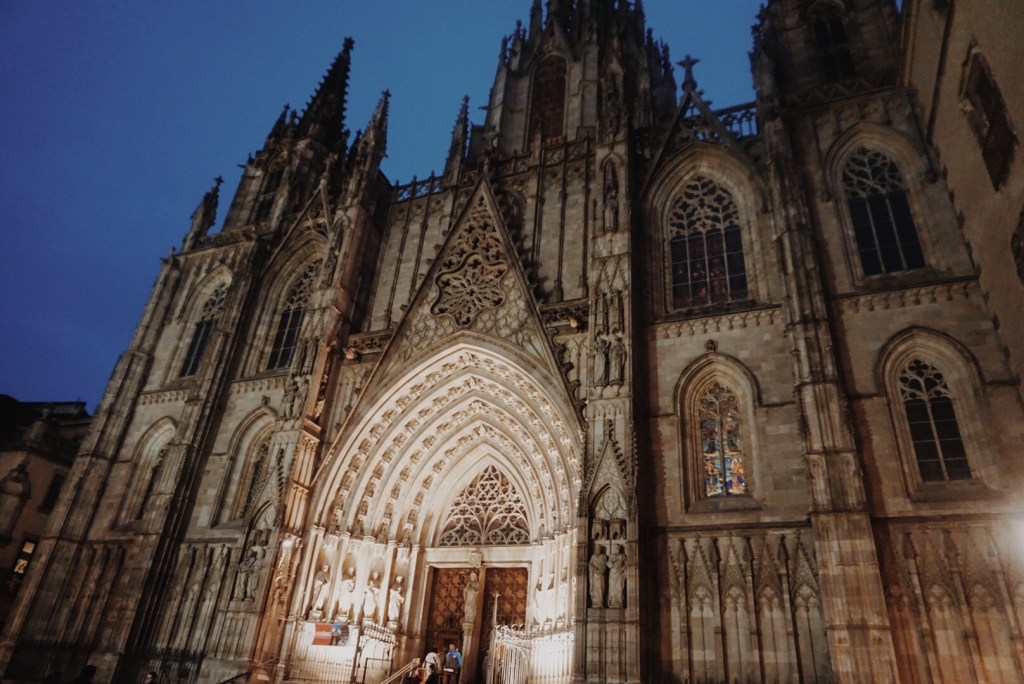
Cathedral of Barcelona 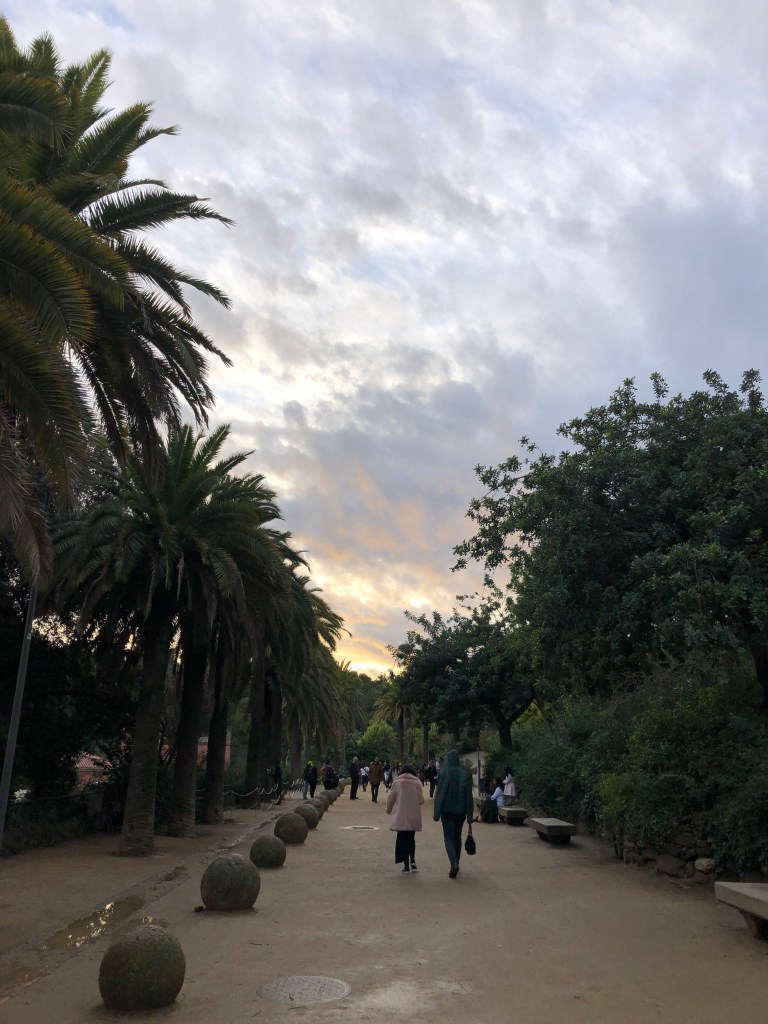
Arco de Triunfo de Barcelona 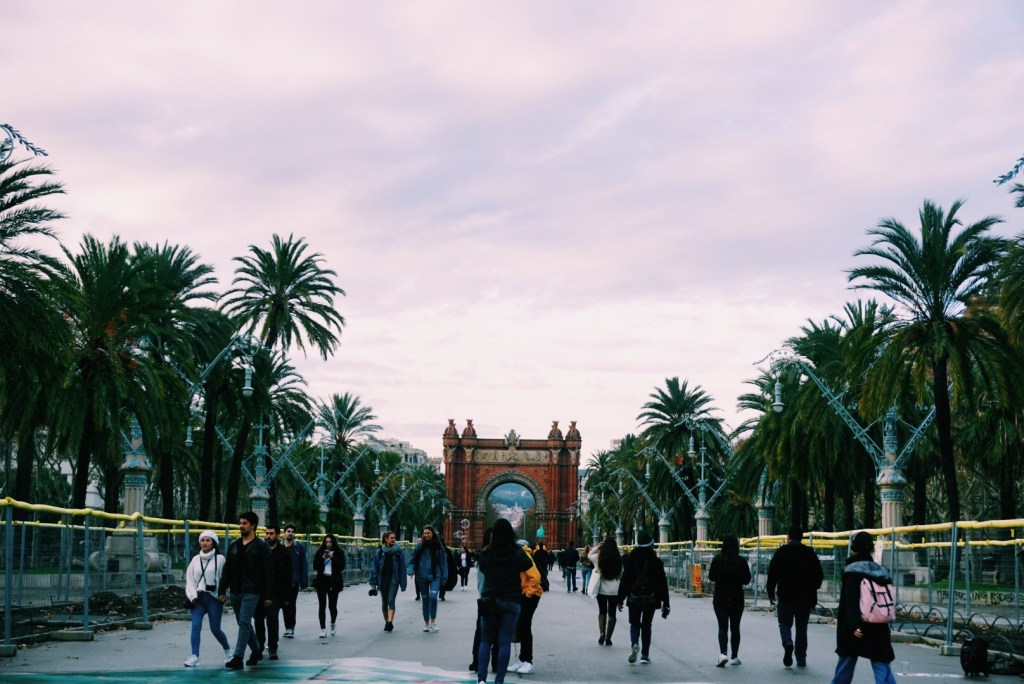
Arco de Triunfo de Barcelona 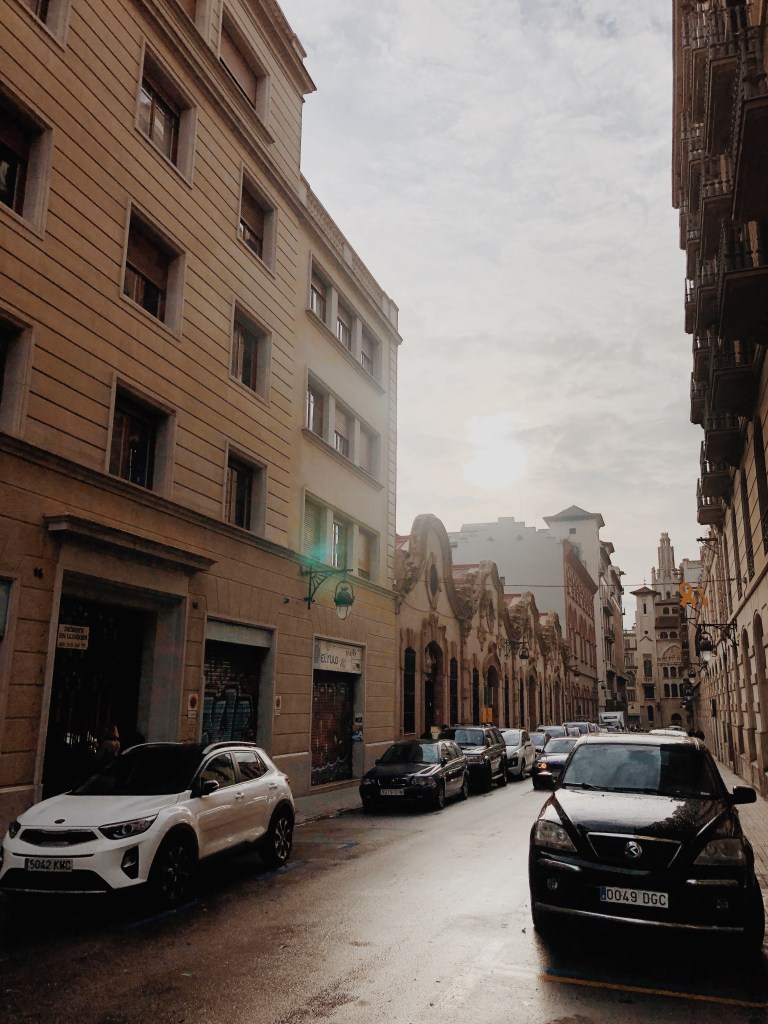
Streets of Barcelona 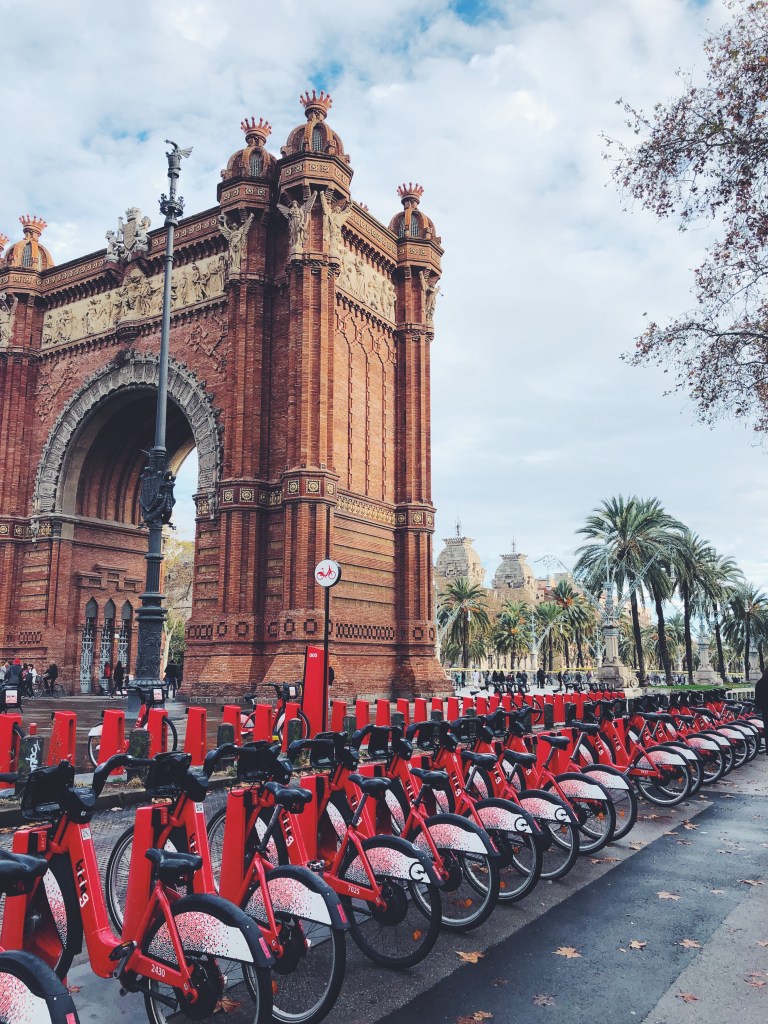
Arco de Triunfo de Barcelona 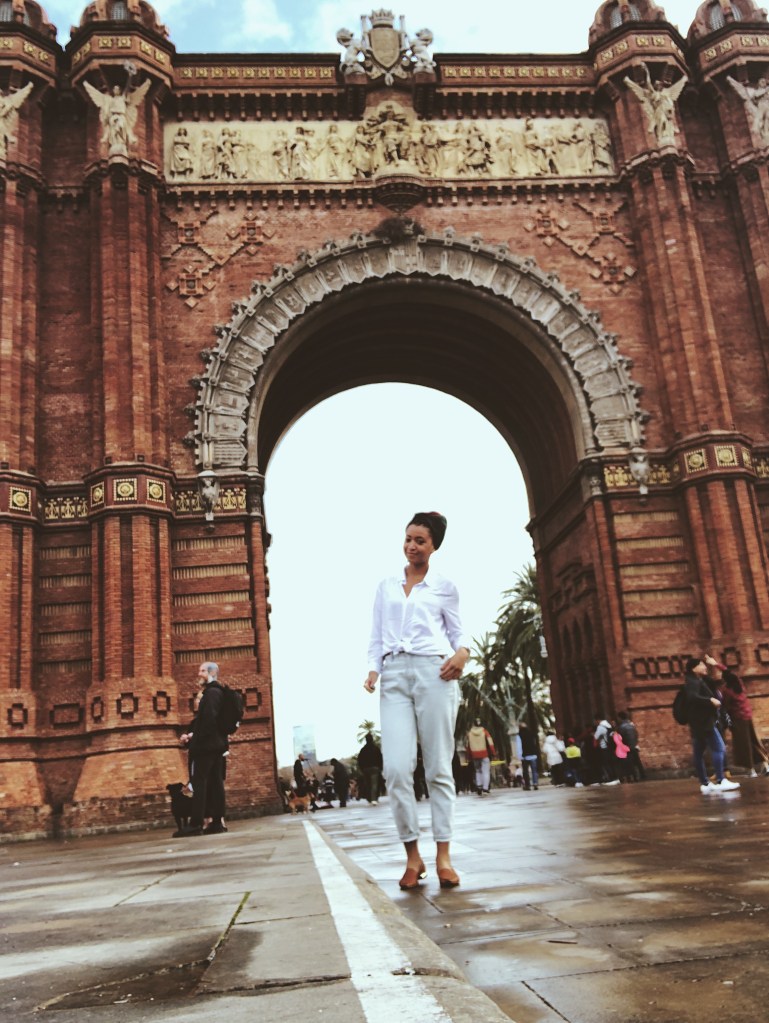
Arco de Triunfo de Barcelona 
Streets of Barcelona 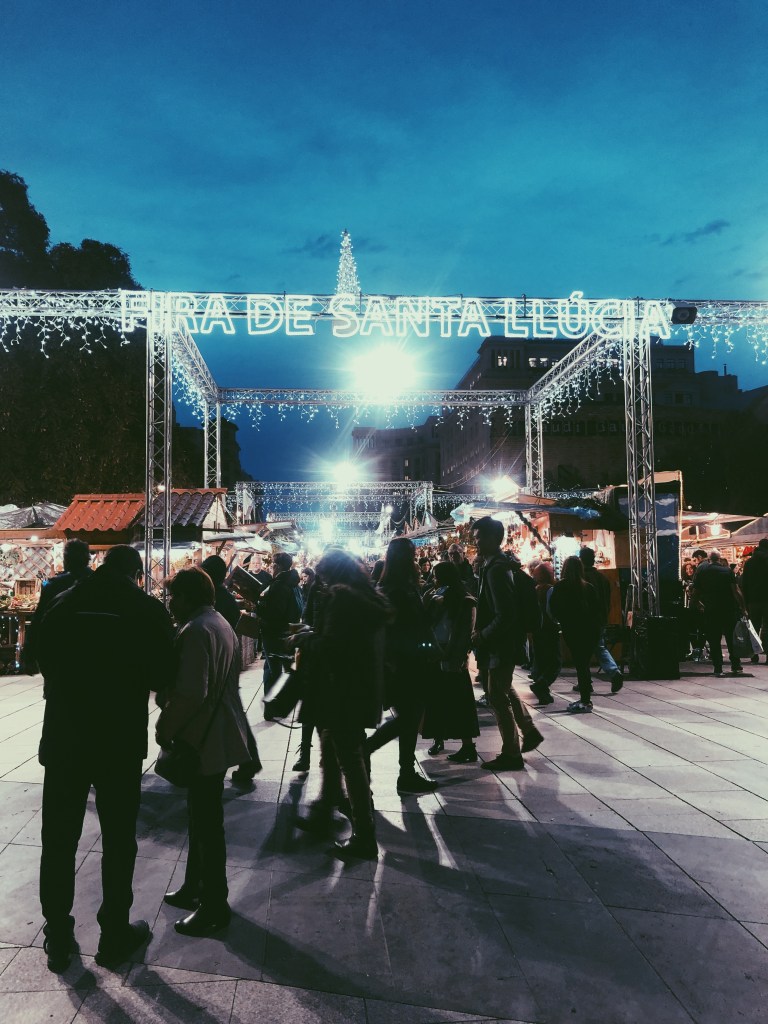
Fira de Santa Llúcia 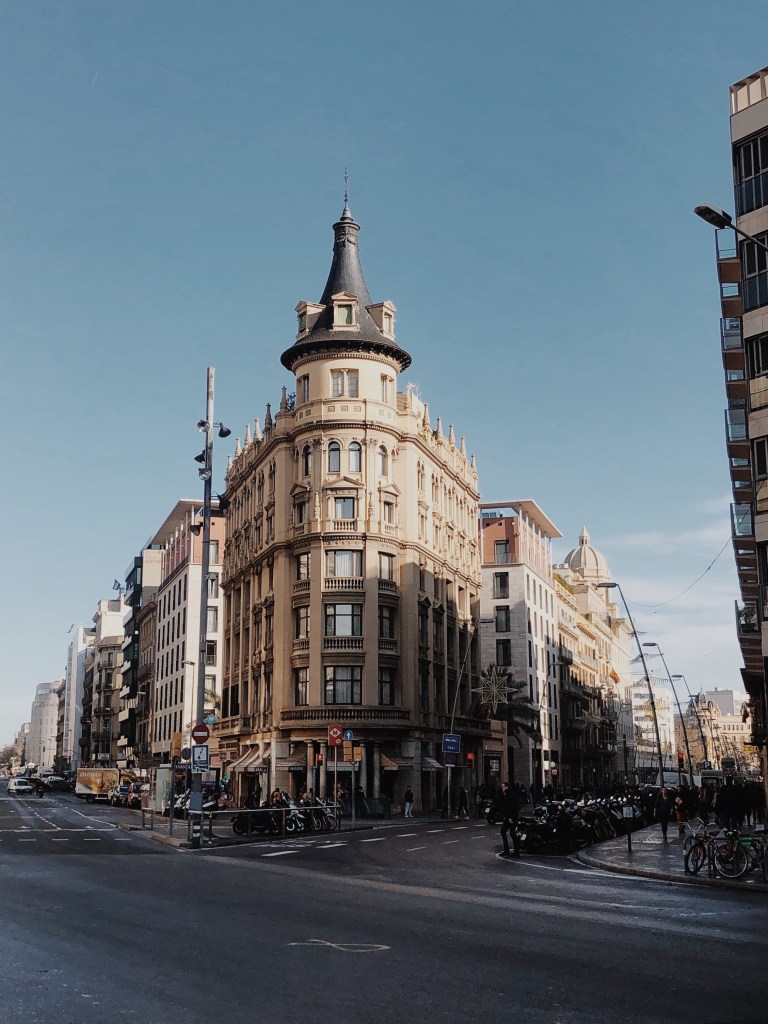
Streets of Barcelona 
Sunset in Barcelona
Next Stop: Barcelona: Barcelona was actually my least favorite stop on the trip. I know this is not a popular opinion, but I think there were several factors that affected this. First of all, I was originally going to go to Madrid, but the weather was too rainy and cold, so Barcelona was booked the day before I actually arrived. I chose to stay in the Eixample neighborhood during my trip and I think I would have enjoyed staying in El Born or the Gothic Quarter more – especially knowing I planned to walk everywhere. I felt like the hotel/location was a bit further and more secluded than I would have liked. Also, I found it hard to find culture in Barcelona – it felt very touristy. I had a hard time finding things to do, food to eat (that I hadn’t already tried in other destinations) that were unique to Barcelona. I also had no plan of attack going into things, just that I would fall into whatever I could while there. One of those experiences led me into Las Ramblas, an enormous maze of shopping corridors, where I easily spent 3-4 hours popping into different shops and markets. Most of what I did in Barcelona was shop and visit some of the esteemed architecture sites: Basilica de Santa Maria Del Pi, Cathedral of Barcelona, Gothic Quarter, The Fira de Santa Llúcia (a Christmas market), Casa Batllo, Arco de Triunfo de Barcelona, La Segrada Familia and Park Güell (where I risked my life to get an amazing sunset shot). One thing I became aware of and intrigued by in Barcelona was the fact that everyone was multilingual. I went to an Asian restaurant where the staff spoke, English, Japanese and Catalan. It was hard for me to understand why in the States, English the sole language pushed for people to learn, yet in Europe, most everyone knows multiple languages. I was later given a perspective that helped me to make sense of that: In Europe, you can hop a 2-hour flight and be in a completely different culture, in the States, you end up in another English-speaking state. Exposure and proximity making all the difference. I’ll try Barcelona again with more context, insight and when the weather is warmer. Total miles walked: 21.6
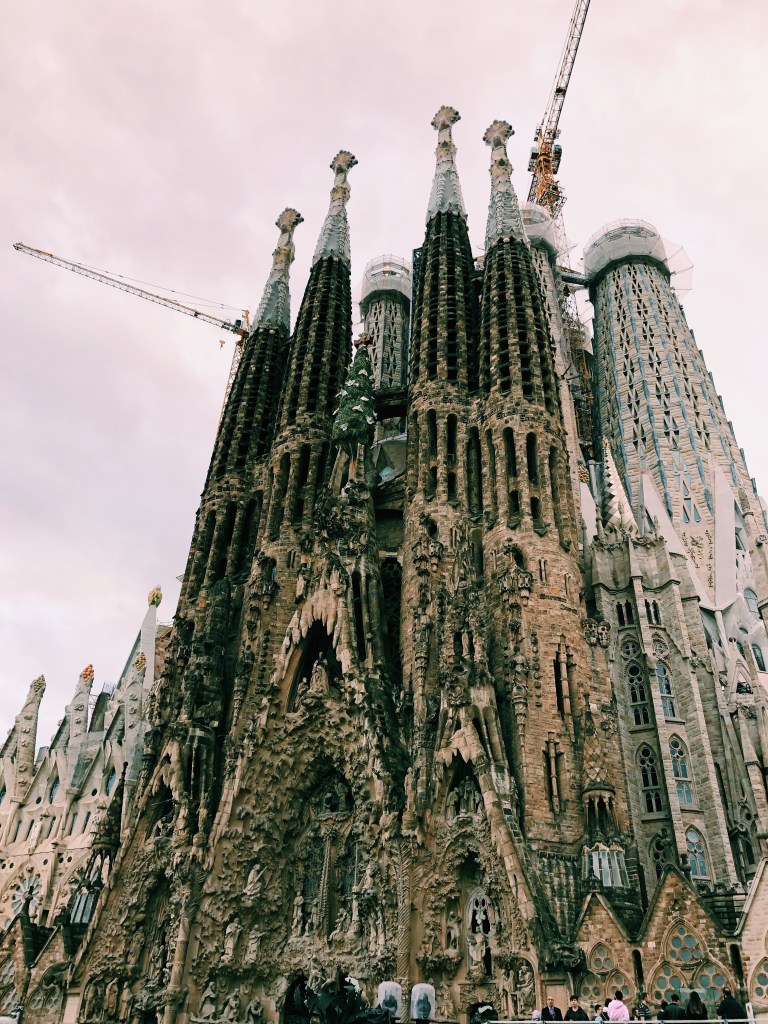
La Sagrada Familia 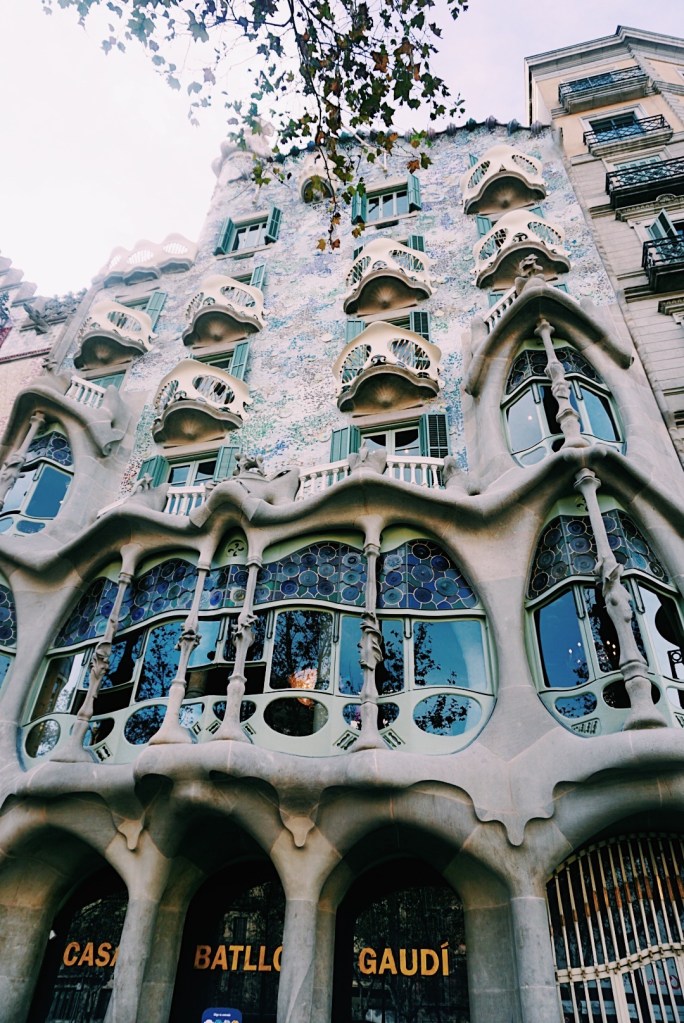
Casa Batllo 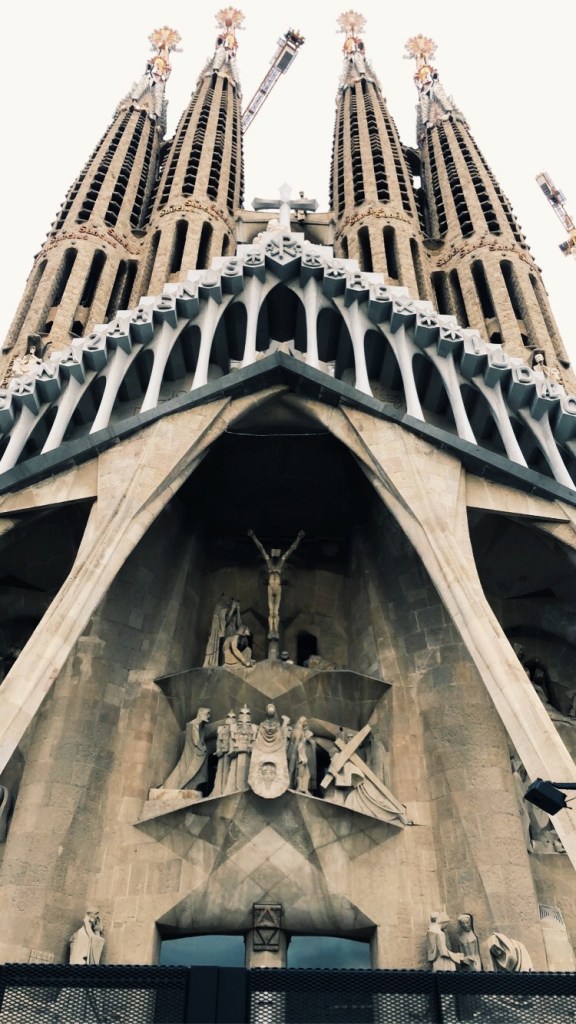
La Sagrada Familia 
Park Guell 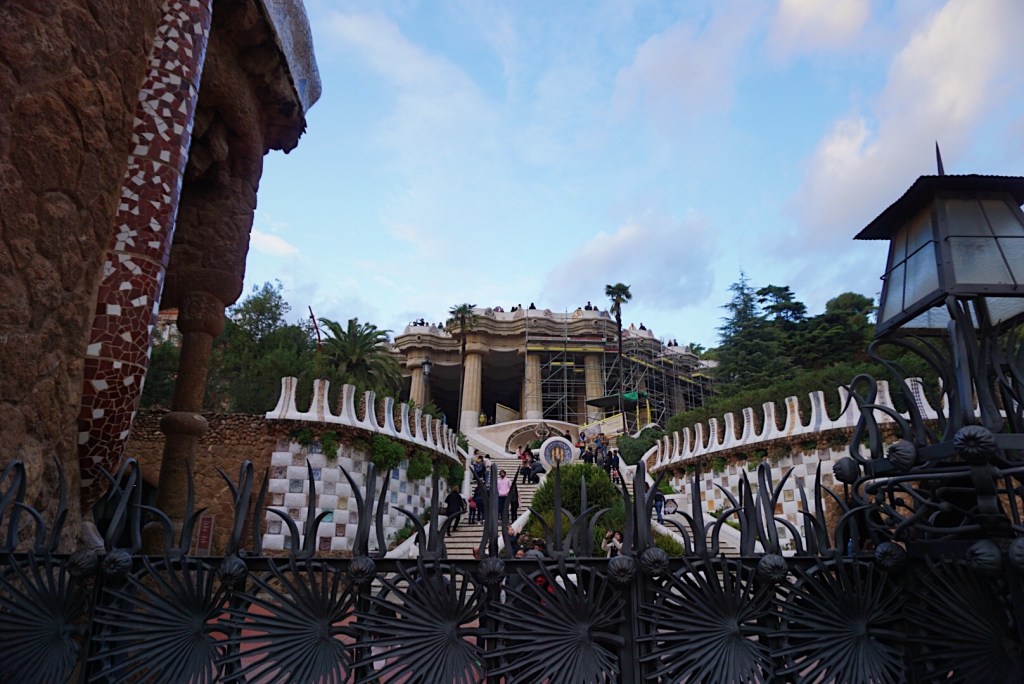
Park Guell 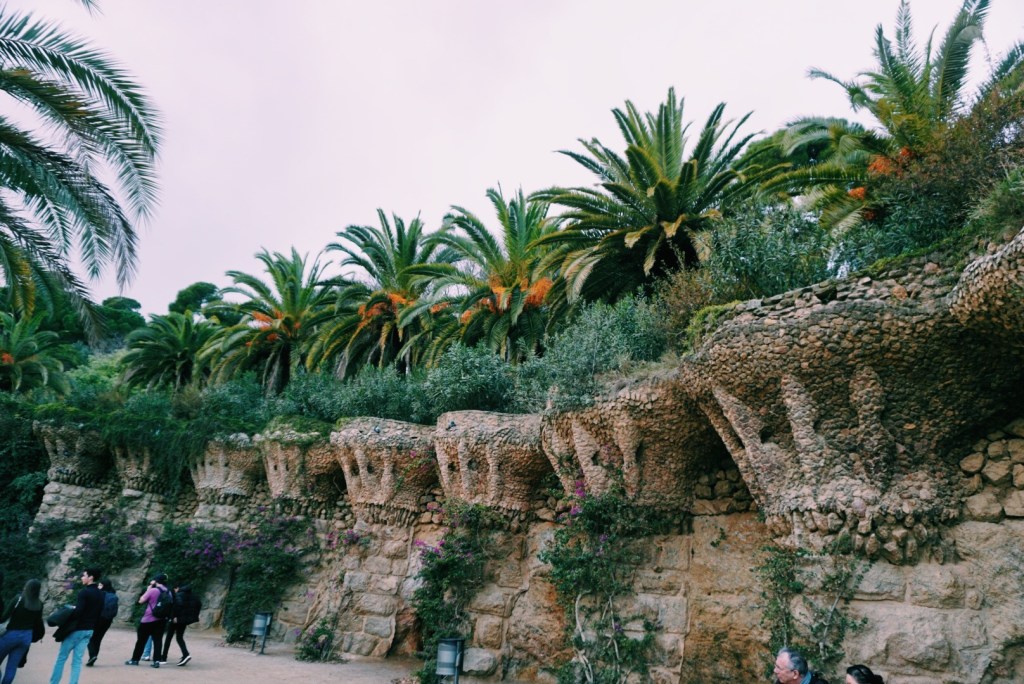
Park Guell 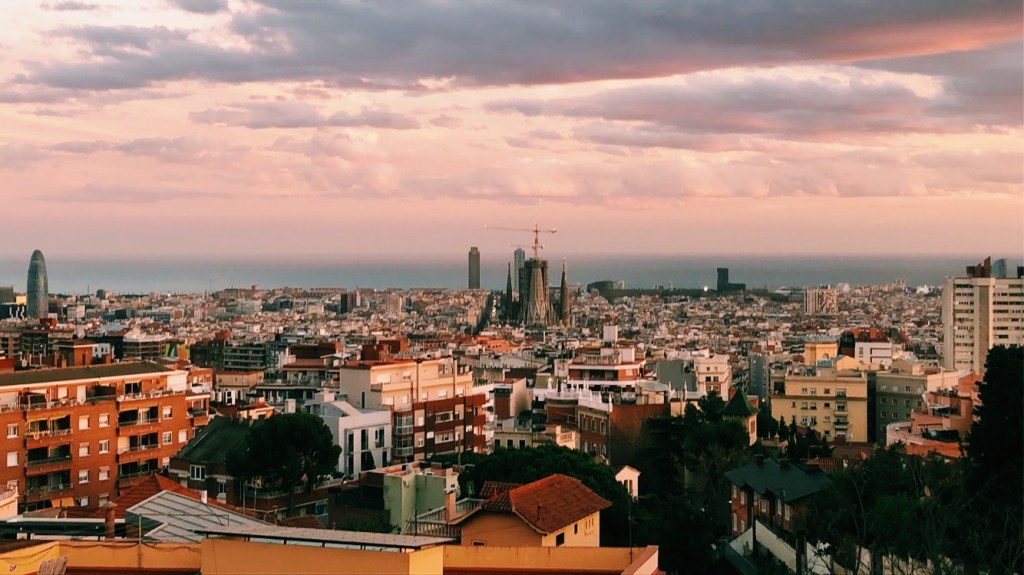
Sunset from near Park Guell 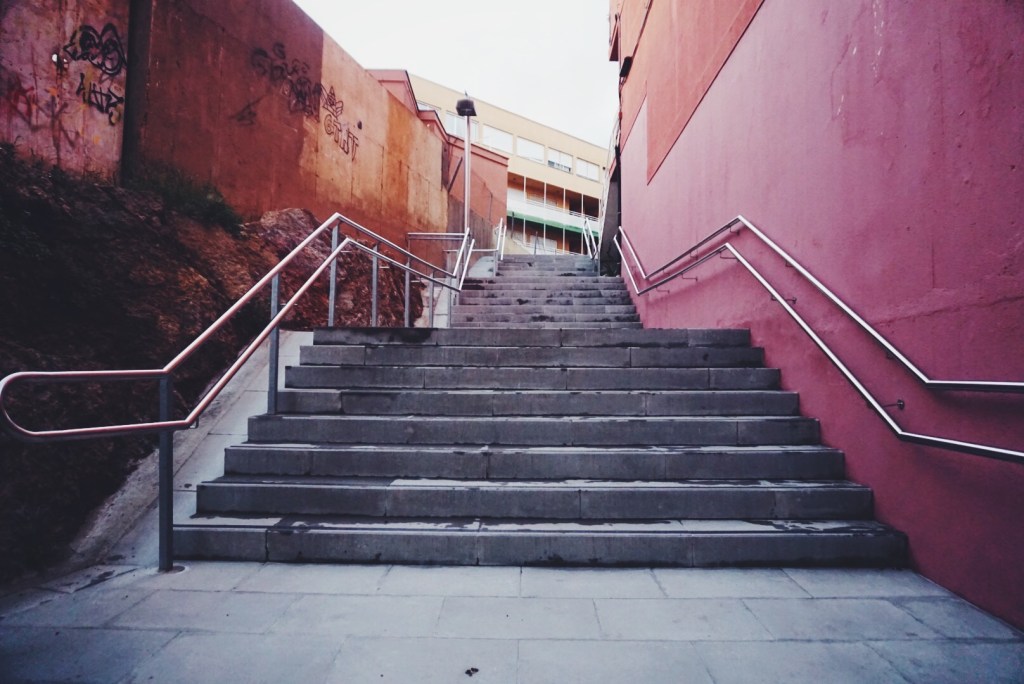
Exploration 
Views of Barcelona
Next (and final) stop: Paris, France. I’m actually surprised at how much I enjoyed Paris. I never had the desire to visit as I’ve always heard the locals are rude, I’ve never cared for French as a language and always found it to be very cliche…boy, was I wrong! Paris quickly became one of my favorite stops on the trip. I learned very early that it was in my best interest to learn a few French phrases as most people didn’t speak English. The few phrases I learned, made all the difference. As with all the other cities, I did a lot of walking here. Mainly because I wanted to, but also because Paris was experiencing a transit strike and most of the buses and trains were not operating, making cabs expensive and hard to get, but I was still able to get everywhere I needed.
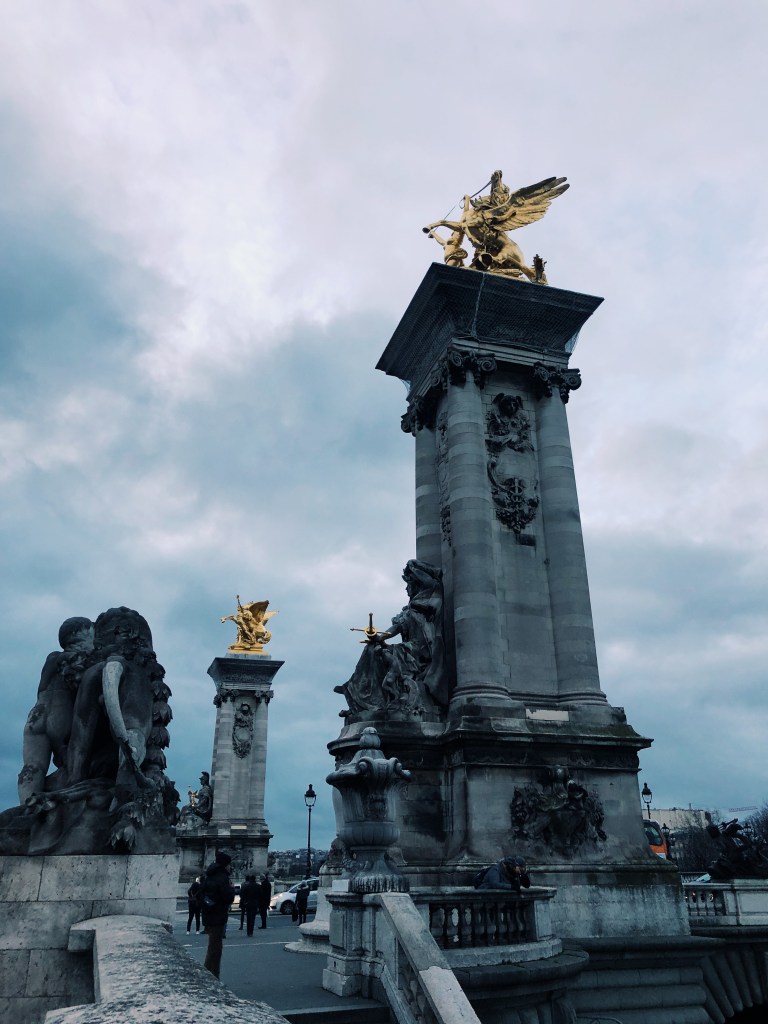
Pont Alexandre III 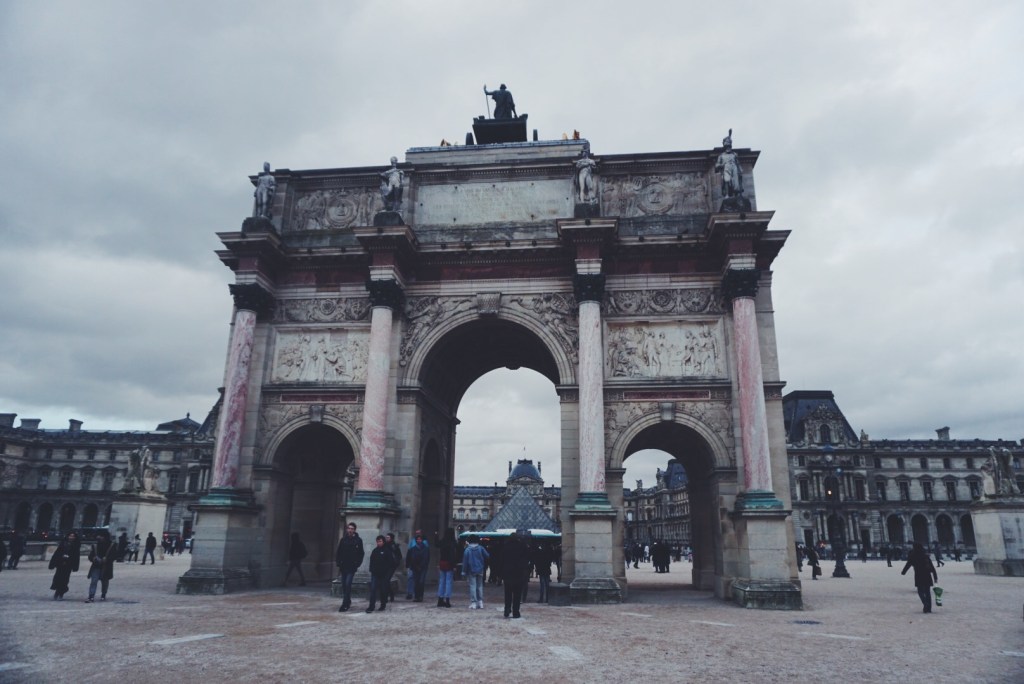
Outside of the Louvre 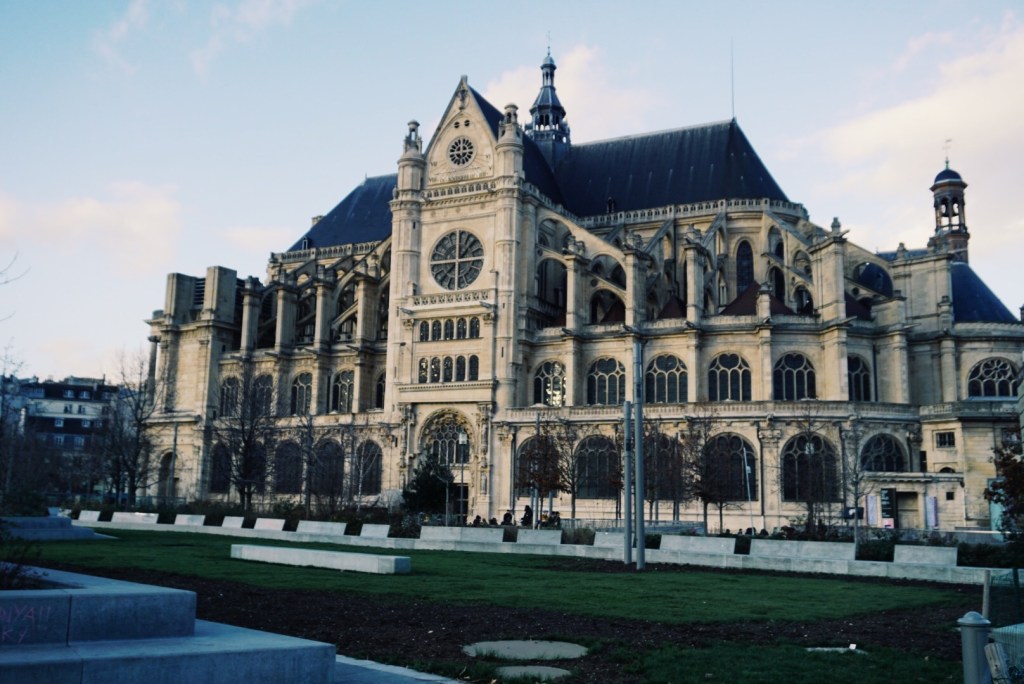

Pont Neuf 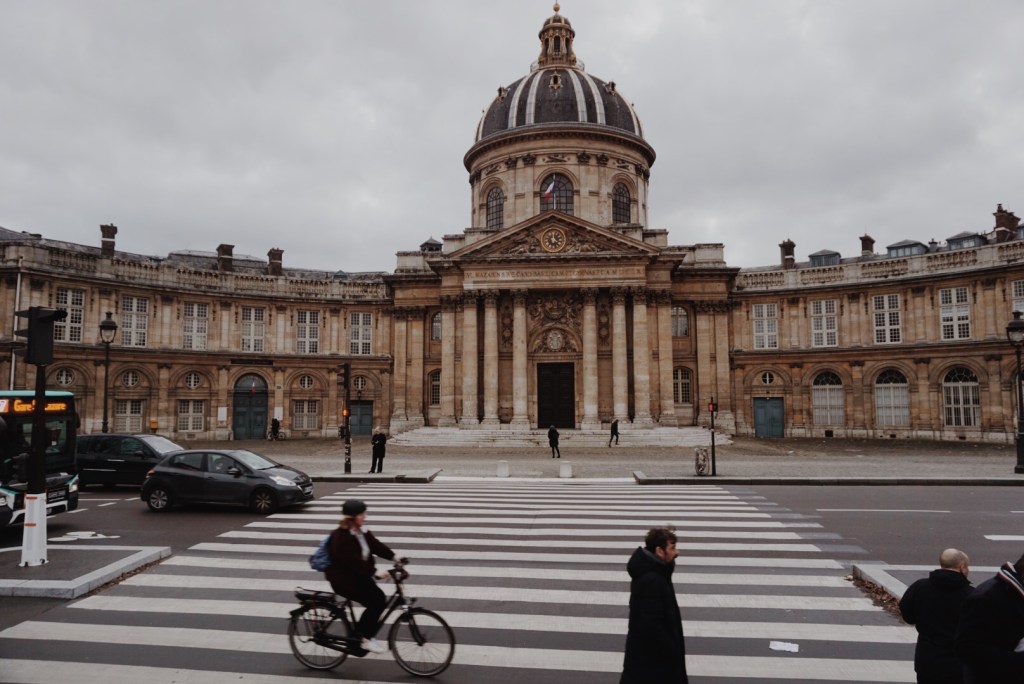
Institut de France 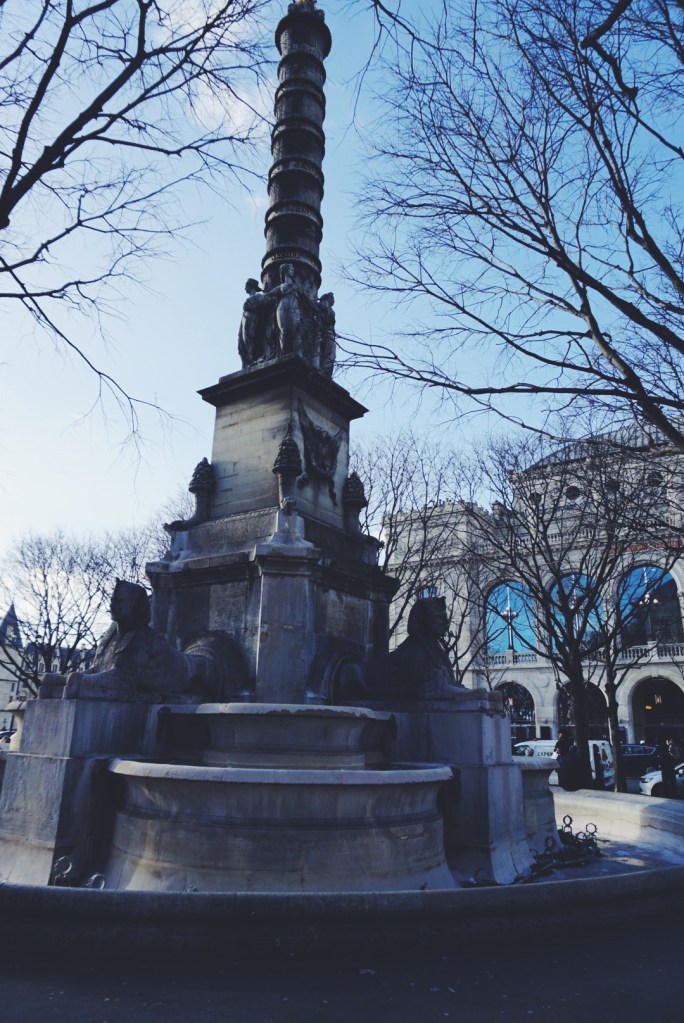
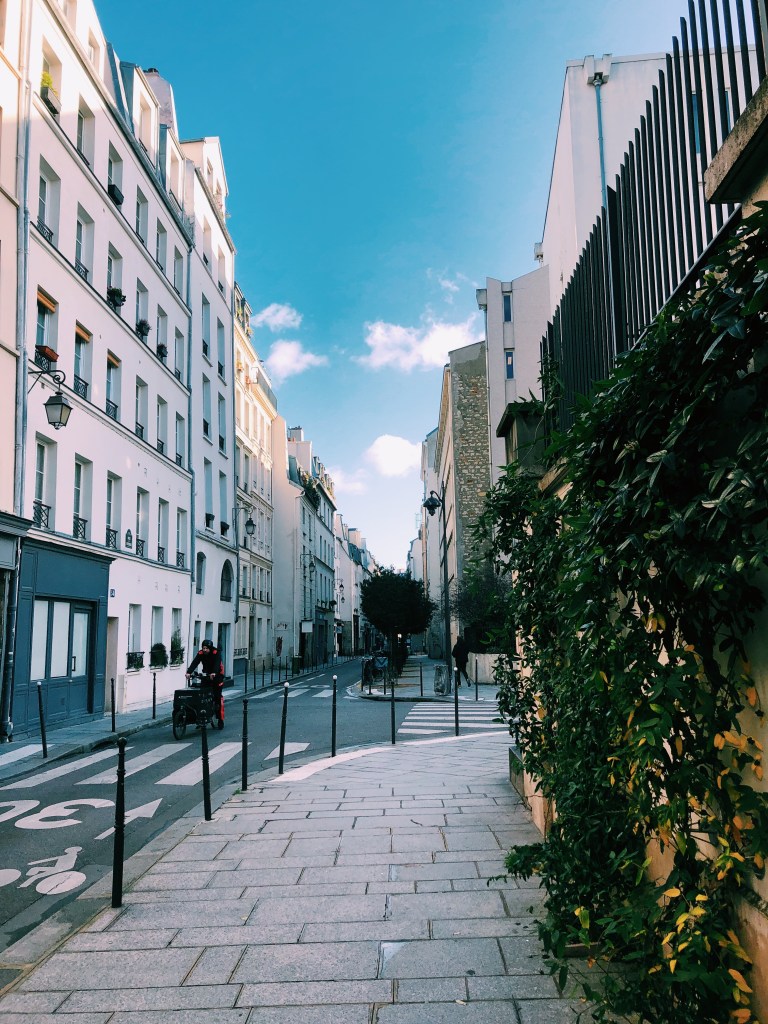
Streets of Paris 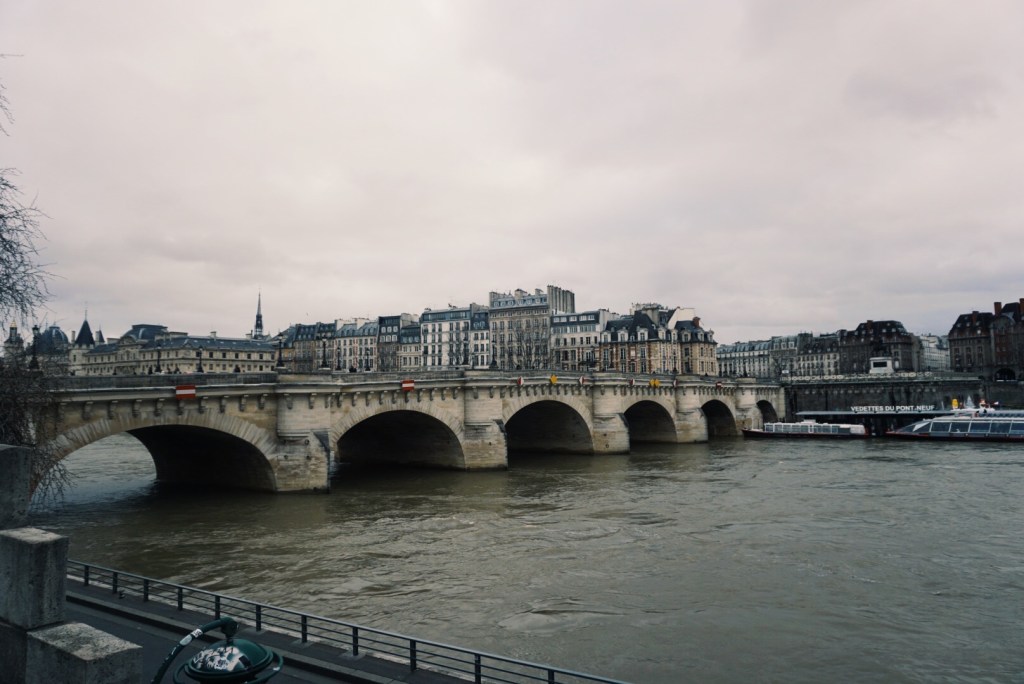
Pont Neuf 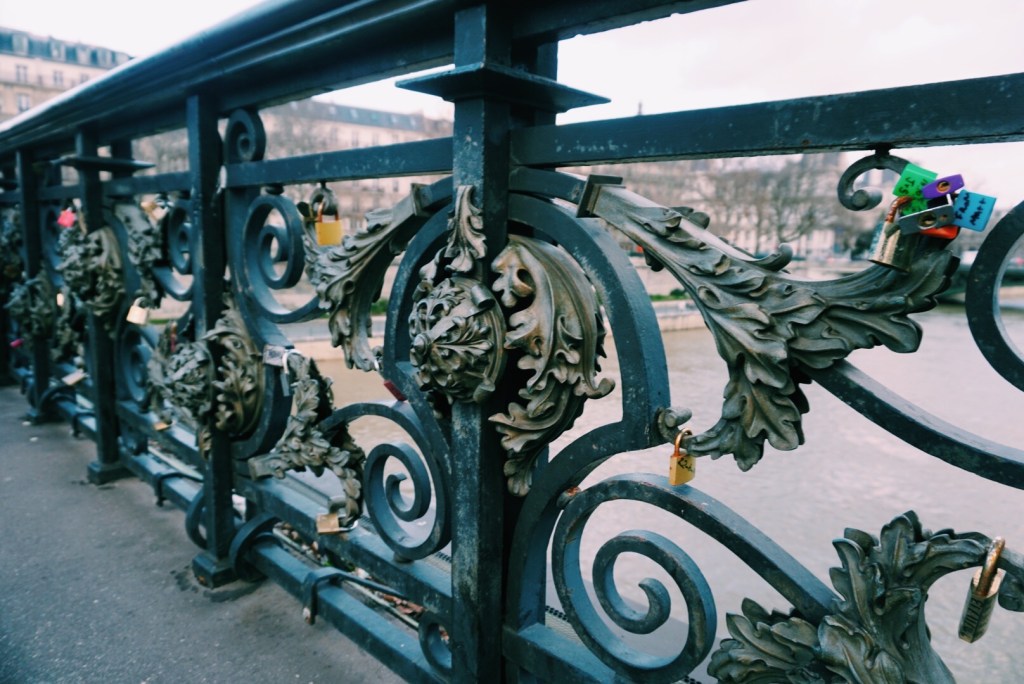
Lockets
I was encouraged right away because Paris was the first city where I saw Black people everywhere I went. Within the first day of being there, I saw more Black people than I had seen the entire two weeks I had been traveling. What I was most interested in in Paris was seeing all the beauty the city offered and eating, as I’ve always had an affinity for French food – it was definitely worth the hype. On my first full day, I walked all over and saw some of the best Paris had to offer: Pont des Arts, a beautiful bridge where I got hustled out of $50 gambling, the Pantheon, the Louvre. I’ll be honest, I was not impressed by the Louvre. I was more impressed by Colonnade de Perrault, the architecture to the east of the Louvre, right before you enter. I was taken aback by the enormity of the structure and once I entered the Louvre, all I saw was people taking selfies and posing for the esteemed photo that looks like they’re holding the pyramid by the point. I was extremely annoyed at how many people were solely concerned about getting the perfect shot. I sat around for a while to see how many people actually stopped, after taking their photos, to truly take in the scene around them – only about 30% actually did. From the Louvre, I walked past Place de la Concorde, Pont Alexandre III and then finally made it to the Eiffel Tower – which was absolutely gorgeous. Along the way, I stopped inside of several shops, waiting for the sun to set so I could see the Tower light up. After snapping a few pictures at the Eiffel Tower, it was time to head back to the hotel, as I had dinner plans with a friend I hadn’t seen in years, who just happened to be in Paris at the same time. I decided I wanted to save money – it was rush hour and there was an extreme surge in taxi prices, so I chose to bike back home (3 miles). What seemed like a smart idea at the time, quickly became one of the most stressful and tense moments I experienced during my travels. Not only did I not have any clue where I was going (so I had to try to find a way to prop my phone up in my shopping bags, which were stuffed into the bike’s front basket), it was also rush hour. Watching other bikers weave in and out of traffic, I became empowered and thought I could do the same – I was not nearly as graceful. Long story short, my phone fell out into the street several times (finally cracking on the final time) and traffic didn’t let up. I finally made it to the hotel and immediately had to rest and stretch. Another experience I’ll cherish (and I saved myself $40!). I met up with my friend who brought along new friends, all who currently live in LA and one who lives in Paris. We all shared more about our work and travel experiences. One of them pointed out how they love traveling while Black, how people are always so inviting and welcoming and asked if that had been my experience? It had not been the experience I had. Most of my time in Europe, I felt invisible. Sometimes I would get looks, but most people stayed to themselves, as did I. I also later wondered how much of a role the way I wore my hair (braids) impacted the way people received and perceived me in these countries.
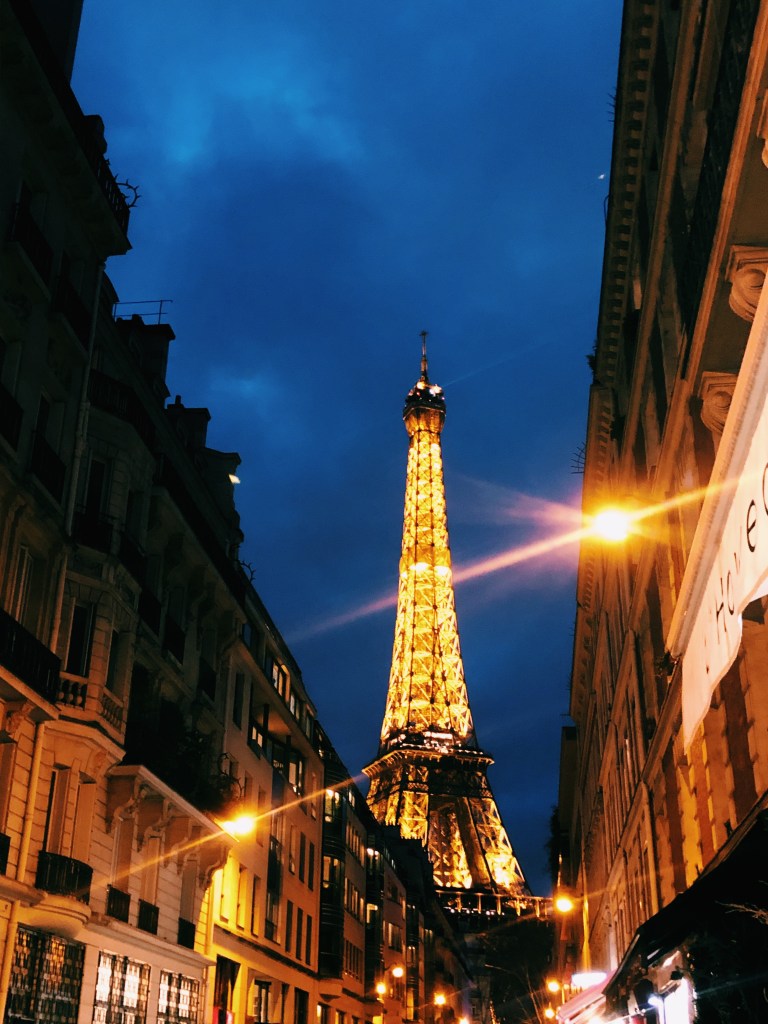
The Eiffel Tower 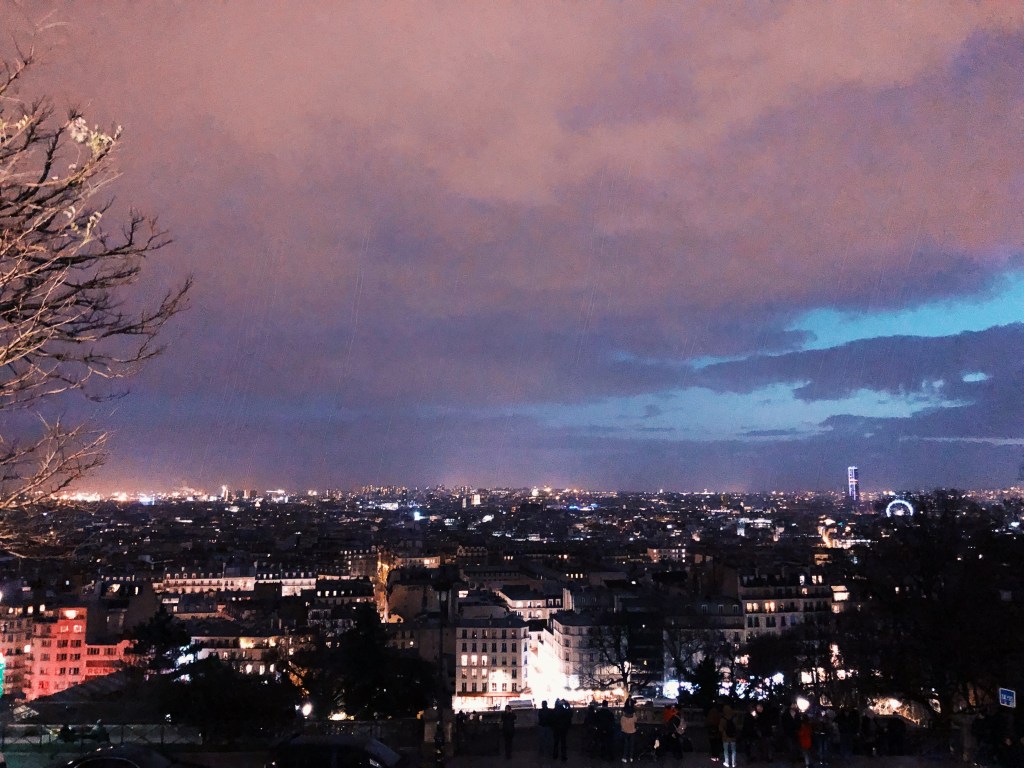
Views from Sacre-Coeur Basilica 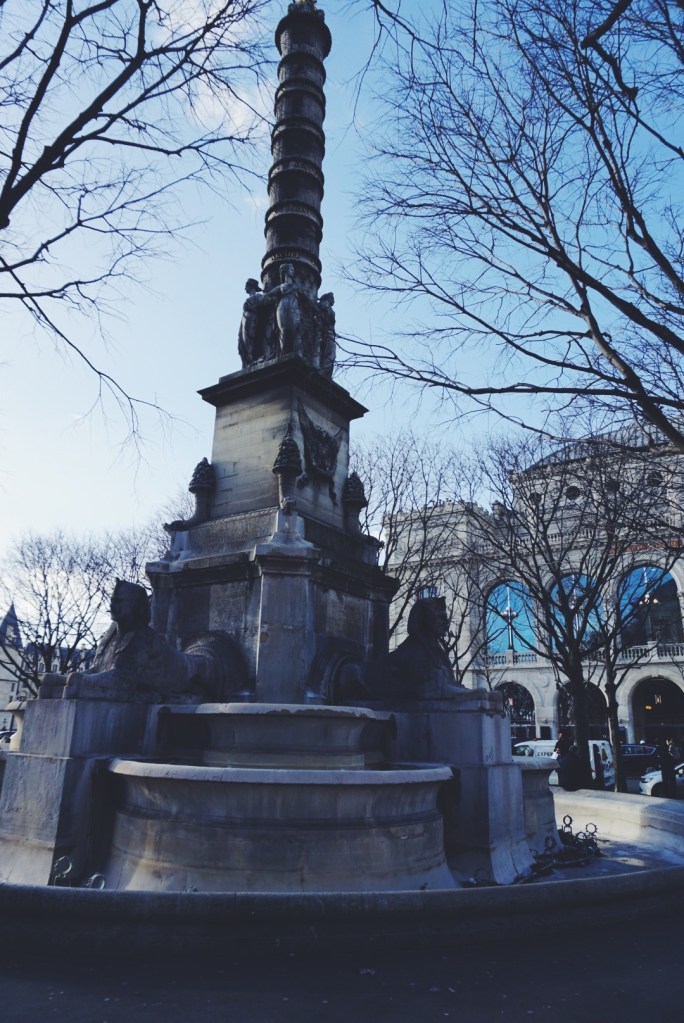
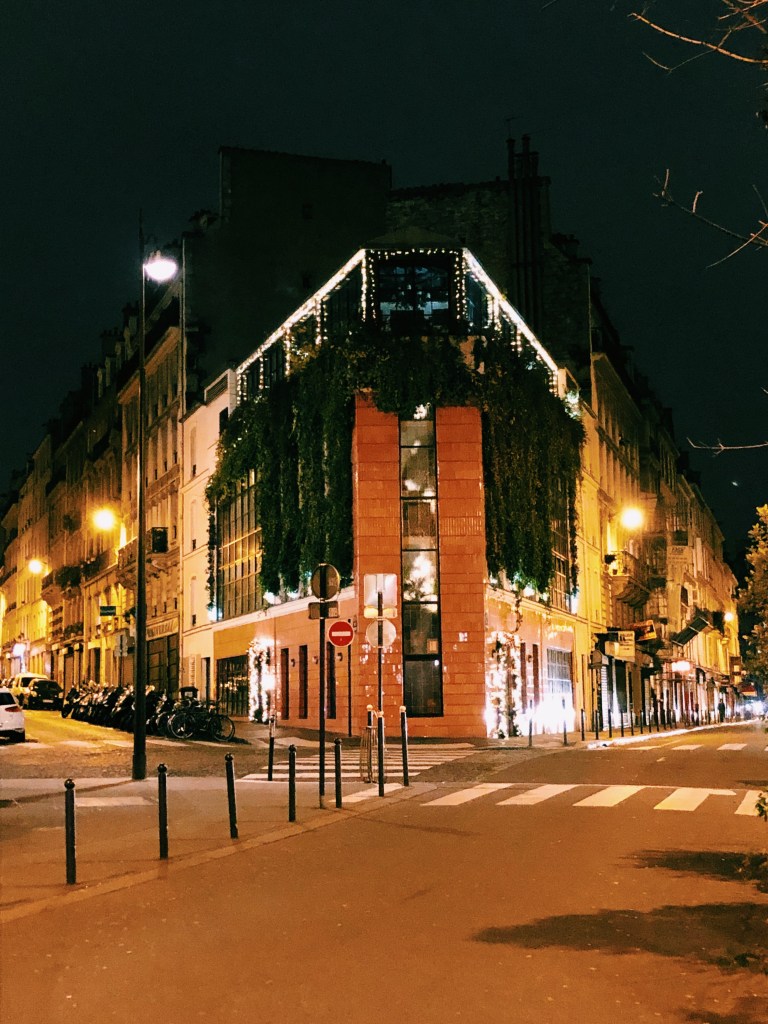
Paris at night 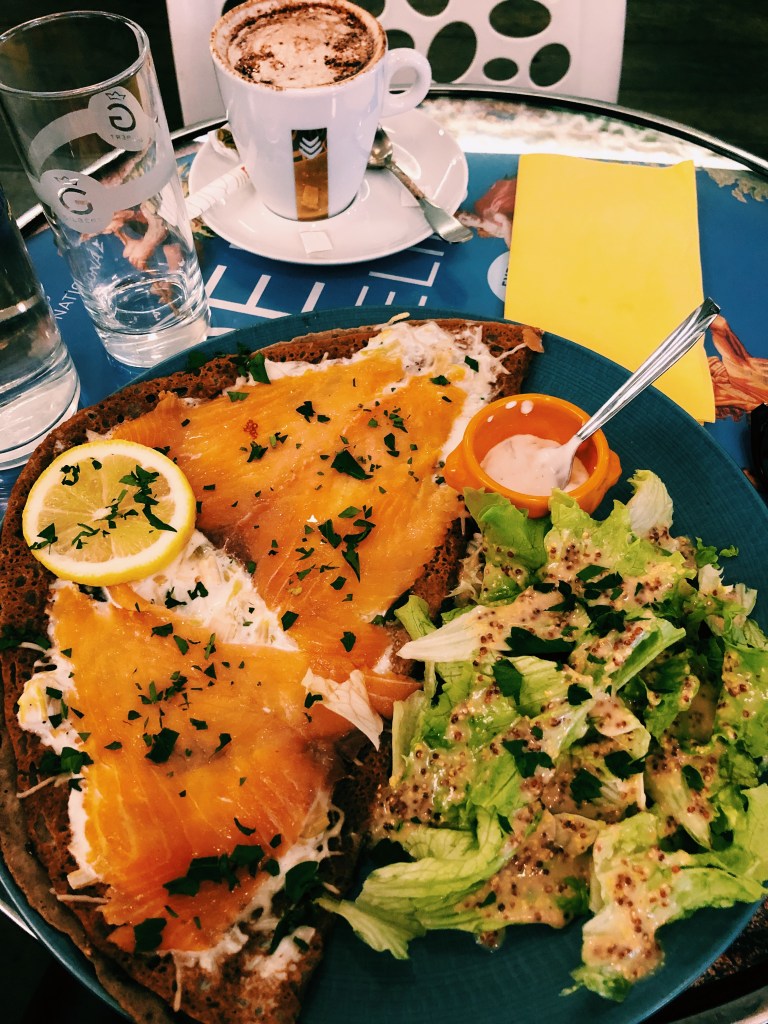
Salmon crepes 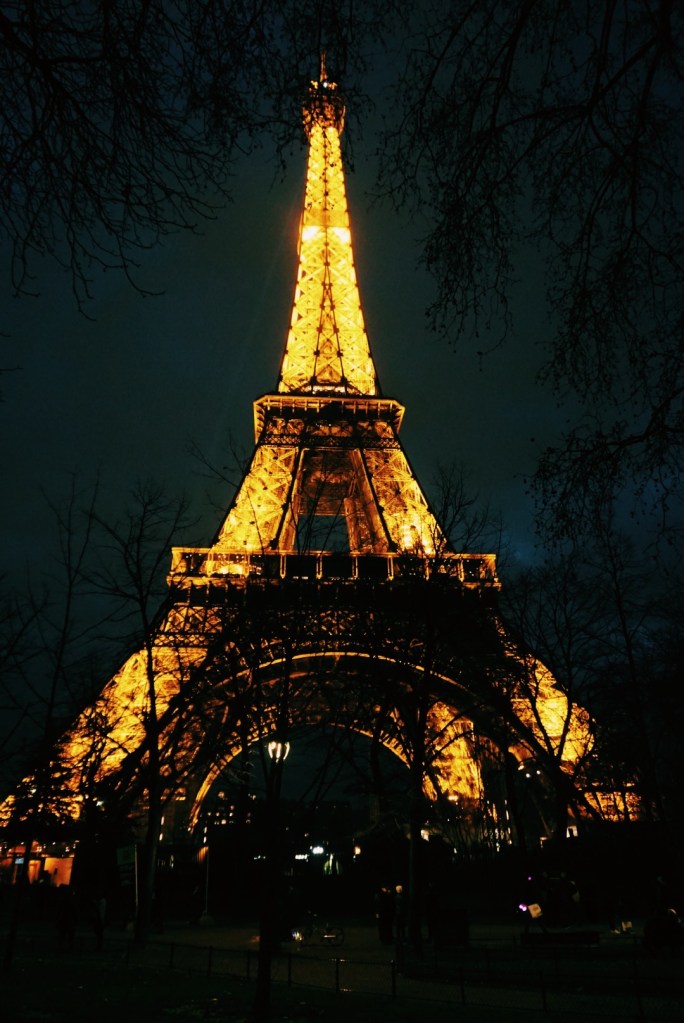
Eiffel Tower 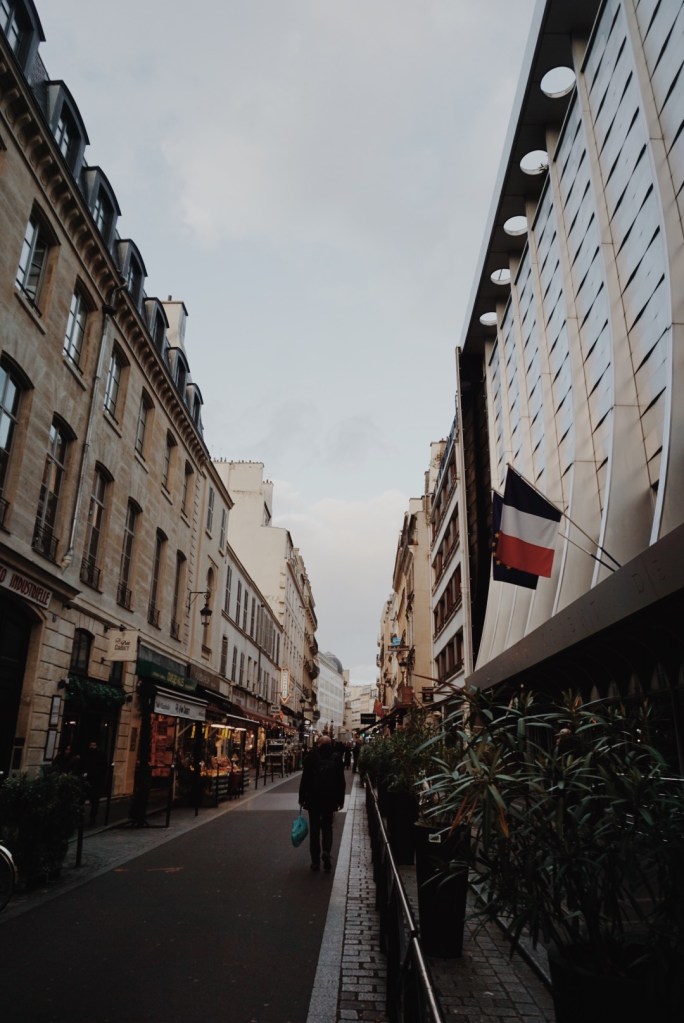
Paris 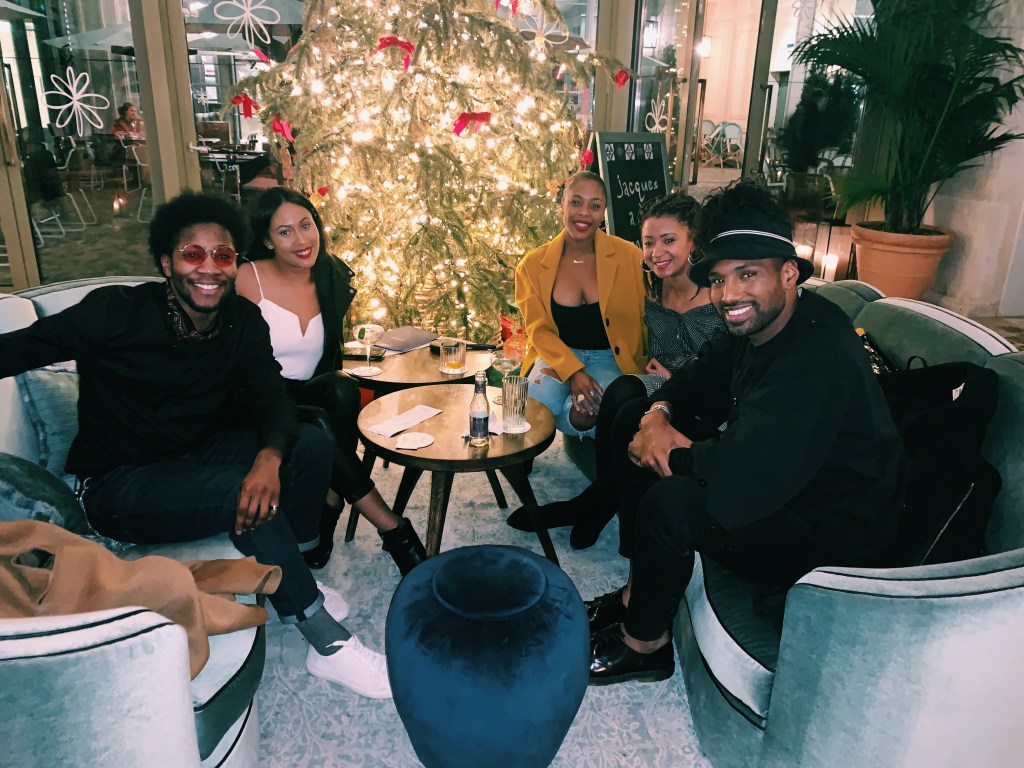
Friends at The Hoxton 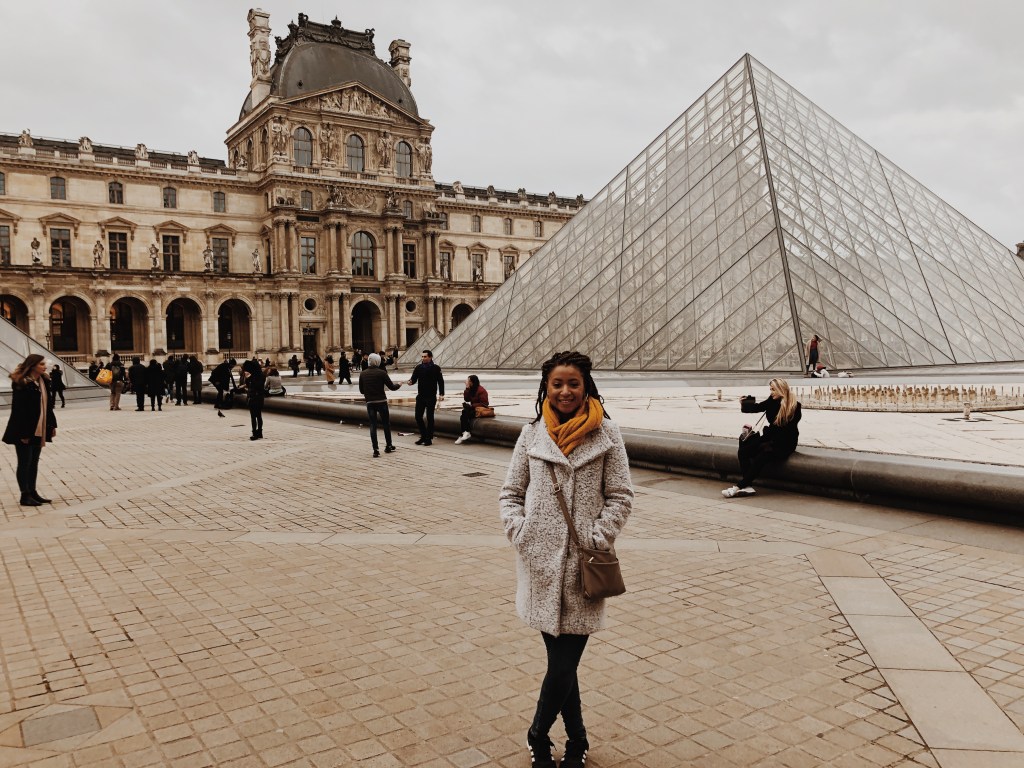
The Louvre
The next day, I hit the rest of the stops on my list. I knew I couldn’t leave Paris without having traditional crepes, so I started my day Divin’Art where I had my first and best savory crepe I’ve ever had. I then visited Sainte Chapelle, which was without question, one of the most spectacular sights I’ve ever seen. Built in seven years, Sainte Chapelle was built to house precious Christian relics, and includes an incredible display of stained glass windows that depict 1,113 scenes from the Old and New Testaments. The pictures I took here were some of the best I’ve taken, but I honestly don’t think you could’ve taken a bad picture. As I was walking back to the hotel, I remembered my Aunt telling me to check out Notre Dame, which I did. While the church is still being reconstructed, they have made visible all the progress and plans they have for the rebuild, allowing tourists to still have an experience when they visit. After leaving the 4th arrondissement, I headed towards Montmartre to catch the sunset and visit Sacre-Coeur Basilica, another breathtaking cathedral at the highest point in the city – offering astonishing views. Then I walked around for a good hour and a half looking for a place I could get a glass of wine and charcuterie (it was Christmas Eve and everything was closing down). Finally, after almost giving up and having walked 11 miles that day (total miles walked in Paris: 25), I stumbled into a place with everything I needed and great service. I got to try almost every wine on the menu and grabbed local chocolates and macaroons on my walk back home, completing my full Paris experience. There was so much more I could have done and plan to do once I visit again, but I was very pleased with the experience I did have.
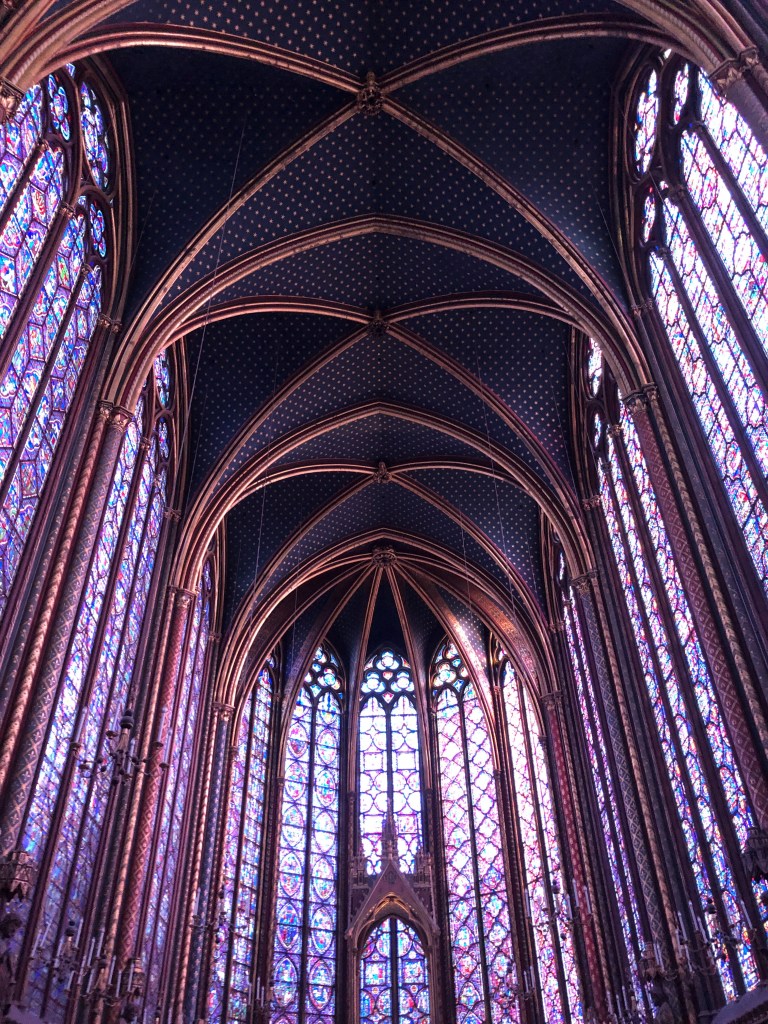
Inside Sainte Chapelle 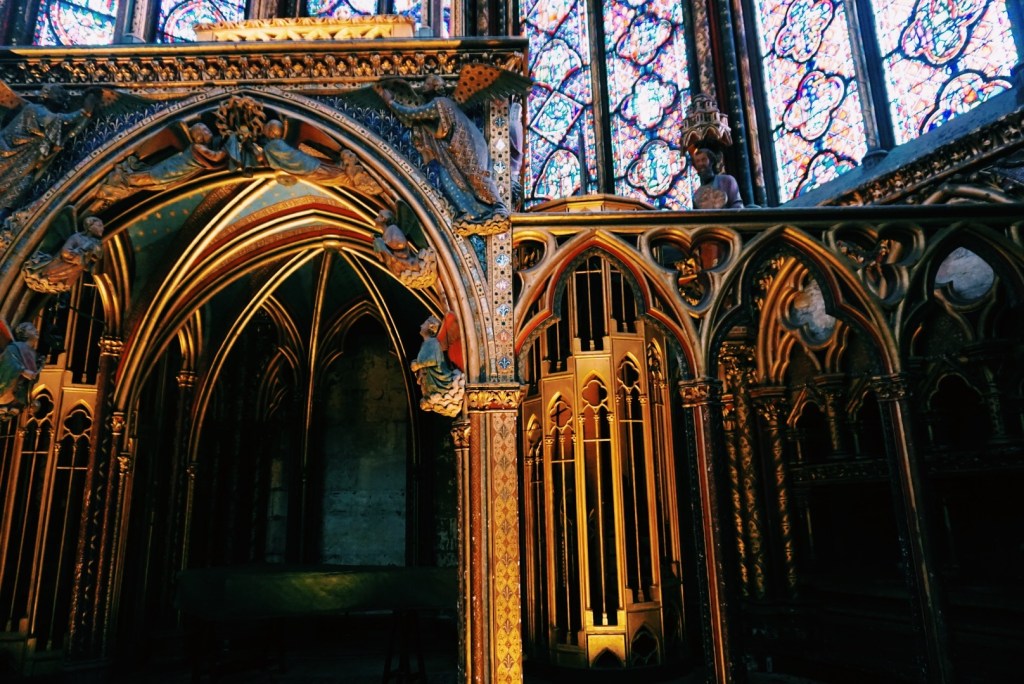
Sainte Chapelle 
Inside Sacre-Coeur Basilica 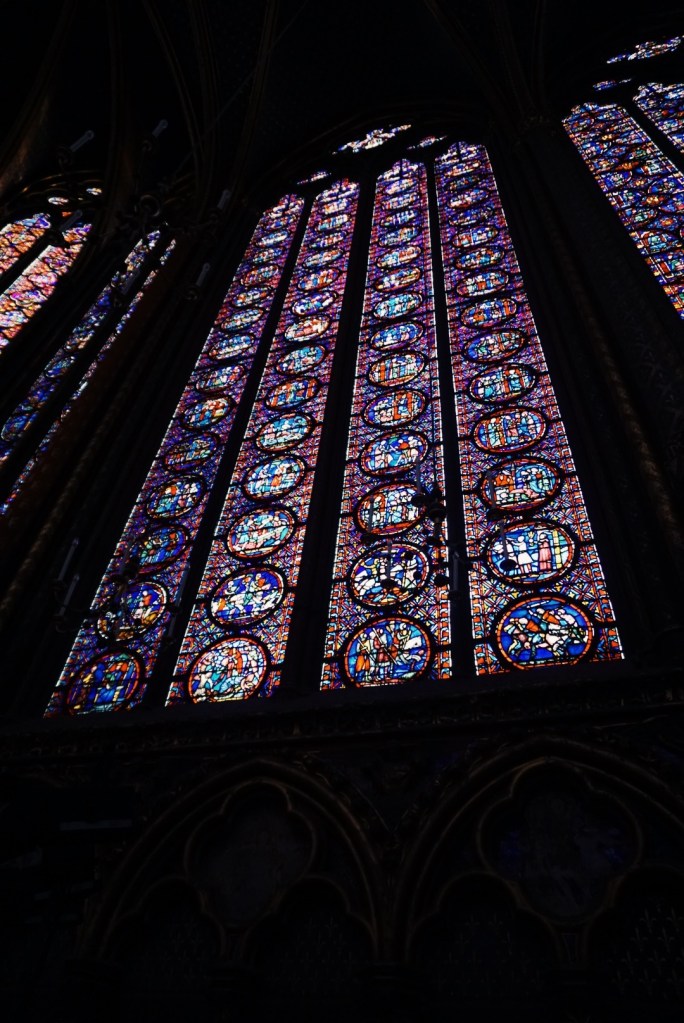
Sainte Chapelle 
Sacre-Coeur Basilica 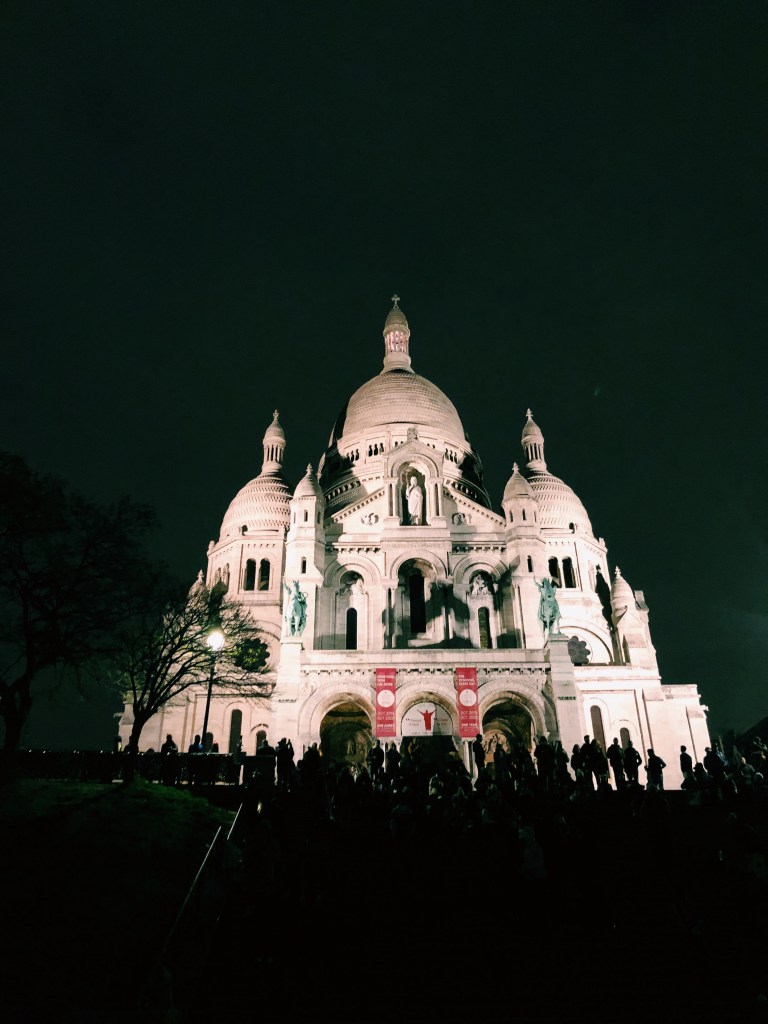
Sacre-Coeur Basilica 
Inside Sacre-Coeur Basilica 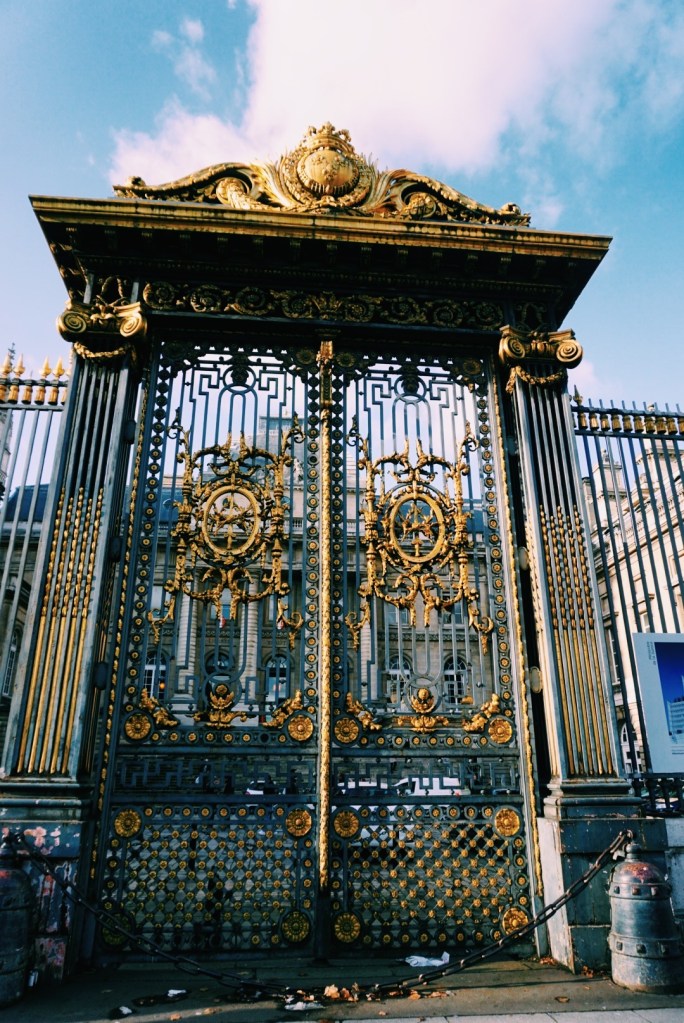
Iron Golden Gate at Sainte-Chapelle 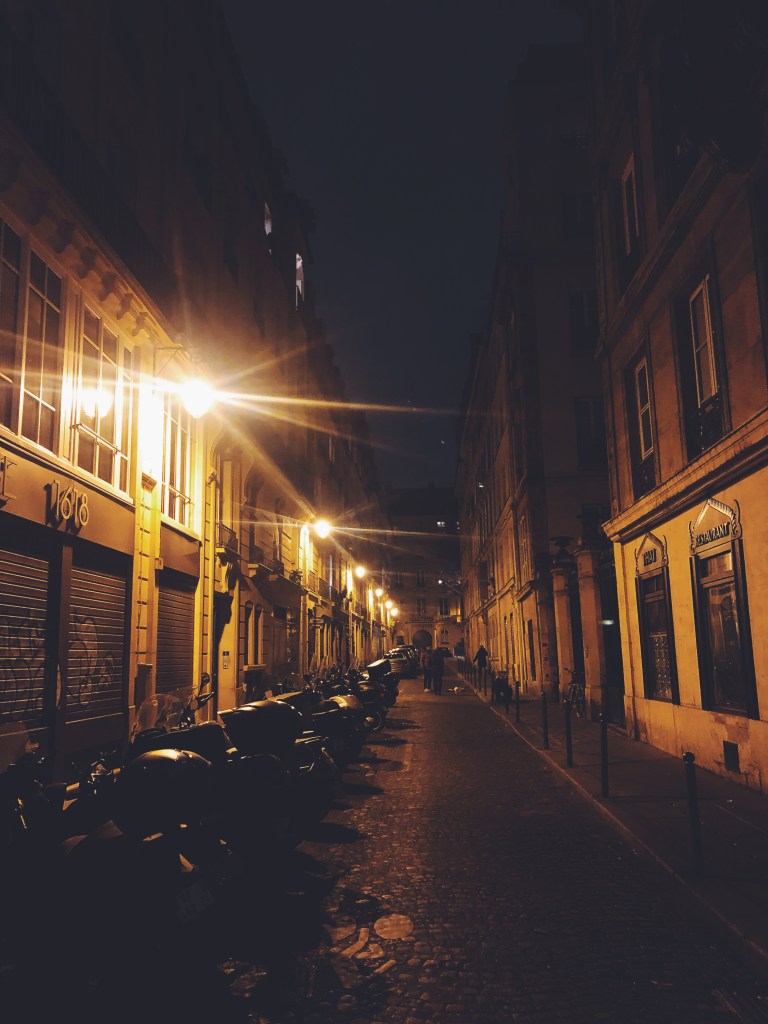
Paris at Night 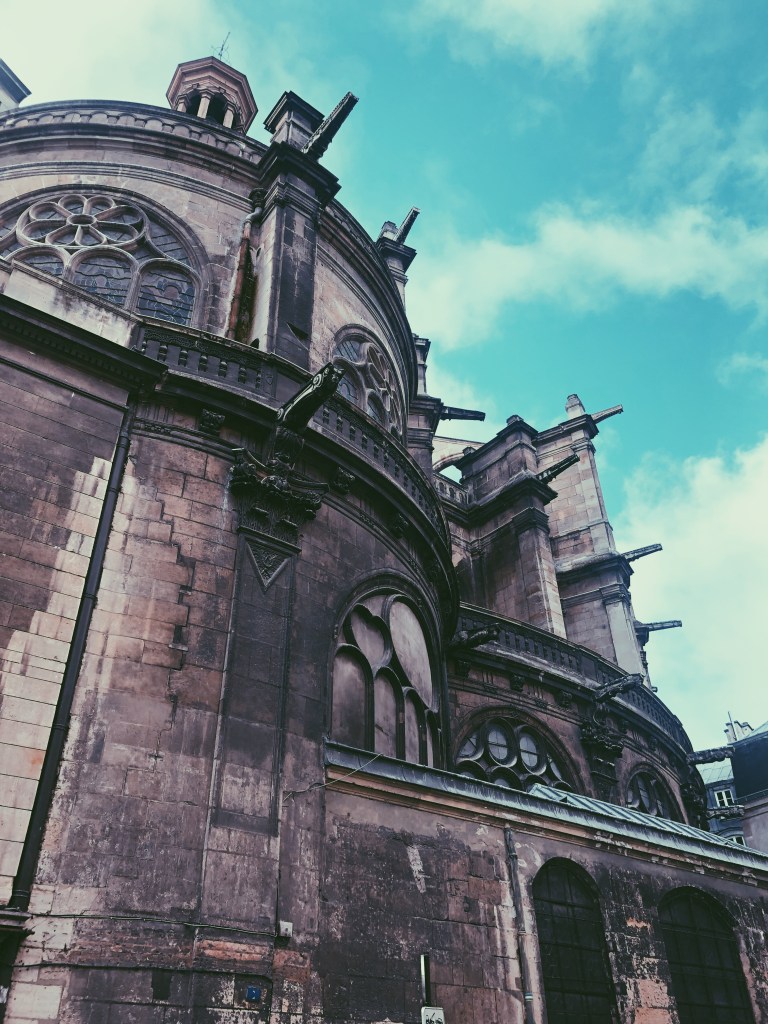
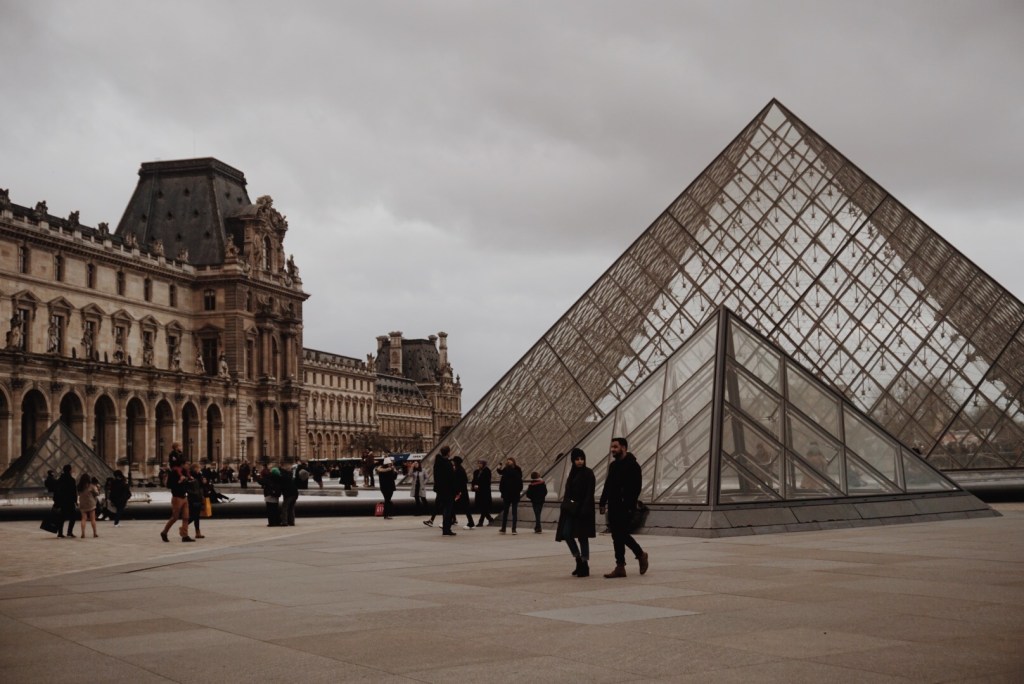
The Louvre 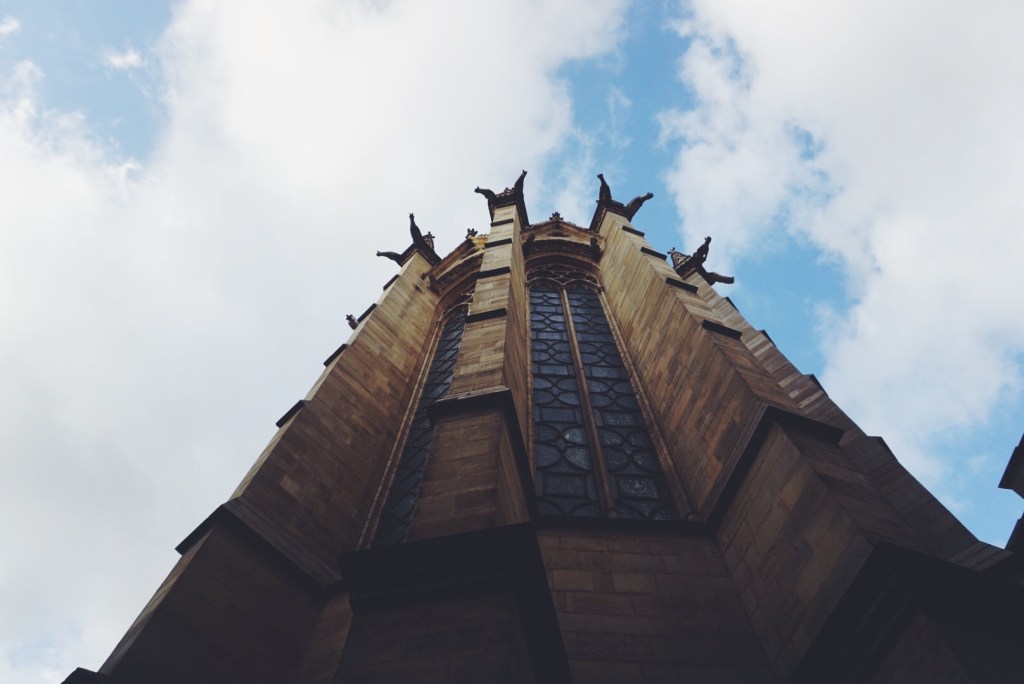
Sainte Chapelle
So many times, I just remember stopping to stare at the gigantic structures, the intricacy of the designs and the thoughtfulness that had to go into creating such beauty. It’s something that I grew a great appreciation for during my travels. Coming back and seeing how quickly we build to keep up with supply and demand, the hustle and bustle of the city that doesn’t create much space for staying present or truly being able to appreciate what you have around you. The entire time I traveled, I had no other choice but to surrender, go with the flow and remain present. It made all the difference. It allowed me to remain in a state of wonder, inspiration, curiosity and gratitude. Every view, story, interaction, experience helped me to truly understand the magnitude of the collective, the innate privileges we carry – the things we think are privileges but in reality are misguided attempts to be accepted or conversely, create elitism. It made me constantly question my role in all of this – the bigger picture – the global landscape. So many areas of the world are experiencing the same issues, the same injustices, the same misplaced power, the same fight for resources, and quest for equity. How do we begin to think about the larger systems at play and leverage our collective power, resources and access to truly change this world for the better? That’s all I’ve been interested in and able to think about since returning. I’m excited to see the many ways in which this trip will continue to inform my work, the space that I choose to take up and how I choose to show up in this world.
Over 100 miles walked, 7 flights, 3 hotels and 2 airbnbs later… I’m well on my way to figuring it out.

 Just The Messenger
Leave a comment